Digital cognitive behavioral therapy for insomnia was associated with lower depression and anxiety symptoms
Digital cognitive behavioral therapy for insomnia on depression and anxiety: a systematic review and meta-analysis
Meta-analysis of 22 randomized controlled trialsBenefit found
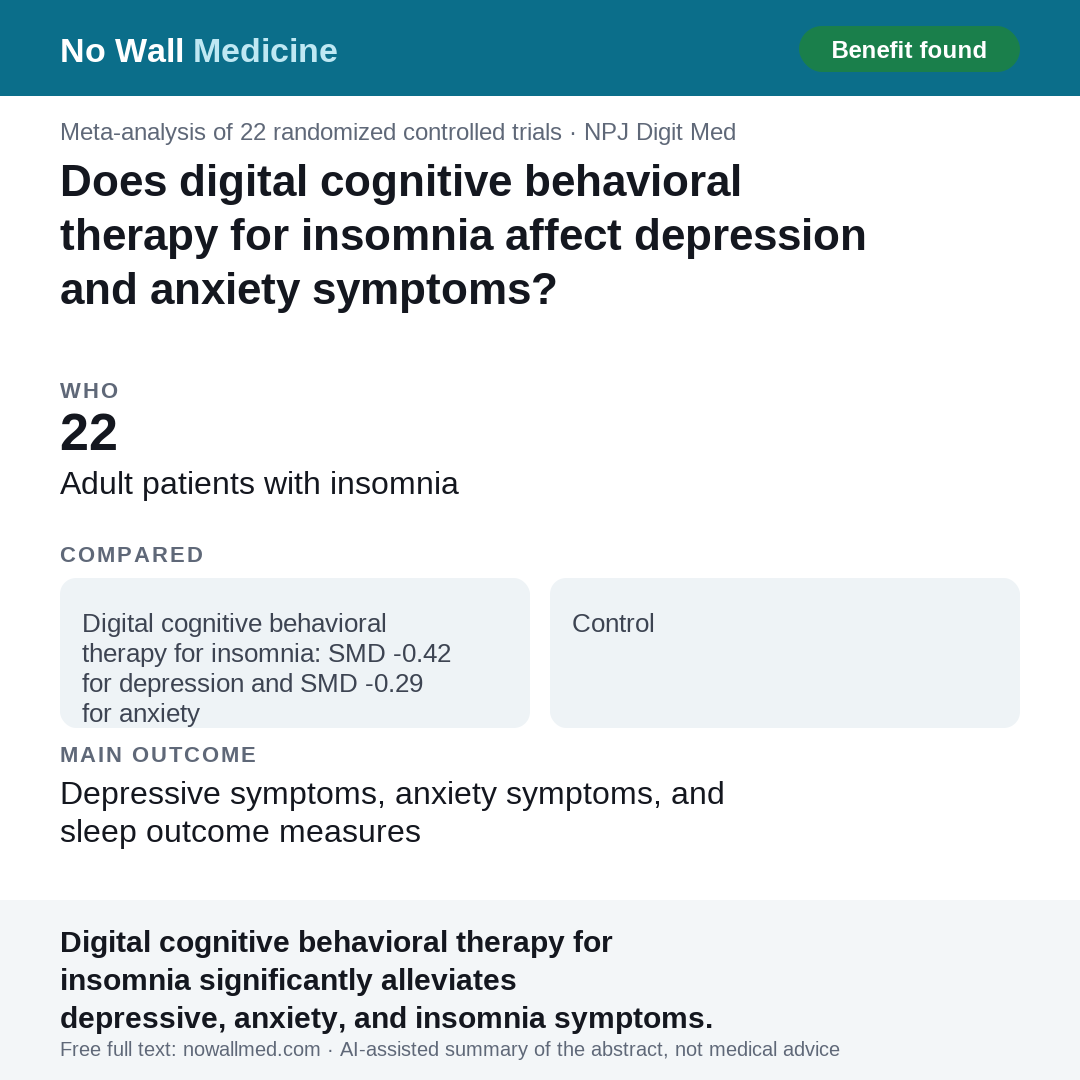
Does digital cognitive behavioral therapy for insomnia affect depression and anxiety symptoms?
Who
22
Adult patients with insomnia
Compared
Digital cognitive behavioral therapy for insomnia: SMD -0.42 for depression and SMD -0.29 for anxiety
Control
Main outcome
Depressive symptoms, anxiety symptoms, and sleep outcome measures
Result: SMD -0.42 (95% CI -0.56, -0.28) for depression; SMD -0.29 (95% CI -0.40, -0.19) for anxiety
Bottom line: Digital cognitive behavioral therapy for insomnia significantly alleviates depressive, anxiety, and insomnia symptoms.
NPJ Digit Med · 2023-03-25Download image
Clinical question: Does digital cognitive behavioral therapy for insomnia affect depression and anxiety symptoms?
Why it matters: It was unknown how digital cognitive behavioral therapy for insomnia affects the clinical symptoms of depression and anxiety in adult patients.
Key points
- Researchers analyzed 22 randomized controlled trials involving adult patients with insomnia to assess the effects of digital cognitive behavioral therapy for insomnia.
- Digital therapy showed a small to moderate effect on depressive symptoms (SMD = -0.42) and anxiety symptoms (SMD = -0.29) compared to a large effect on sleep (SMD = -0.76).
- Higher treatment adherence was associated with more robust outcomes for depression, anxiety, and sleep, including in fully automated programs without human therapist support.
Headline and key points written with AI from the paper’s abstract, with every number checked against it. Read the paper before relying on them.
Was this summary helpful?
Cite this article
Lee S, Oh JW, Park KM, Lee S, Lee E. Digital cognitive behavioral therapy for insomnia on depression and anxiety: a systematic review and meta-analysis. NPJ Digit Med. 2023. doi:10.1038/s41746-023-00800-3
Spotted a mistake? Suggest a correction
Top studies every Monday
The week’s key trials and guidelines in your specialties, plus any topics you follow. By email, free.
Get the weekly digest