Digital Interventions for Psychological Well-being in University Students: Systematic Review and Meta-analysis
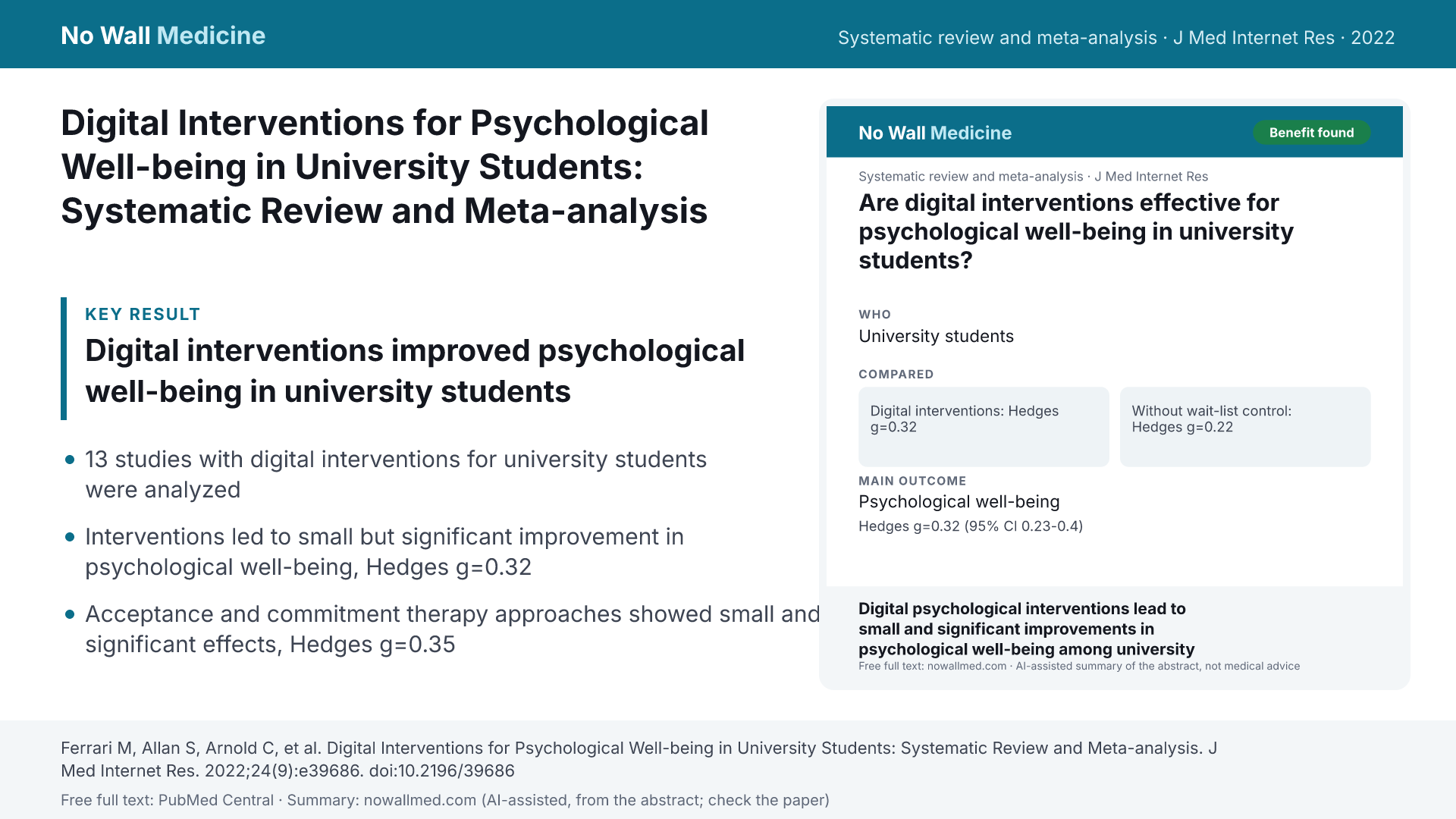
Key result: Digital interventions improved psychological well-being in university students
Systematic review and meta-analysisBenefit found
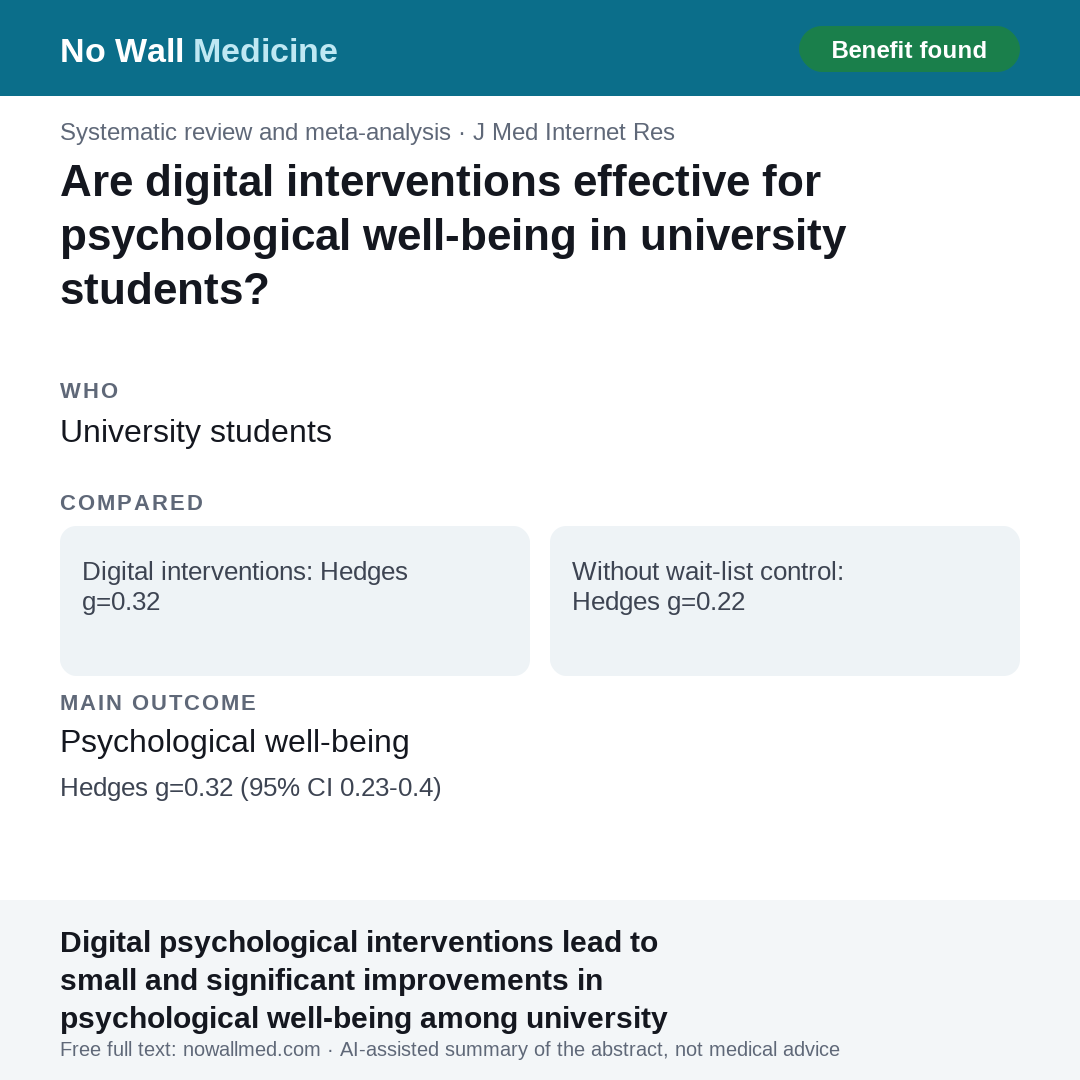
Are digital interventions effective for psychological well-being in university students?
Who
University students
Compared
Digital interventions: Hedges g=0.32
Without wait-list control: Hedges g=0.22
Main outcome
Psychological well-being
Result: Hedges g=0.32 (95% CI 0.23-0.4)
Bottom line: Digital psychological interventions lead to small and significant improvements in psychological well-being among university students.
Limitation: Features that optimize service delivery and outcomes require further assessment.
J Med Internet Res · 2022-09-28Download image
Key points
- 13 studies with digital interventions for university students were analyzed.
- Interventions led to small but significant improvement in psychological well-being, Hedges g=0.32.
- Acceptance and commitment therapy approaches showed small and significant effects, Hedges g=0.35.
Why it matters: Effectiveness of digital interventions for university students' psychological well-being remains unclear
Limitation the authors note: None stated in the abstract
Discussion prompts
- Would these patients look like yours? Who was left out?
- Is the main outcome one that matters to patients?
- Is the difference large enough to change what you do?
Cite: Ferrari M, Allan S, Arnold C, et al. Digital Interventions for Psychological Well-being in University Students: Systematic Review and Meta-analysis. J Med Internet Res. 2022. doi:10.2196/39686
Free full text: PubMed Central · Summary and visual abstract: nowallmed.com/a/digital-interventions-for-psychological-well-being-in-university-qm1vi7/ (AI-assisted from the abstract; check the paper before relying on it).