Digital single-session interventions were associated with small reductions in depressive symptoms among young people
Digital single-session interventions for depression and self-injurious thoughts and behaviours in young people: a systematic review and meta-analysis
Psychiatry & Mental HealthAdult and pediatric
Systematic review and meta-analysisBenefit found
Are digital single-session interventions effective for reducing depression and self-injurious thoughts and behaviours?
Who
9353
Young people aged 10 to 24 years
Compared
Digital single-session interventions
Control
Main outcome
Depressive symptoms and self-injurious thoughts and behaviours
Result: Hedge's g = -0.18 (95% CI -0.24 to -0.11)
Bottom line: Digital single-session interventions yield significant and sustained reductions in depressive symptoms among young people.
Limitation: Limited studies reported on outcomes for depressive symptoms post-intervention and limited evidence for self-injurious thoughts and behaviours.
Funded by: Suicide Prevention Australia and NHMRC
eClinicalMedicine · 2025-10-30Download image
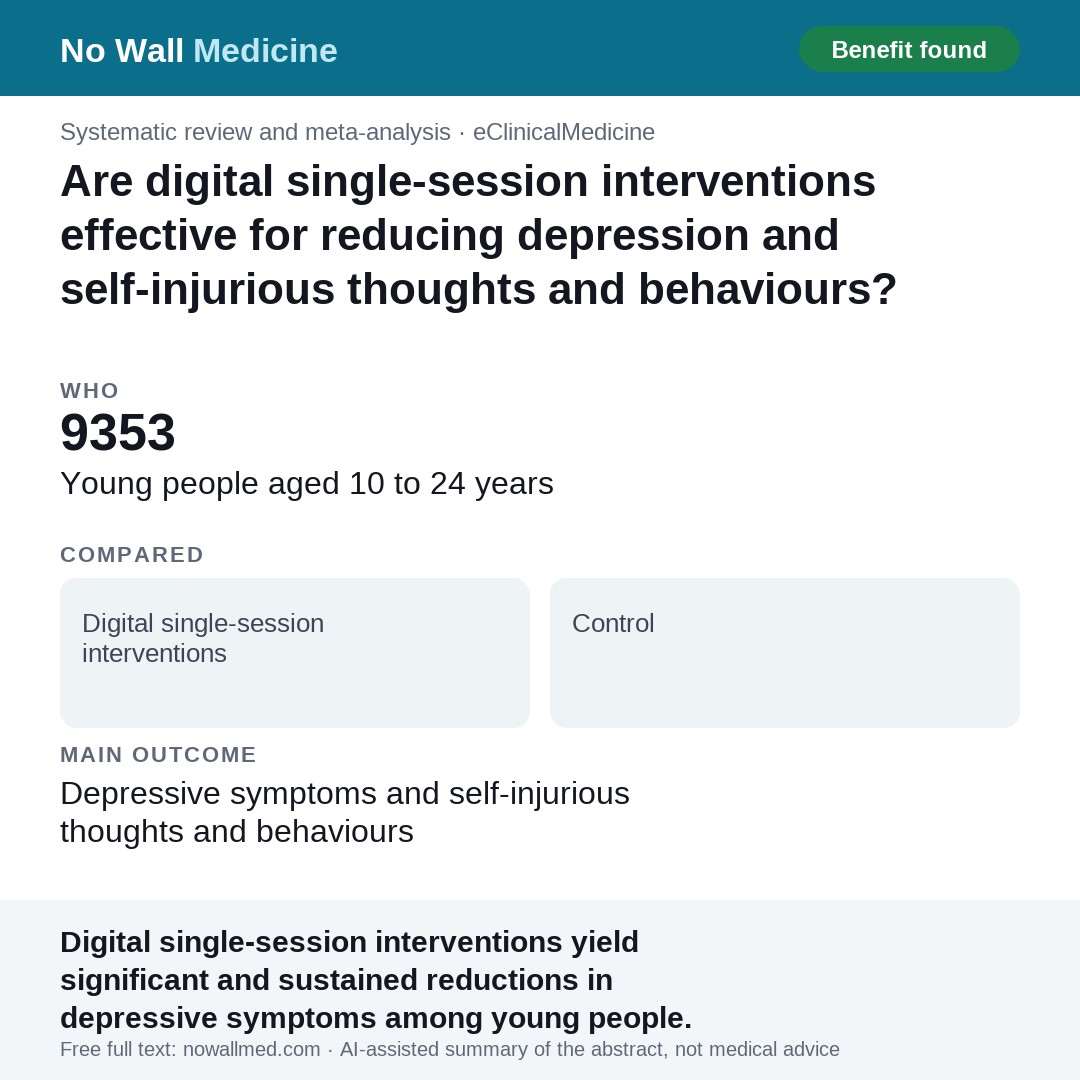
Clinical question: Are digital single-session interventions effective for reducing depression and self-injurious thoughts and behaviours?
Why it matters: It is unclear how effective digital single-session interventions are for reducing self-injurious thoughts and behaviours and depression in adolescents and young adults.
Key points
- Researchers analyzed 22 articles involving 9353 participants aged 10-24 to evaluate digital single-session interventions for depression and self-injurious thoughts and behaviours.
- At the longest follow-up point, which averaged 3.05 months, digital interventions showed a small reduction in depressive symptoms compared to controls (Hedge's g = -0.18).
- Evidence for the effectiveness of these digital interventions in reducing self-injurious thoughts and behaviours remains limited.
Headline and key points written with AI from the paper’s abstract, with every number checked against it. Read the paper before relying on them.
Cite this article
Hatoum AH, Coutts-Bain D, Hunnisett N, Baffsky R, O'Dea B, Torok M. Digital single-session interventions for depression and self-injurious thoughts and behaviours in young people: a systematic review and meta-analysis. eClinicalMedicine. 2025. doi:10.1016/j.eclinm.2025.103601
Spotted a mistake? Suggest a correction