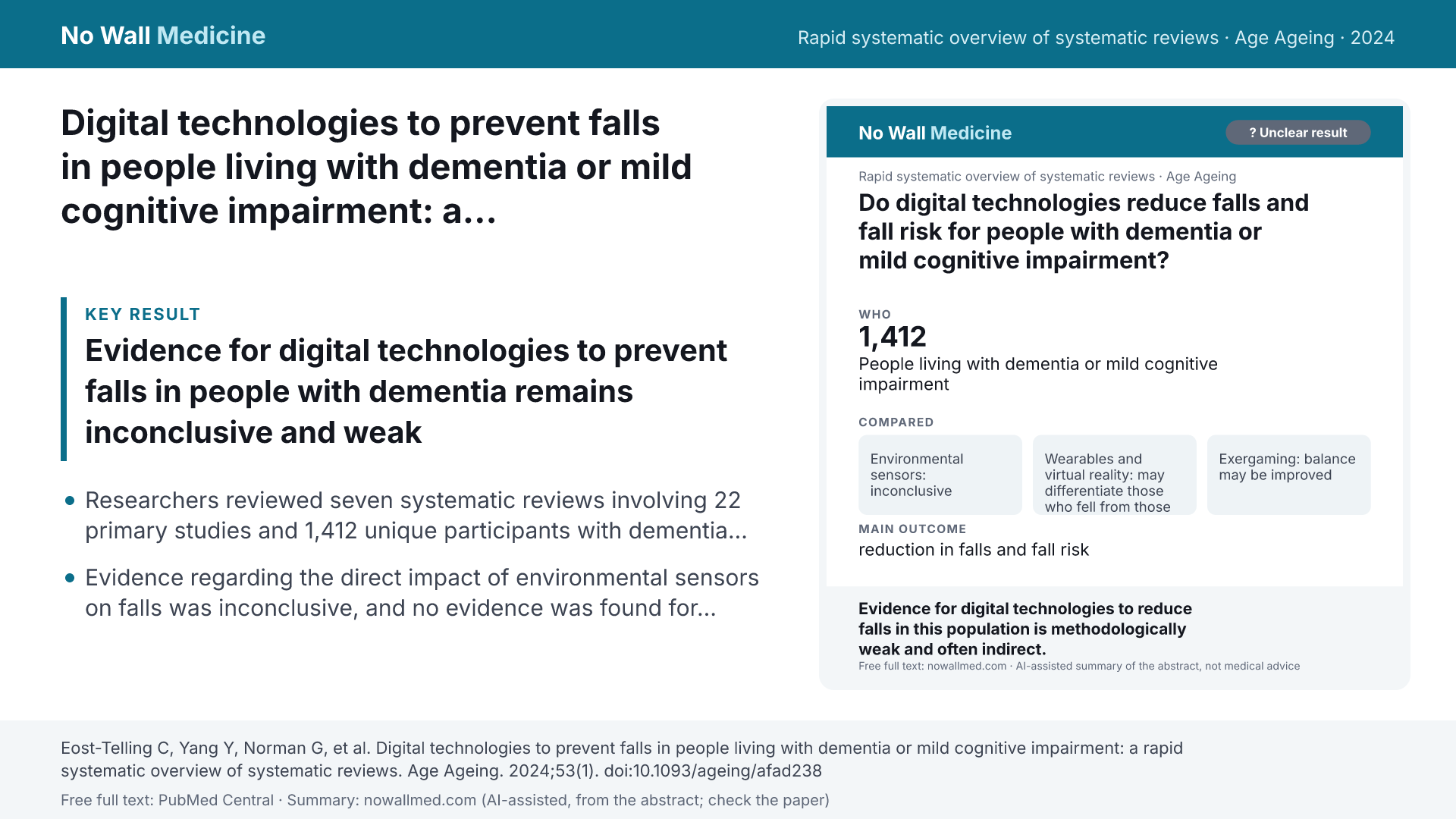
Evidence for digital technologies to prevent falls in people with dementia remains inconclusive and weak
Digital technologies to prevent falls in people living with dementia or mild cognitive impairment: a rapid systematic overview of systematic reviews
Rapid systematic overview of systematic reviewsUnclear result
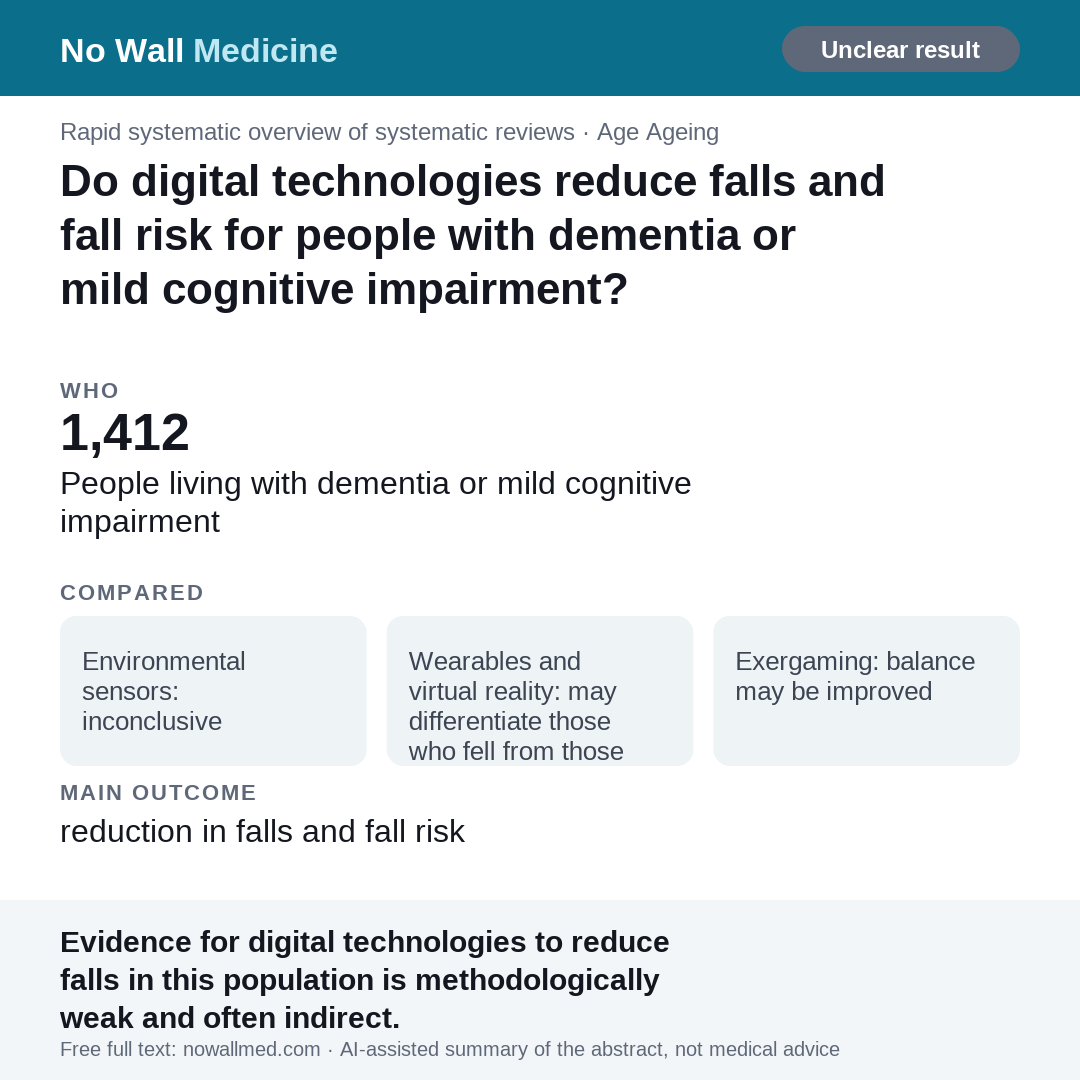
Do digital technologies reduce falls and fall risk for people with dementia or mild cognitive impairment?
Who
1,412
People living with dementia or mild cognitive impairment
Compared
Environmental sensors: inconclusive
Wearables and virtual reality: may differentiate those who fell from those who did not
Exergaming: balance may be improved
Main outcome
reduction in falls and fall risk
Bottom line: Evidence for digital technologies to reduce falls in this population is methodologically weak and often indirect.
Limitation: Included reviews had critical flaws, small studies, and were mostly non-randomised.
Age Ageing · 2024-01-14Download image
Clinical question: Do digital technologies reduce falls and fall risk for people with dementia or mild cognitive impairment?
Key points
- Researchers reviewed seven systematic reviews involving 22 primary studies and 1,412 unique participants with dementia or mild cognitive impairment.
- Evidence regarding the direct impact of environmental sensors on falls was inconclusive, and no evidence was found for mobile applications.
- Wearable sensors and virtual reality systems were associated with the ability to differentiate between people who fell and those who did not.
Limitation the authors note: The included systematic reviews had critical flaws because the primary studies were small, varied, mostly non-randomized, and of low or moderate quality.
Headline and key points written with AI from the paper’s abstract, with every number checked against it. Read the paper before relying on them.
Was this summary helpful?
Subject terms
Cite this article
Eost-Telling C, Yang Y, Norman G, et al. Digital technologies to prevent falls in people living with dementia or mild cognitive impairment: a rapid systematic overview of systematic reviews. Age Ageing. 2024. doi:10.1093/ageing/afad238
Spotted a mistake? Suggest a correction