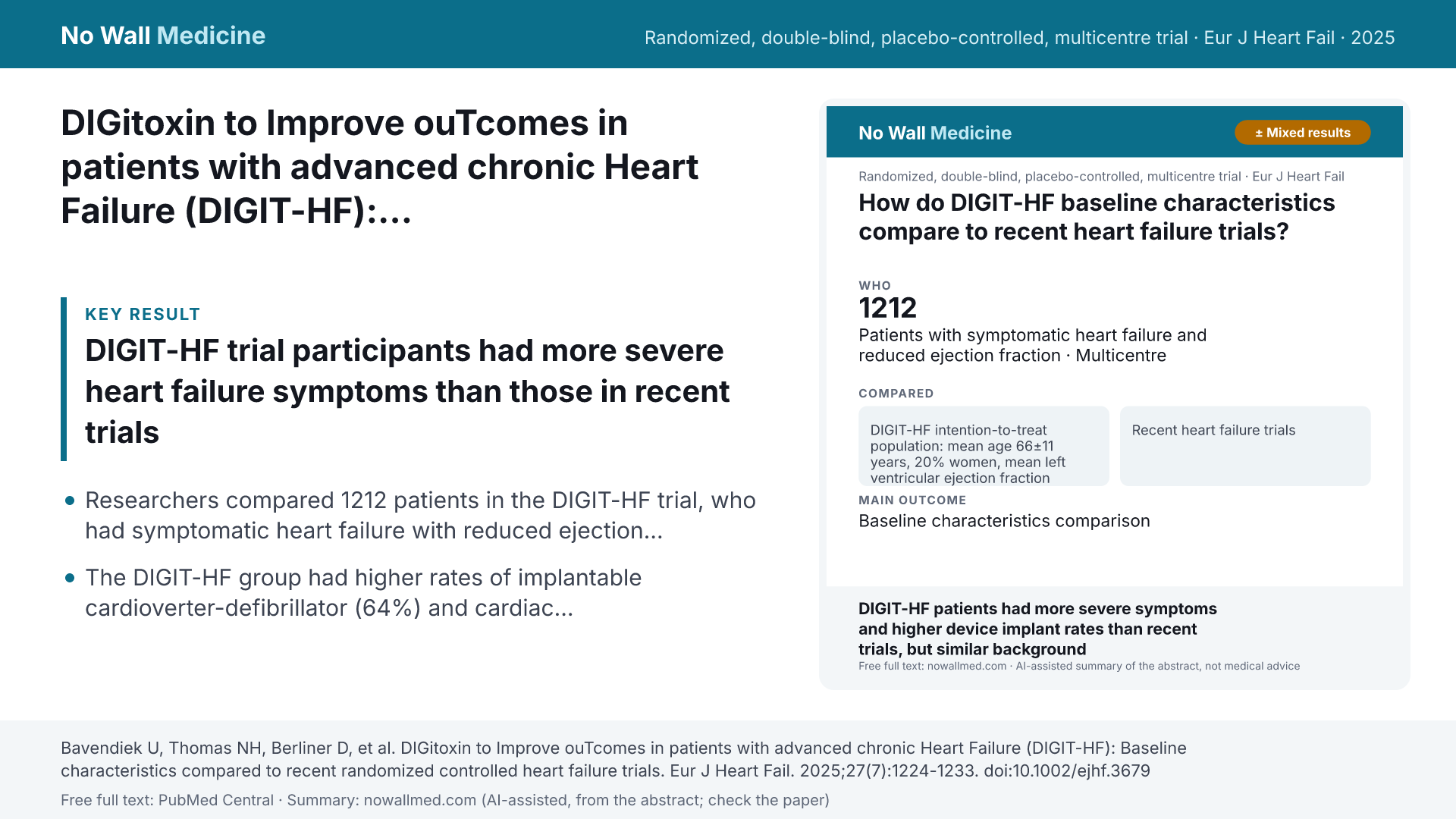
DIGitoxin to Improve ouTcomes in patients with advanced chronic Heart Failure (DIGIT-HF): Baseline characteristics compared to recent randomized controlled heart failure trials
Key result: DIGIT-HF trial participants had more severe heart failure symptoms than those in recent trials
Key points
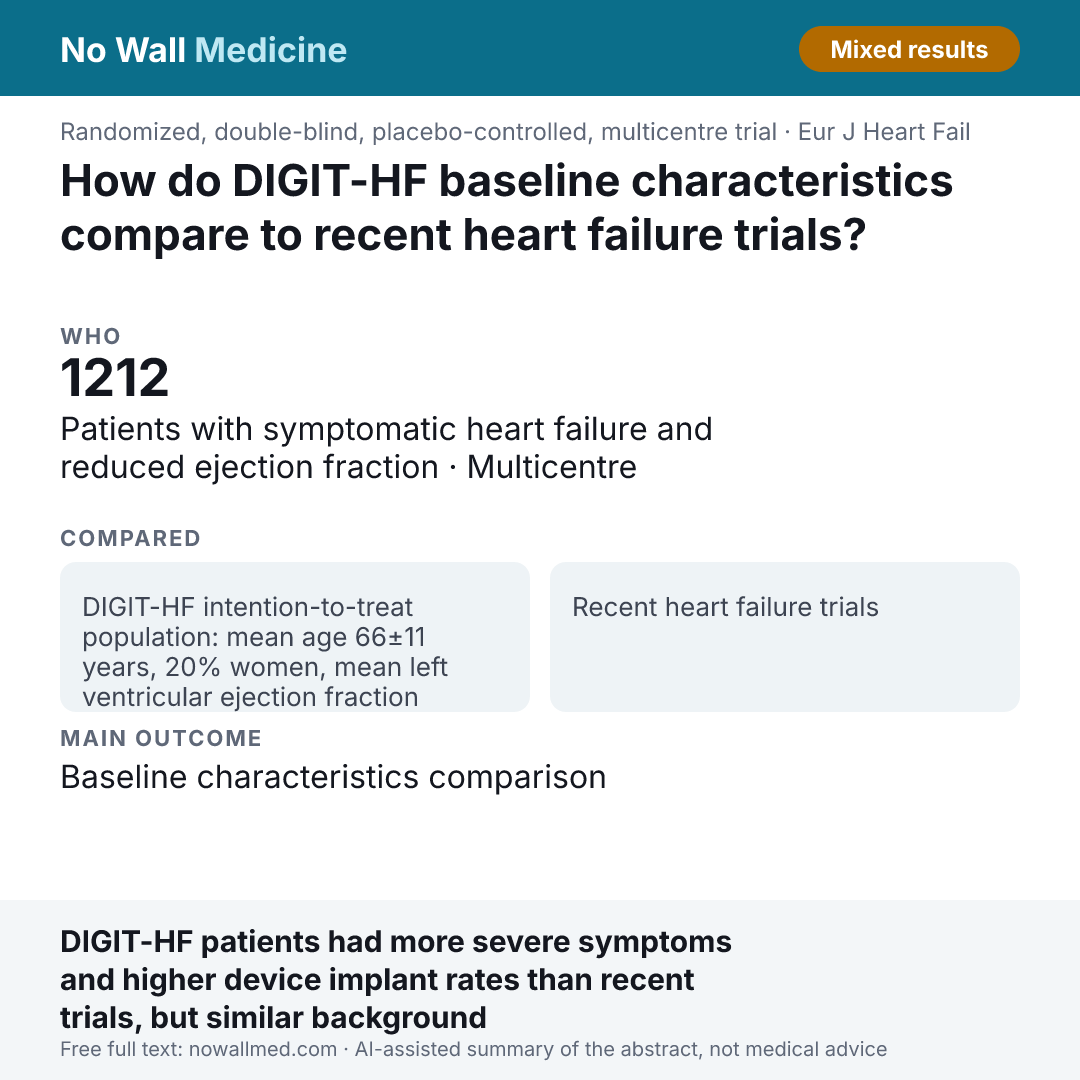
- Researchers compared 1212 patients in the DIGIT-HF trial, who had symptomatic heart failure with reduced ejection fraction, to participants in recent clinical trials.
- The DIGIT-HF group had higher rates of implantable cardioverter-defibrillator (64%) and cardiac resynchronization therapy (25%) devices compared to recent trials.
- While most baseline characteristics were similar, the DIGIT-HF population had a higher proportion of patients in New York Heart Association functional classes III and IV.
Why it matters: Researchers needed to characterize the baseline profile of the DIGIT-HF trial population to understand how they compare to participants in recent heart failure studies.
Discussion prompts
- Would these patients look like yours? Who was left out?
- Is the main outcome one that matters to patients?
- Is the difference large enough to change what you do?
Cite: Bavendiek U, Thomas NH, Berliner D, et al. DIGitoxin to Improve ouTcomes in patients with advanced chronic Heart Failure (DIGIT-HF): Baseline characteristics compared to recent randomized controlled heart failure trials. Eur J Heart Fail. 2025;27(7):1224-1233. doi:10.1002/ejhf.3679
Free full text: PubMed Central · Summary and visual abstract: nowallmed.com/a/digitoxin-to-improve-outcomes-in-patients-with-advanced-chronic-heart-pach16/ (AI-assisted from the abstract; check the paper before relying on it).