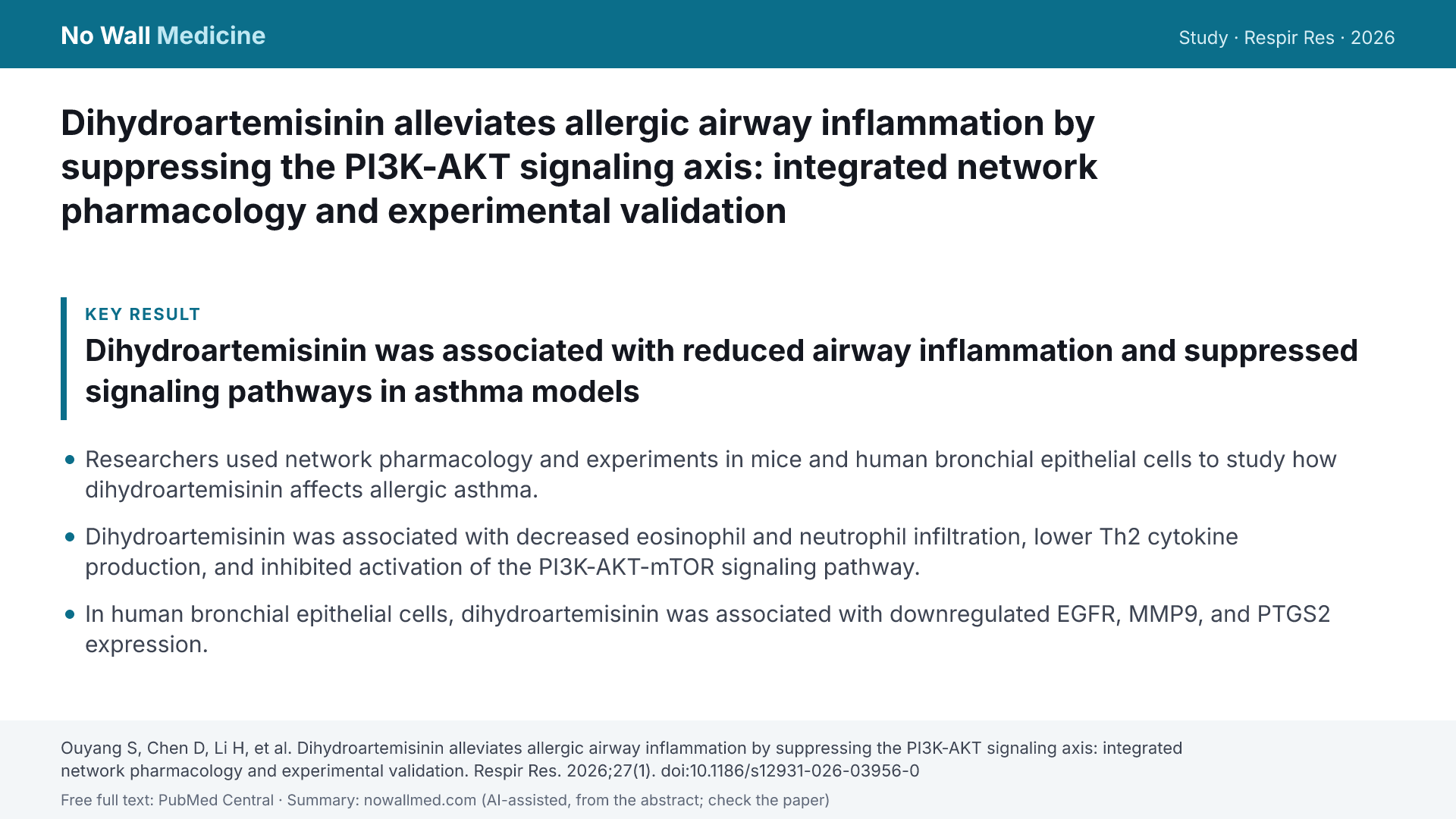
Dihydroartemisinin was associated with reduced airway inflammation and suppressed signaling pathways in asthma models
Dihydroartemisinin alleviates allergic airway inflammation by suppressing the PI3K-AKT signaling axis: integrated network pharmacology and experimental validation
Why it matters: The mechanistic role of dihydroartemisinin in allergic asthma remains incompletely defined.
Key points
- Researchers used network pharmacology and experiments in mice and human bronchial epithelial cells to study how dihydroartemisinin affects allergic asthma.
- Dihydroartemisinin was associated with decreased eosinophil and neutrophil infiltration, lower Th2 cytokine production, and inhibited activation of the PI3K-AKT-mTOR signaling pathway.
- In human bronchial epithelial cells, dihydroartemisinin was associated with downregulated EGFR, MMP9, and PTGS2 expression.
Headline and key points written with AI from the paper’s abstract, with every number checked against it. Read the paper before relying on them.
Was this summary helpful?
Subject terms
Headline, design, result, key points, caveat and citation as plain text.
Cite this article
Ouyang S, Chen D, Li H, et al. Dihydroartemisinin alleviates allergic airway inflammation by suppressing the PI3K-AKT signaling axis: integrated network pharmacology and experimental validation. Respir Res. 2026;27(1). doi:10.1186/s12931-026-03956-0
Spotted a mistake? Suggest a correction