Using sublingual microcirculation measurements in shock patients did not change 30-day mortality rates
Direct assessment of microcirculation in shock: a randomized-controlled multicenter study
Randomized, prospective clinical multicenter trialNo clear difference
Does integrating sublingual microcirculatory perfusion variables in therapy reduce 30-day mortality in shock patients?
Who
141
Patients with shock and arterial lactate above two millimoles per liter · Multicenter intensive care unit
Compared
34.7%Intervention group
47.1%Routine care group
Main outcome
30-day mortality
Result: hazard ratio 1.54 (95% confidence interval 0.90-2.66)
Bottom line: Integrating sublingual microcirculatory perfusion variables into therapy plans did not improve 30-day mortality in patients with shock.
Intensive Care Med · 2023-06-06Download image
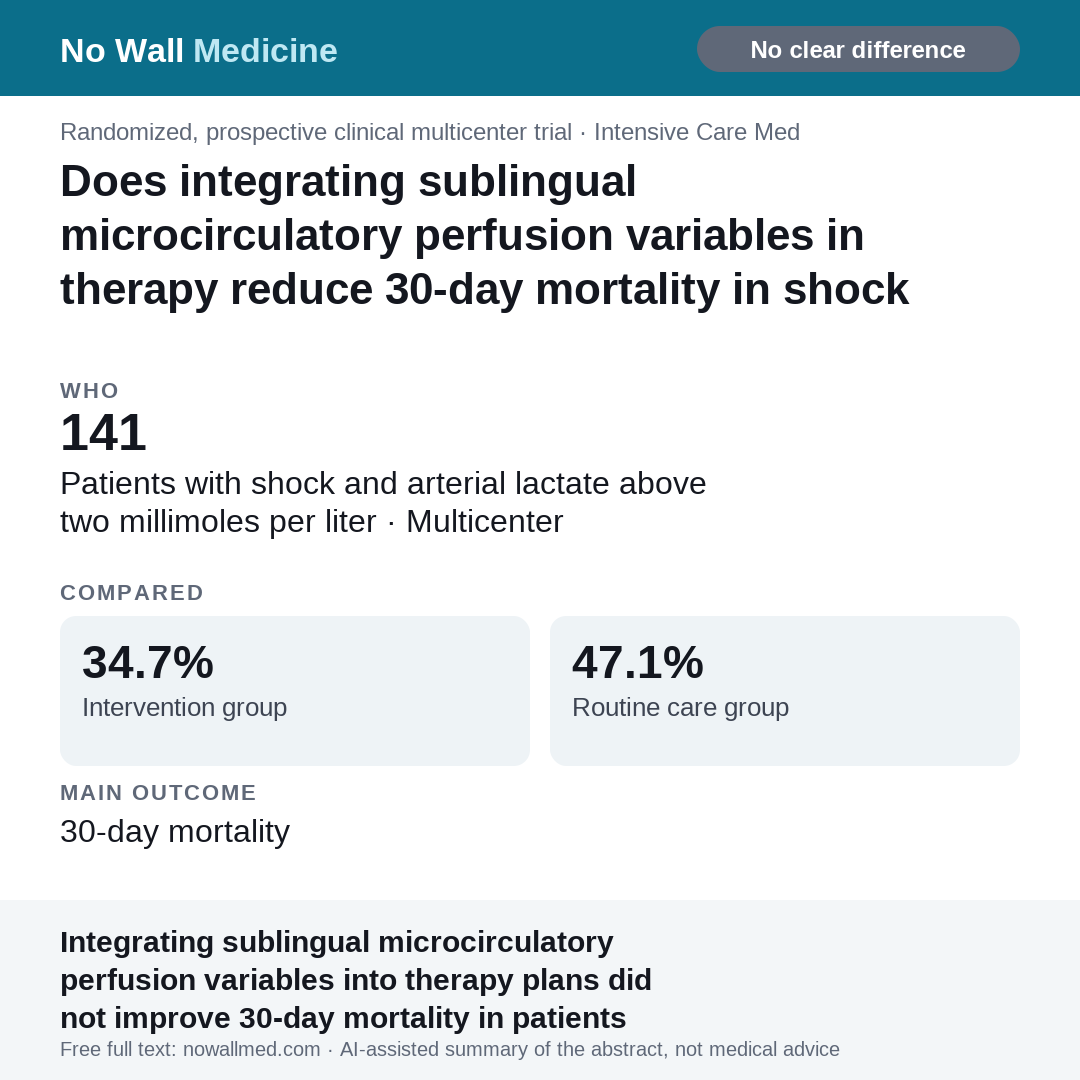
Clinical question: Does integrating sublingual microcirculatory perfusion variables in therapy reduce 30-day mortality in shock patients?
Why it matters: It was unknown if using a video microscope to measure blood flow in small vessels under the tongue could reduce mortality in patients with shock.
Key points
- Researchers studied 141 patients with cardiogenic, post cardiac surgery, or septic shock who were randomized to receive routine care or integrated sublingual microcirculation measurements.
- The intervention group had more frequent adjustments to fluids or vasoactive drugs compared to routine care at 66.7% versus 41.8% (p = 0.009).
- There was no significant difference in 30-day mortality between the intervention group (47.1%) and the routine care group (34.7%) (p = 0.118).
Headline and key points written with AI from the paper’s abstract, with every number checked against it. Read the paper before relying on them.
Was this summary helpful?
Subject terms
Cite this article
Bruno RR, Wollborn J, Fengler K, Flick M, Wunder C, Allgäuer S. Direct assessment of microcirculation in shock: a randomized-controlled multicenter study. Intensive Care Med. 2023. doi:10.1007/s00134-023-07098-5
Spotted a mistake? Suggest a correction
Top studies every Monday
The week’s key trials and guidelines in your specialties, plus any topics you follow. By email, free.
Get the weekly digest