Dual antiplatelet therapy reduces recurrent stroke risk in minor stroke patients regardless of disability
Disabling Neurologic Deficits and Antiplatelet Therapy in Acute Minor Stroke
Randomized trial analysisBenefit found
Does disabling neurologic deficit affect antiplatelet therapy efficacy in minor stroke?
Who
3725
Patients with minor stroke
Compared
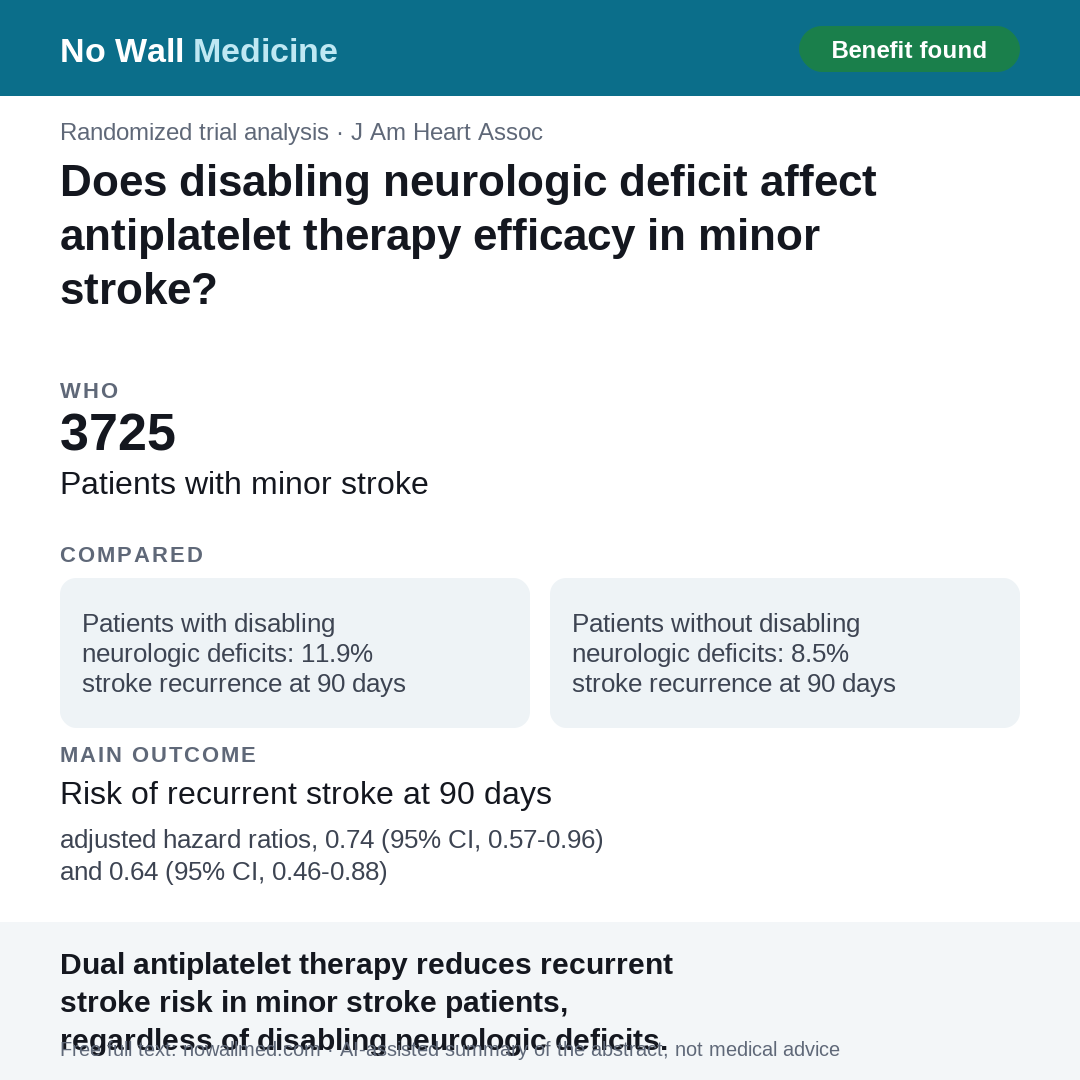
Patients with disabling neurologic deficits: 11.9% stroke recurrence at 90 days
Patients without disabling neurologic deficits: 8.5% stroke recurrence at 90 days
Main outcome
Risk of recurrent stroke at 90 days
Result: adjusted hazard ratios, 0.74 (95% CI, 0.57-0.96) and 0.64 (95% CI, 0.46-0.88)
Bottom line: Dual antiplatelet therapy reduces recurrent stroke risk in minor stroke patients, regardless of disabling neurologic deficits.
J Am Heart Assoc · 2025-04-07Download image
Clinical question: Does disabling neurologic deficit affect antiplatelet therapy efficacy in minor stroke?
Why it matters: It was unclear how disabling neurologic deficits, or significant physical impairments, affect clinical outcomes and the effectiveness of antiplatelet therapy in minor stroke.
Key points
- Researchers analyzed 3725 patients with minor stroke, comparing those with disabling neurologic deficits to those without.
- Patients with disabling neurologic deficits had a higher 90-day stroke recurrence risk of 11.9% compared to 8.5% for those without.
- Dual antiplatelet therapy with clopidogrel and aspirin was associated with a lower risk of recurrent stroke than aspirin alone in both groups.
Headline and key points written with AI from the paper’s abstract, with every number checked against it. Read the paper before relying on them.
Was this summary helpful?
Subject terms
Cite this article
Han C, Yang M, Pan Y, Li H, Liu L, Meng X. Disabling Neurologic Deficits and Antiplatelet Therapy in Acute Minor Stroke. J Am Heart Assoc. 2025. doi:10.1161/JAHA.122.029734
Spotted a mistake? Suggest a correction
Top studies every Monday
The week’s key trials and guidelines in your specialties, plus any topics you follow. By email, free.
Get the weekly digest