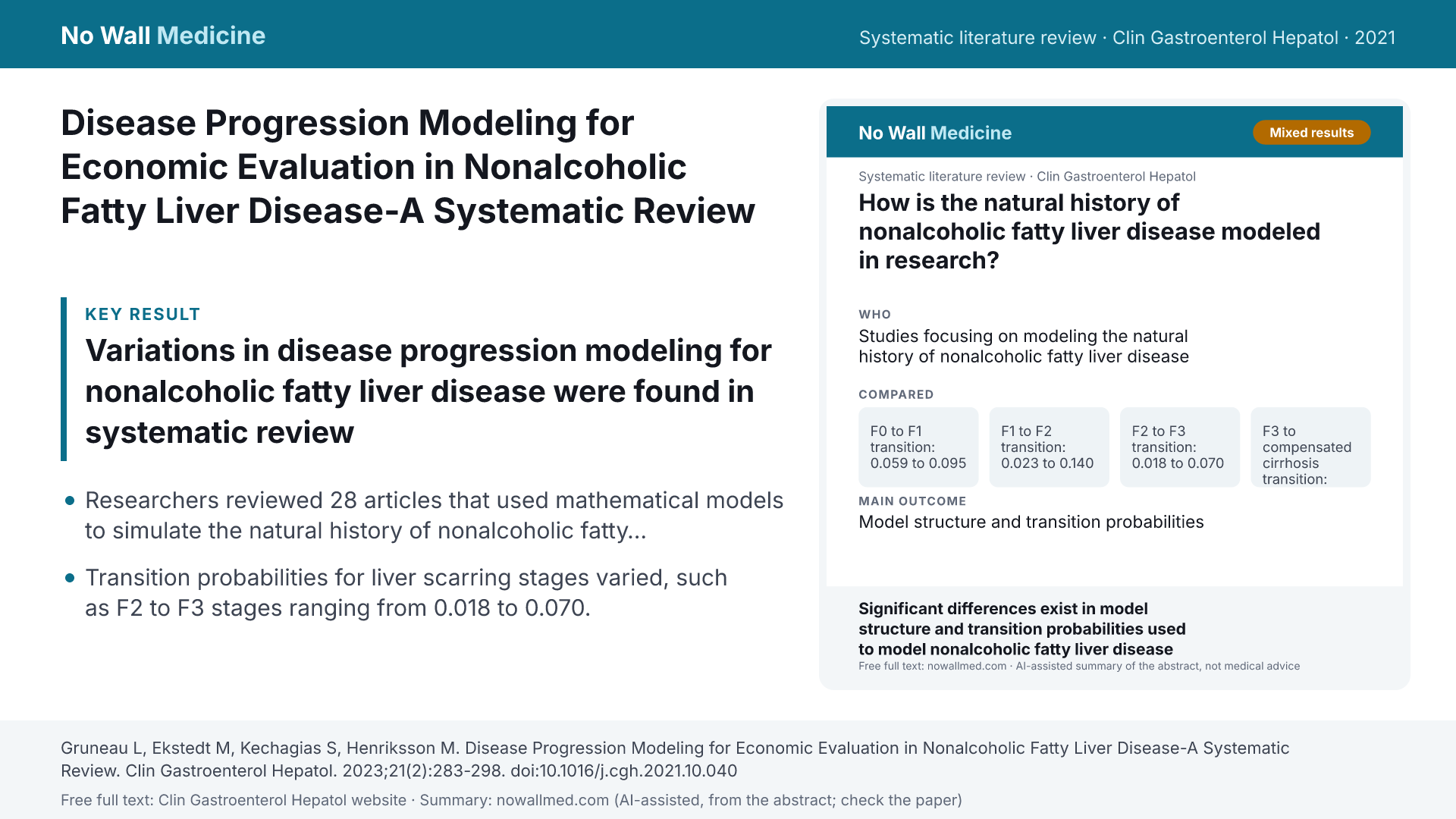
Disease Progression Modeling for Economic Evaluation in Nonalcoholic Fatty Liver Disease-A Systematic Review
Key result: Variations in disease progression modeling for nonalcoholic fatty liver disease were found in systematic review
Key points
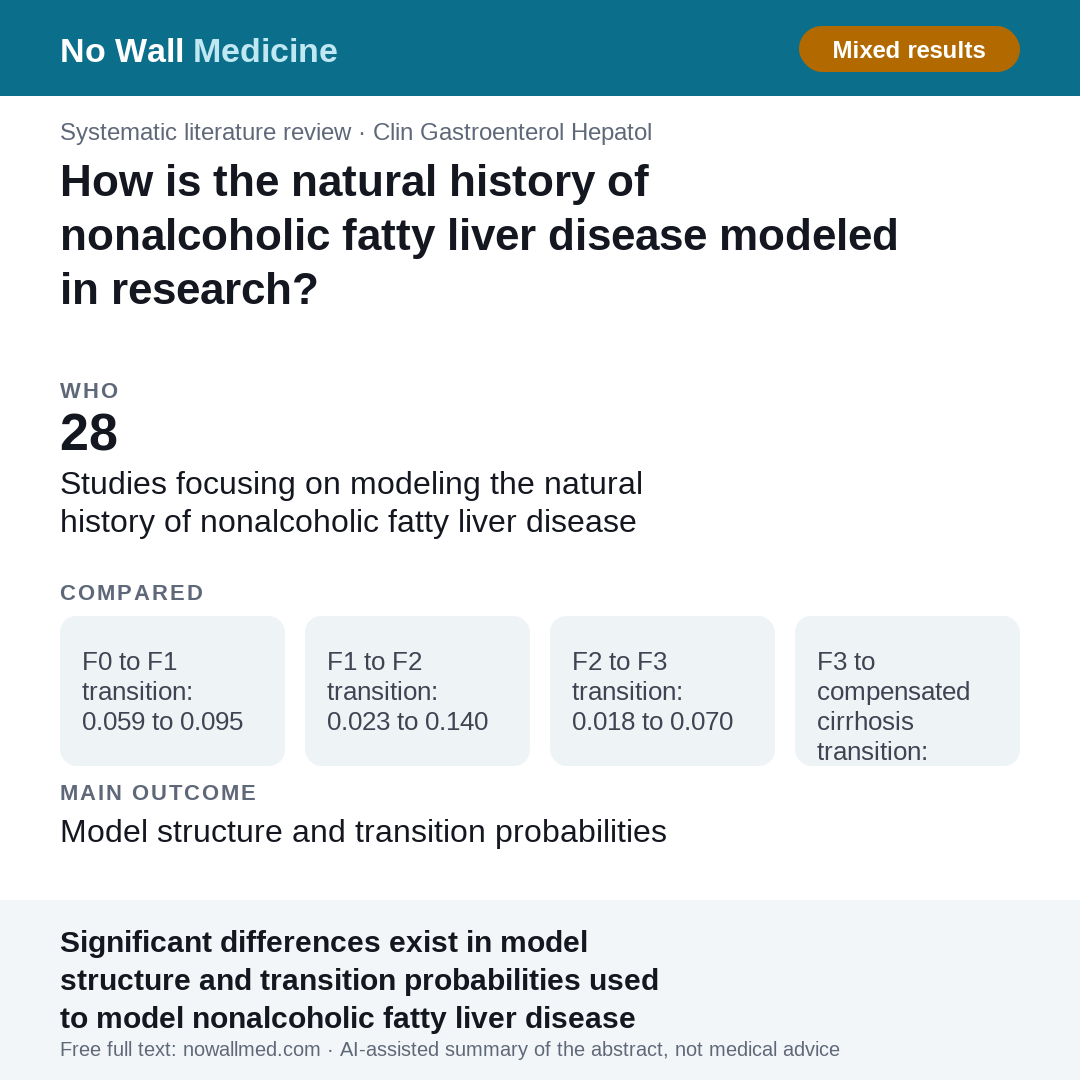
- Researchers reviewed 28 articles that used mathematical models to simulate the natural history of nonalcoholic fatty liver disease.
- Transition probabilities for liver scarring stages varied, such as F2 to F3 stages ranging from 0.018 to 0.070.
- Studies showed differences in model structure, data inputs, and how they defined nonalcoholic steatohepatitis or advanced liver disease.
Why it matters: The approach to modeling the natural history of nonalcoholic fatty liver disease differs across contemporary research, which may impact economic evaluations of new treatments.
Discussion prompts
- Would these patients look like yours? Who was left out?
- Is the main outcome one that matters to patients?
- Is the difference large enough to change what you do?
Cite: Gruneau L, Ekstedt M, Kechagias S, Henriksson M. Disease Progression Modeling for Economic Evaluation in Nonalcoholic Fatty Liver Disease-A Systematic Review. Clin Gastroenterol Hepatol. 2021. doi:10.1016/j.cgh.2021.10.040
Free full text: Clin Gastroenterol Hepatol website · Summary and visual abstract: nowallmed.com/a/disease-progression-modeling-for-economic-evaluation-in-nonalcoholic-gk5nw3/ (AI-assisted from the abstract; check the paper before relying on it).