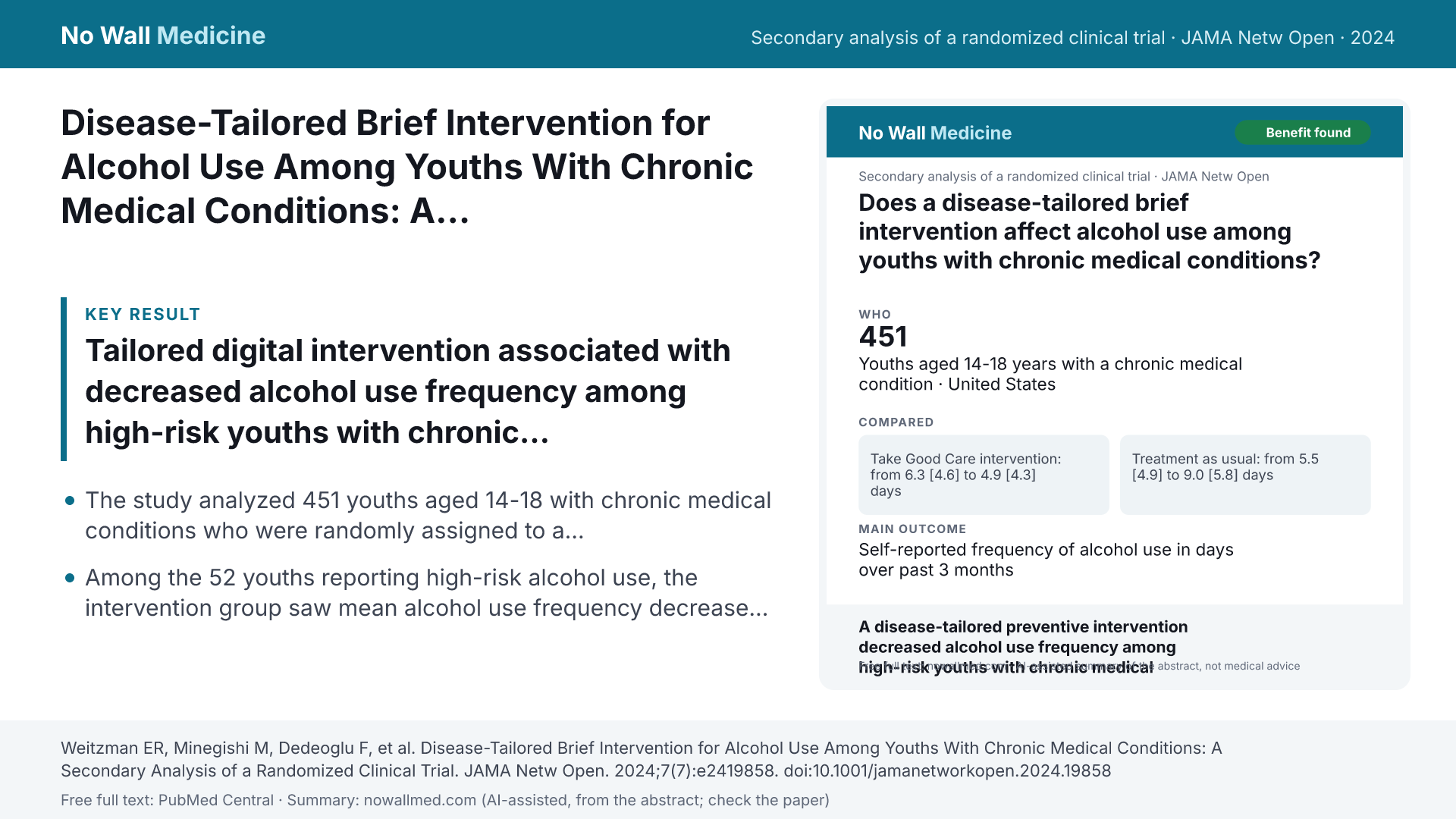
Tailored digital intervention associated with decreased alcohol use frequency among high-risk youths with chronic medical conditions
Disease-Tailored Brief Intervention for Alcohol Use Among Youths With Chronic Medical Conditions: A Secondary Analysis of a Randomized Clinical Trial
Secondary analysis of a randomized clinical trialBenefit found
Does a disease-tailored brief intervention affect alcohol use among youths with chronic medical conditions?
Who
451
Youths aged 14-18 years with a chronic medical condition · United States
Compared
Take Good Care intervention: from 6.3 [4.6] to 4.9 [4.3] days
Treatment as usual: from 5.5 [4.9] to 9.0 [5.8] days
Main outcome
Self-reported frequency of alcohol use in days over past 3 months
Result: adjusted relative rate ratio 0.60 (95% CI, 0.38 to 0.94)
Bottom line: A disease-tailored preventive intervention decreased alcohol use frequency among high-risk youths with chronic medical conditions.
JAMA Netw Open · 2024-07-01 · Save PNG
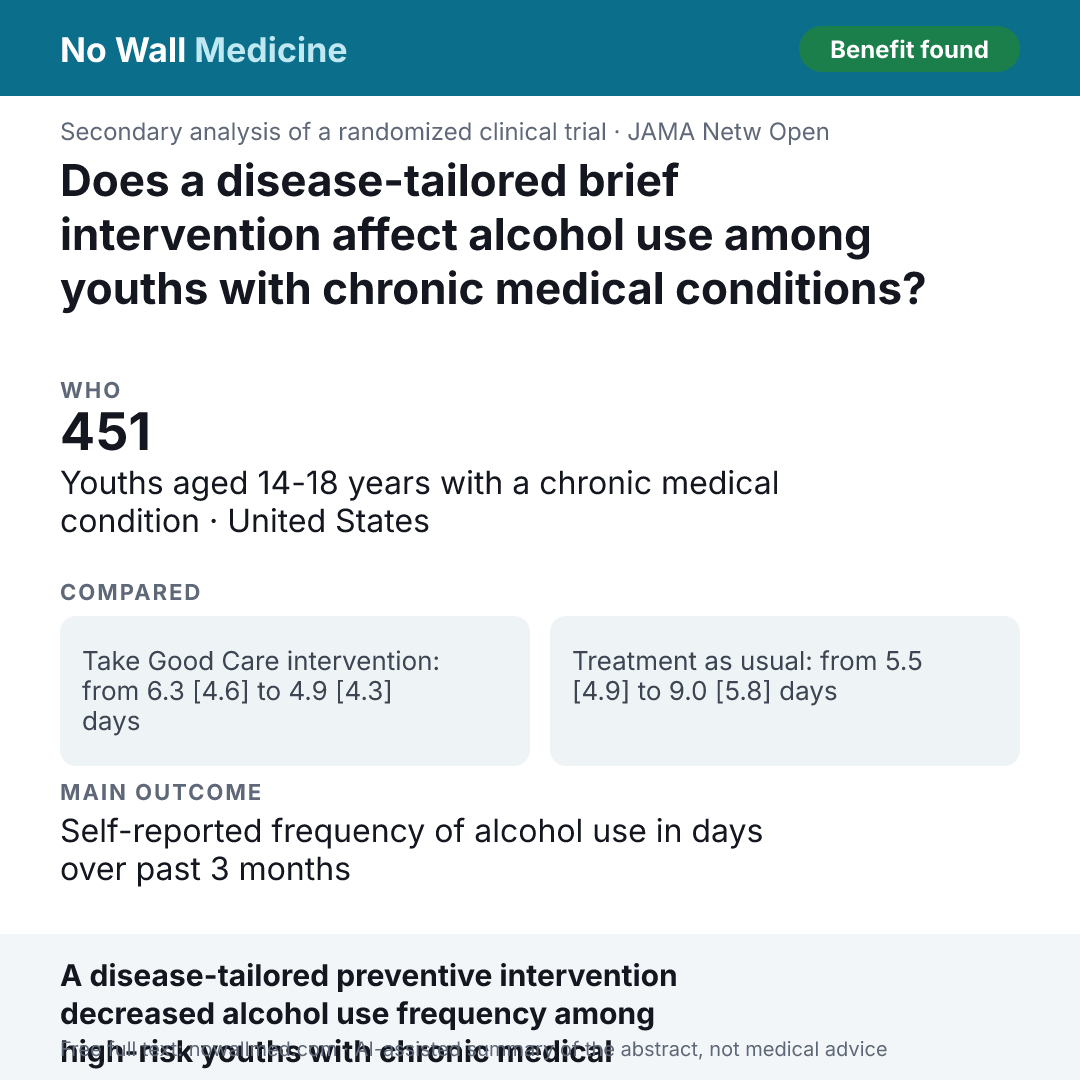
Clinical question: Does a disease-tailored brief intervention affect alcohol use among youths with chronic medical conditions?
Why it matters: Preventive interventions for youths with chronic medical conditions are scarce and lack evidence regarding longer-term effects based on their specific level of alcohol use risk.
Key points
- The study analyzed 451 youths aged 14-18 with chronic medical conditions who were randomly assigned to a tablet-based intervention or treatment as usual.
- Among the 52 youths reporting high-risk alcohol use, the intervention group saw mean alcohol use frequency decrease from 6.3 to 4.9 days, while the treatment as usual group increased from 5.5 to 9.0 days.
- No group differences in alcohol use frequency were found among youths reporting no or low-risk alcohol use at baseline.
Headline and key points written with AI from the paper’s abstract, with every number checked against it. Read the paper before relying on them.
Was this summary helpful?
Subject terms
Headline, design, result, key points, caveat and citation as plain text.
Cite this article
Weitzman ER, Minegishi M, Dedeoglu F, et al. Disease-Tailored Brief Intervention for Alcohol Use Among Youths With Chronic Medical Conditions: A Secondary Analysis of a Randomized Clinical Trial. JAMA Netw Open. 2024;7(7):e2419858. doi:10.1001/jamanetworkopen.2024.19858
Spotted a mistake? Suggest a correction