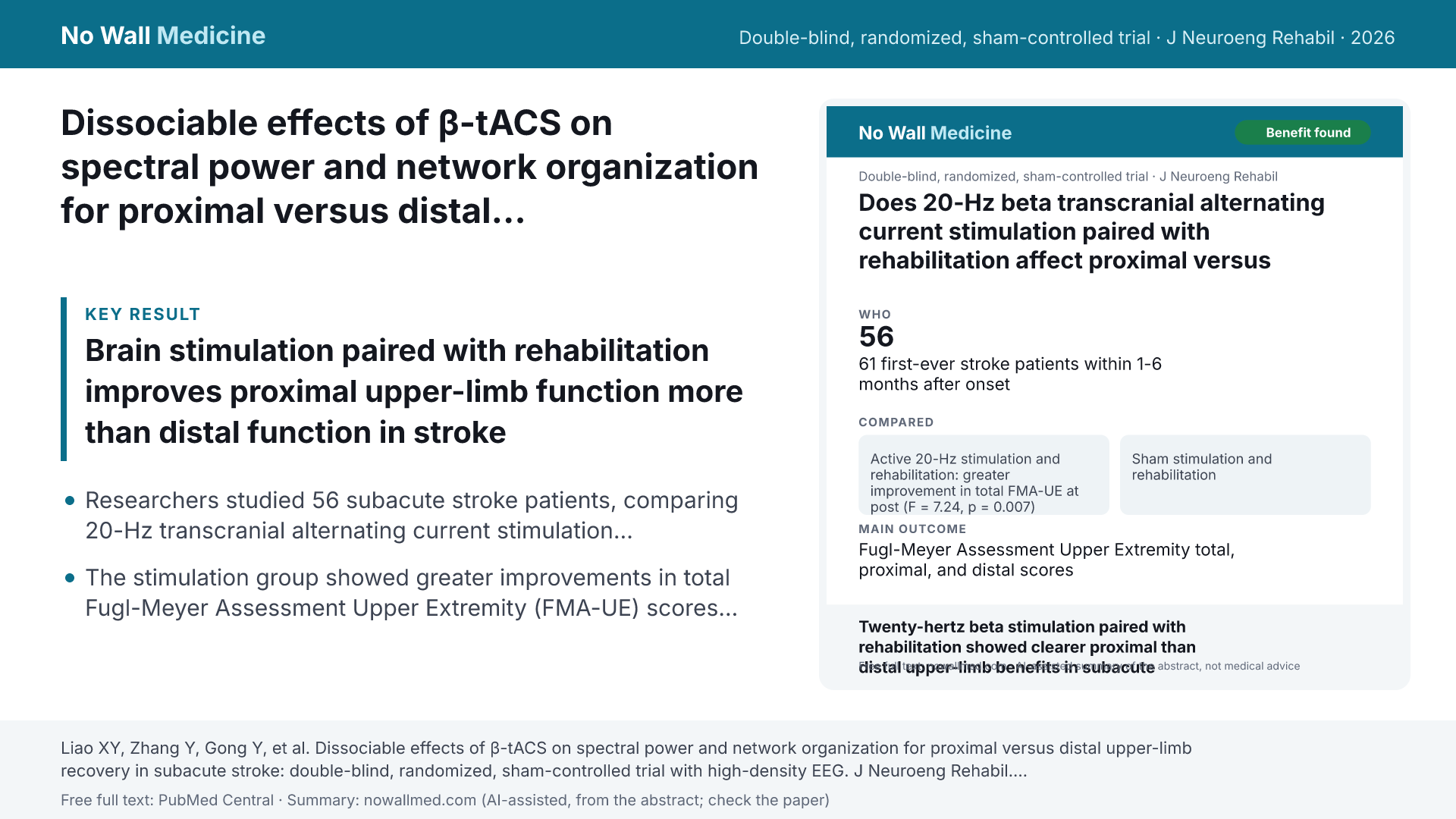
Brain stimulation paired with rehabilitation improves proximal upper-limb function more than distal function in stroke
Dissociable effects of β-tACS on spectral power and network organization for proximal versus distal upper-limb recovery in subacute stroke: double-blind, randomized, sham-controlled trial with high-density EEG
Double-blind, randomized, sham-controlled trialBenefit found
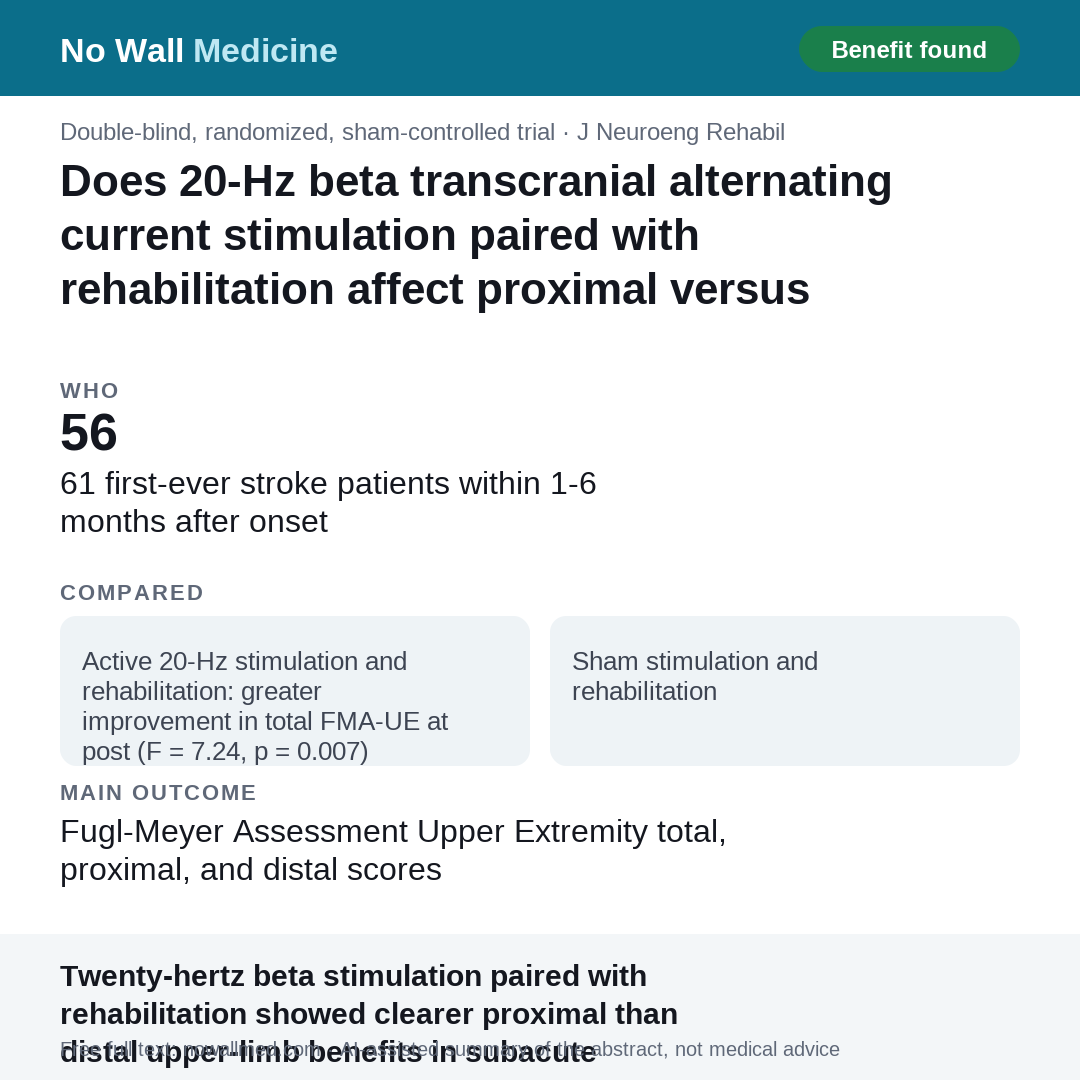
Does 20-Hz beta transcranial alternating current stimulation paired with rehabilitation affect proximal versus distal upper-limb recovery?
Who
56
61 first-ever stroke patients within 1-6 months after onset
Compared
Active 20-Hz stimulation and rehabilitation: greater improvement in total FMA-UE at post (F = 7.24, p = 0.007)
Sham stimulation and rehabilitation
Main outcome
Fugl-Meyer Assessment Upper Extremity total, proximal, and distal scores
Bottom line: Twenty-hertz beta stimulation paired with rehabilitation showed clearer proximal than distal upper-limb benefits in subacute stroke.
J Neuroeng Rehabil · 2026-06-16Download image
Clinical question: Does 20-Hz beta transcranial alternating current stimulation paired with rehabilitation affect proximal versus distal upper-limb recovery?
Why it matters: It is unclear if brain stimulation paired with rehabilitation affects proximal and distal upper-limb recovery differently in patients after a stroke.
Key points
- Researchers studied 56 subacute stroke patients, comparing 20-Hz transcranial alternating current stimulation (tACS) paired with rehabilitation against a sham stimulation group.
- The stimulation group showed greater improvements in total Fugl-Meyer Assessment Upper Extremity (FMA-UE) scores and proximal limb scores compared to the sham group.
- No significant difference was found between the groups regarding distal limb improvement, and no significant main effects for beta-band connectivity were observed.
Headline and key points written with AI from the paper’s abstract, with every number checked against it. Read the paper before relying on them.
Was this summary helpful?
Subject terms
Cite this article
Liao XY, Zhang Y, Gong Y, et al. Dissociable effects of β-tACS on spectral power and network organization for proximal versus distal upper-limb recovery in subacute stroke: double-blind, randomized, sham-controlled trial with high-density EEG. J Neuroeng Rehabil. 2026. doi:10.1186/s12984-026-02040-4
Spotted a mistake? Suggest a correction