Five distinct patterns of multiple health conditions were linked to different outcomes in heart failure patients
Distinct Comorbidity Clusters in Patients With Acute Heart Failure: Data From RELAX-AHF-2
Prospective randomized trial with latent class analysisMixed results
What are the multimorbidity subtypes and their associations with clinical outcomes in acute heart failure?
Who
6545
Patients with acute heart failure
Compared
Diabetes and chronic kidney disease: HR: 1.80; 95% CI: 1.50-2.20
Elderly/atrial fibrillation: HR: 1.42; 95% CI: 1.20-1.70
Metabolic: HR: 1.40; 95% CI: 1.20-1.80
Young: Reference
Main outcome
Composite clinical outcome and all-cause mortality
Bottom line: Five distinct comorbidity clusters exist, influencing clinical outcomes and treatment responses in acute heart failure patients.
JACC Heart Fail · 2024-07-03Download image
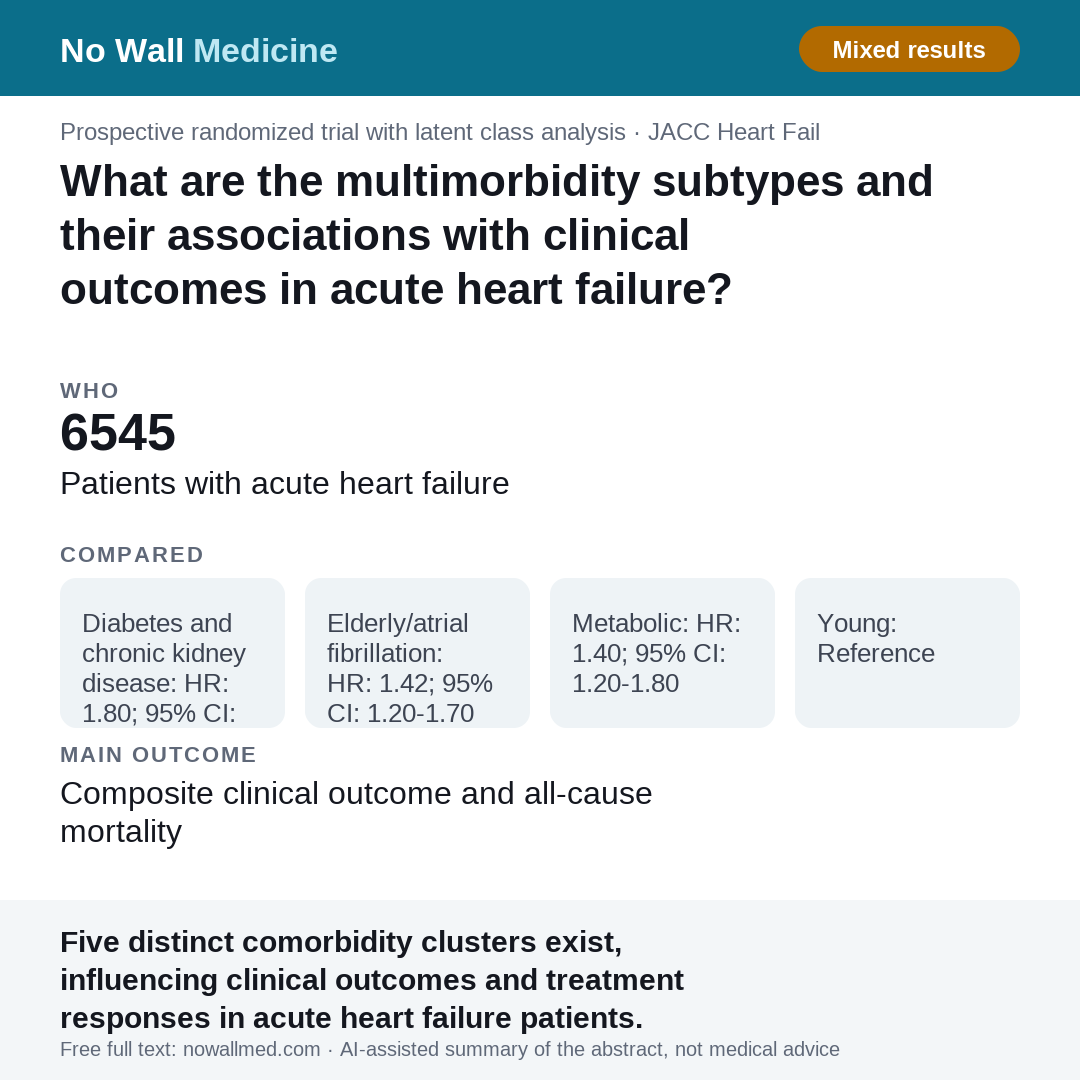
Clinical question: What are the multimorbidity subtypes and their associations with clinical outcomes in acute heart failure?
Why it matters: It was unknown how specific patterns of co-occurring health conditions, or multimorbidity, influence clinical outcomes and treatment responses in patients with acute heart failure.
Key points
- Researchers analyzed 6,545 patients from the RELAX-AHF-2 trial to identify patterns of co-occurring health conditions and their links to clinical outcomes.
- Patients in the diabetes and chronic kidney disease, elderly/atrial fibrillation, and metabolic groups had higher rates of composite outcomes compared to the young group.
- In the young group, treatment with serelaxin was associated with a lower risk for all-cause mortality with a hazard ratio of 0.59.
Headline and key points written with AI from the paper’s abstract, with every number checked against it. Read the paper before relying on them.
Was this summary helpful?
Subject terms
Cite this article
Gomez KA, Tromp J, Figarska SM, Beldhuis IE, Cotter G, Davison BA. Distinct Comorbidity Clusters in Patients With Acute Heart Failure: Data From RELAX-AHF-2. JACC Heart Fail. 2024. doi:10.1016/j.jchf.2024.04.028
Spotted a mistake? Suggest a correction
Top studies every Monday
The week’s key trials and guidelines in your specialties, plus any topics you follow. By email, free.
Get the weekly digest