Meta-analysis identifies widespread structural and functional brain changes associated with irritable bowel syndrome
Distributed structural and functional brain alterations associated with irritable bowel syndrome: a coordinate-based multimodal meta-analysis
Coordinate-based multimodal meta-analysisMixed results
What are the distributed structural and functional brain alterations associated with irritable bowel syndrome?
Who
Patients with irritable bowel syndrome compared to non-irritable bowel syndrome controls
Compared
Irritable bowel syndrome
Non-irritable bowel syndrome controls
Main outcome
Structural and functional brain alterations
Bottom line: Irritable bowel syndrome is associated with distributed structural and functional brain abnormalities in somatosensory, interoceptive, affective, and cognitive processing.
Transl Psychiatry · 2026-08-14Download image
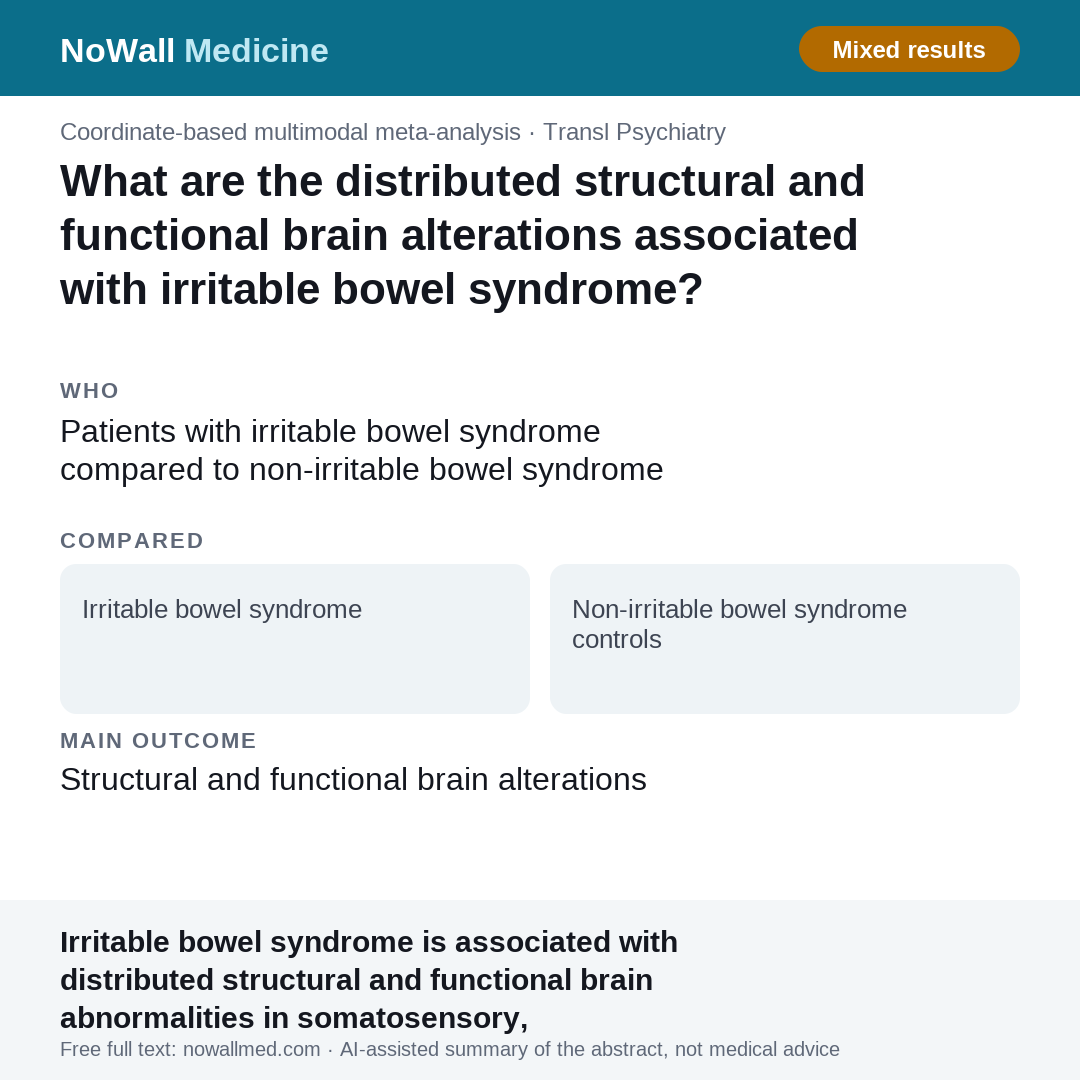
Clinical question: What are the distributed structural and functional brain alterations associated with irritable bowel syndrome?
Why it matters: Existing neuroimaging syntheses lack an integrated multimodal approach across different imaging paradigms to understand brain alterations in irritable bowel syndrome.
Key points
- Researchers meta-analysed multiple neuroimaging studies involving hundreds of subjects to compare brain structures and functions in people with irritable bowel syndrome against controls.
- The analysis found decreased grey matter in the medial thalamus and caudate, and altered functional connectivity in regions like the insula and inferior parietal lobule.
- Task-based imaging showed four clusters of brain activity changes spanning cortical and subcortical regions, including the amygdala and putamen.
Headline and key points written with AI from the paper’s abstract, with every number checked against it. Read the paper before relying on them.
Topics
Spotted a mistake? Suggest a correction
More in Psychiatry & Mental Health
Depressive symptoms linked to stronger defensive response in panic disorder patients
Defensive reactivity to interoceptive perturbation in panic disorder: Depressive symptom burden and panic severity dimensions
Genes linked to mitochondria implicated in psychiatric disorders
Brain-derived multi-omics prioritization of mitochondria-related genes in schizophrenia, bipolar disorder, and major depressive disorder
Brain structure variations linked to alcohol use severity in large studies
A reproducible structural brain axis of alcohol use severity
Most animal psychedelic studies use stress-inducing methods and brief testing
Animal models in psychedelic research - Tripping over translation