Paediatric early warning systems were associated with lower mortality and unplanned code rates in children
Do paediatric early warning systems reduce mortality and critical deterioration events among children? A systematic review and meta-analysis
Systematic review and meta-analysisBenefit found
Does implementing paediatric early warning systems reduce mortality and critical deterioration events?
Who
580,604
Children under 18 years old in inpatient units and emergency departments · Inpatient units and emergency departments
Compared
With Paediatric Early Warning Systems
Without Paediatric Early Warning Systems: increased risk (pooled RR 1.18, 95% CI 1.01-1.38, p = 0.036)
Main outcome
mortality, cardiopulmonary arrests, unplanned codes and critical deterioration events
Result: pooled RR 1.18 (95% CI 1.01-1.38)
Bottom line: Paediatric early warning systems were associated with reduced mortality and unplanned code rates in children.
Limitation: potential confounders and imprecision among included studies
Resusc Plus · 2022-06-29Download image
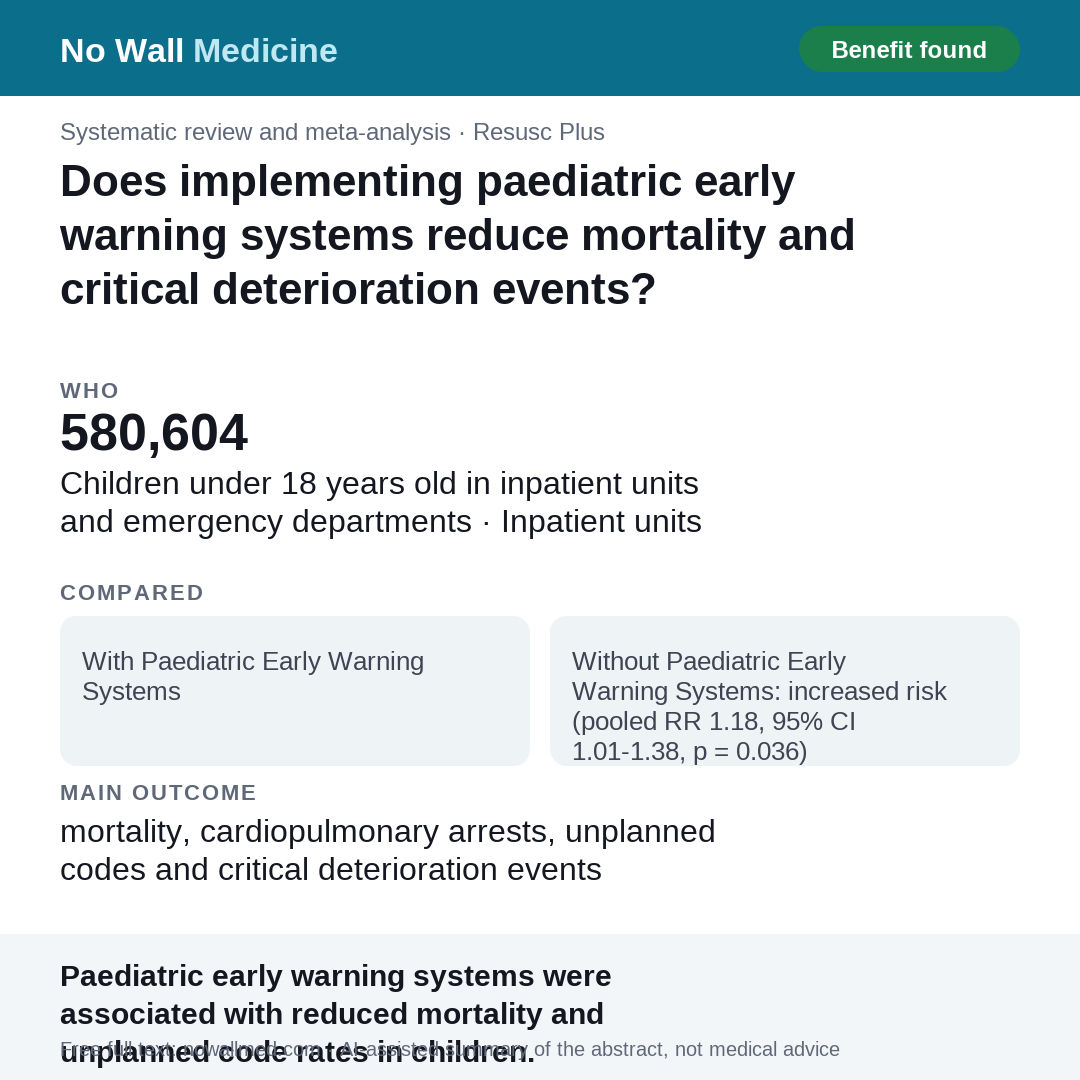
Clinical question: Does implementing paediatric early warning systems reduce mortality and critical deterioration events?
Why it matters: It was unknown if implementing paediatric early warning systems reduces mortality, cardiopulmonary arrests, unplanned codes, and critical deterioration events in hospital settings.
Key points
- Researchers analyzed 15 studies involving 580,604 hospital admissions to compare paediatric early warning systems against usual care.
- The use of these warning systems was associated with a lower risk of mortality (pooled RR 1.18, 95% CI 1.01-1.38, p = 0.036) and unplanned code events (pooled RR 1.73, 95% CI 1.01-2.96, p = 0.046).
- No differences were found in the rates of cardiopulmonary arrests or critical deterioration events between the groups.
Limitation the authors note: The findings were limited by potential confounders and imprecision among the included studies.
Headline and key points written with AI from the paper’s abstract, with every number checked against it. Read the paper before relying on them.
Was this summary helpful?
Cite this article
Chong SL, Goh MSL, Ong GY, Acworth J, Sultana R, Yao SHW. Do paediatric early warning systems reduce mortality and critical deterioration events among children? A systematic review and meta-analysis. Resusc Plus. 2022. doi:10.1016/j.resplu.2022.100262
Spotted a mistake? Suggest a correction
Top studies every Monday
The week’s key trials and guidelines in your specialties, plus any topics you follow. By email, free.
Get the weekly digest