Electrical stimulation therapy shows no consistent effect on synkinesis in facial paralysis patients
Does Electrical Stimulation Therapy Influence Synkinesis in Facial Paralysis? A Systematic Review
Systematic reviewMixed results
Does electrical stimulation therapy influence synkinesis in facial paralysis?
Who
243
Patients with facial paralysis
Compared
Electrical stimulation
Control
Main outcome
Incidence or severity of synkinesis
Bottom line: Electrical stimulation may benefit overall facial function without significant additional risk of synkinesis, though evidence remains inconsistent.
OTO Open · 2026-04-14Download image
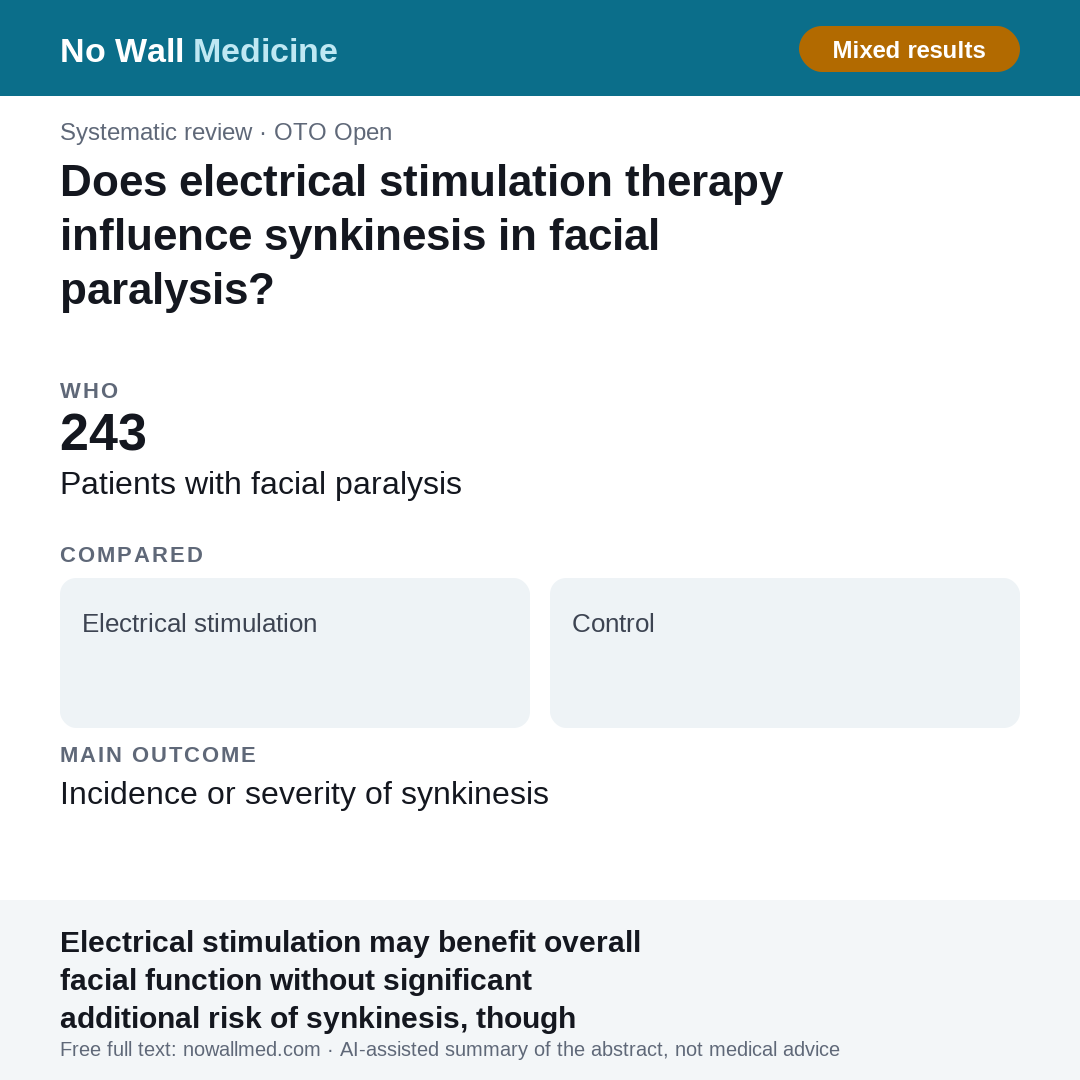
Clinical question: Does electrical stimulation therapy influence synkinesis in facial paralysis?
Why it matters: The role of electrical stimulation in facial paralysis is controversial due to concerns that it might increase the risk of synkinesis.
Key points
- Researchers reviewed 6 studies involving 243 patients to evaluate how electrical stimulation affects synkinesis, which is the involuntary movement of facial muscles.
- Three of five studies reported no differences in synkinesis scores between electrical stimulation and control groups, while two studies found no difference in synkinesis incidence.
- Bell's palsy was the most common cause of facial paralysis in the reviewed studies at 76.5%.
Headline and key points written with AI from the paper’s abstract, with every number checked against it. Read the paper before relying on them.
Cite this article
Eberly HW, Aziz M, Lorenz FJ, Schopper HK, Lighthall JG. Does Electrical Stimulation Therapy Influence Synkinesis in Facial Paralysis? A Systematic Review. OTO Open. 2026. doi:10.1002/oto2.70231
Spotted a mistake? Suggest a correction