Baseline depressive symptoms and diabetes distress were not linked to future glycemic control
Does Emotional Distress Predict Worse Glycemic Control Over Time? Results From the Glycemia Reduction Approaches in Diabetes: A Comparative Effectiveness Study (GRADE)
Randomized controlled trial substudyNo clear difference
Do baseline depressive symptoms and diabetes distress predict worse glycemic control over time?
Who
1739
Individuals with type 2 diabetes mellitus
Compared
Depressive symptoms
Diabetes distress
Main outcome
HbA1c value ≥7% and HbA1c value >7.5%
Bottom line: Baseline emotional distress was not associated with glycemic control over time in individuals with diabetes of relatively short duration.
Diabetes Care · 2024-01-22Download image
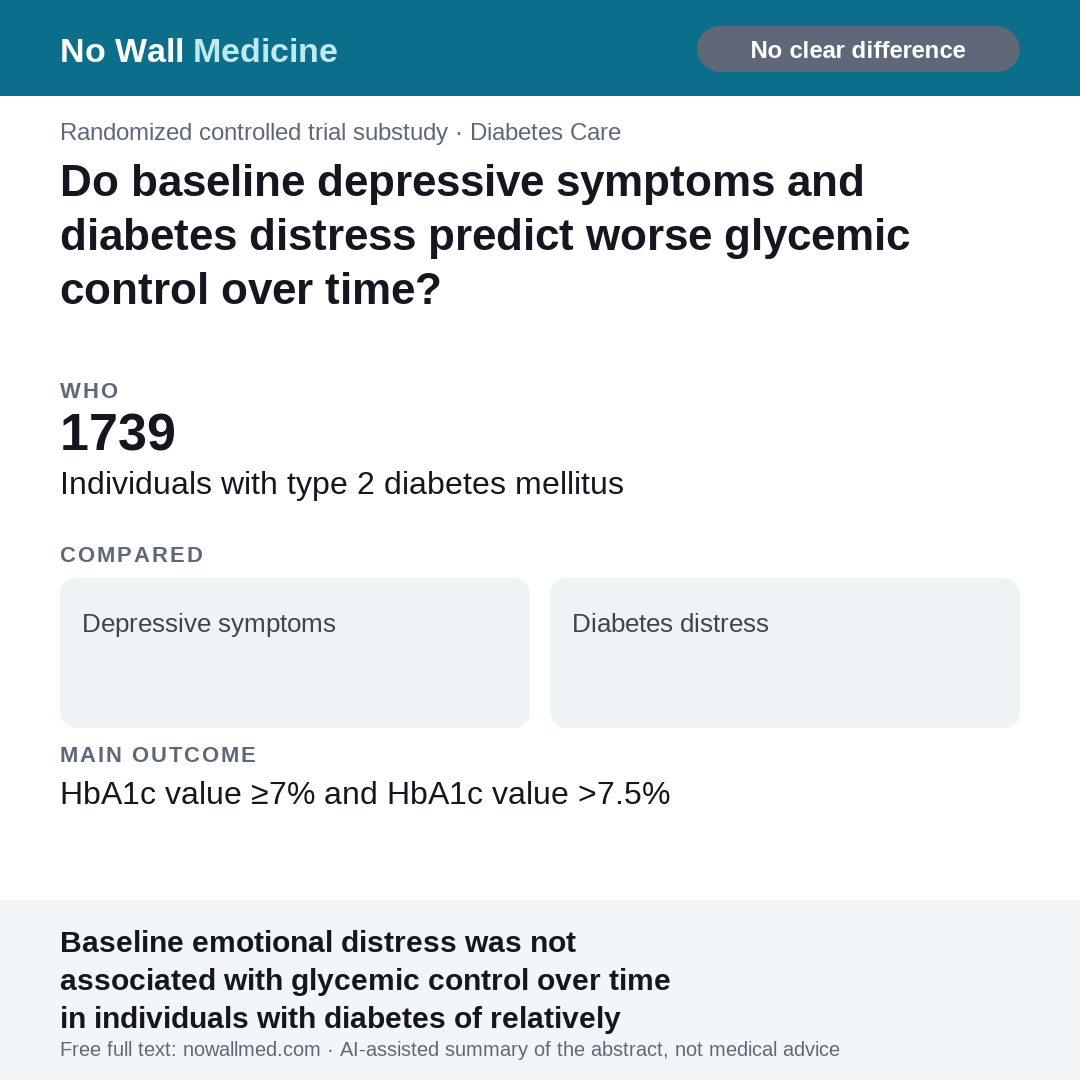
Clinical question: Do baseline depressive symptoms and diabetes distress predict worse glycemic control over time?
Why it matters: It was unknown if baseline levels of depressive symptoms and diabetes-specific distress are associated with future glycemic control in people with type 2 diabetes.
Key points
- Researchers studied 1,739 participants with type 2 diabetes, including 56% non-Hispanic White, 18% non-Hispanic Black, and 17% Hispanic individuals.
- Baseline levels of depressive symptoms and diabetes distress were not associated with the risk of reaching an HbA1c (average blood sugar) of ≥7% or >7.5%.
- The participants had a mean age of 58.0 years and a mean diabetes duration of 4.2 years.
Headline and key points written with AI from the paper’s abstract, with every number checked against it. Read the paper before relying on them.
Was this summary helpful?
Subject terms
Cite this article
Cherrington AL, Bebu I, Krause-Steinrauf H, Hoogendoorn CJ, Crespo-Ramos G, Presley C. Does Emotional Distress Predict Worse Glycemic Control Over Time? Results From the Glycemia Reduction Approaches in Diabetes: A Comparative Effectiveness Study (GRADE). Diabetes Care. 2024. doi:10.2337/dc23-0642
Spotted a mistake? Suggest a correction
Top studies every Monday
The week’s key trials and guidelines in your specialties, plus any topics you follow. By email, free.
Get the weekly digest