Hormone replacement therapy and oral contraceptive pills were associated with lower glioma risk in females
Does exogenous hormonal therapy affect the risk of glioma among females: A systematic review and meta-analysis
Systematic review and meta-analysisKey finding
Does exogenous hormone replacement therapy and oral contraceptive pills affect glioma risk in females?
Who
Females
Compared
Hormone replacement therapy: OR = 0.78 (95% CI 0.66-0.91)
Oral contraceptive pills: OR = 0.80 (95% CI 0.67-0.96)
Main outcome
Risk of developing glioma
Bottom line: Sustained hormone replacement therapy and oral contraceptive pill use is associated with a reduced risk of glioma development.
Neurooncol Adv · 2023-12-23 · Save PNG
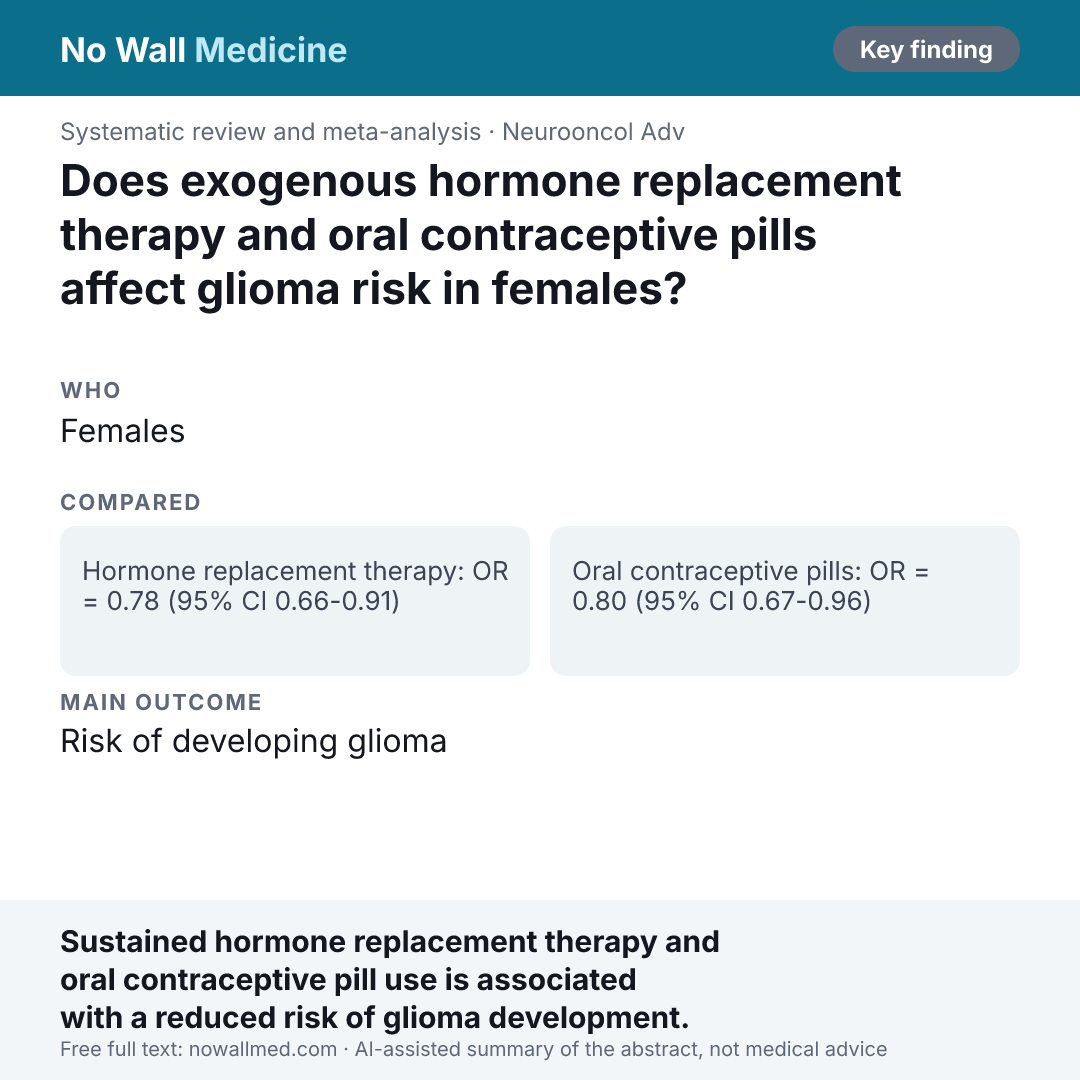
Clinical question: Does exogenous hormone replacement therapy and oral contraceptive pills affect glioma risk in females?
Key points
- Researchers performed a meta-analysis of various studies to evaluate the relationship between exogenous female hormones and the risk of glioma, a type of brain tumor.
- The use of hormone replacement therapy was associated with an odds ratio of 0.78 and oral contraceptive pills with an odds ratio of 0.80.
- For hormone replacement therapy used for more than 10 years, the odds ratio was 0.69, while oral contraceptive pills used for more than 10 years had an odds ratio of 0.58.
Headline and key points written with AI from the paper’s abstract, with every number checked against it. Read the paper before relying on them.
Was this summary helpful?
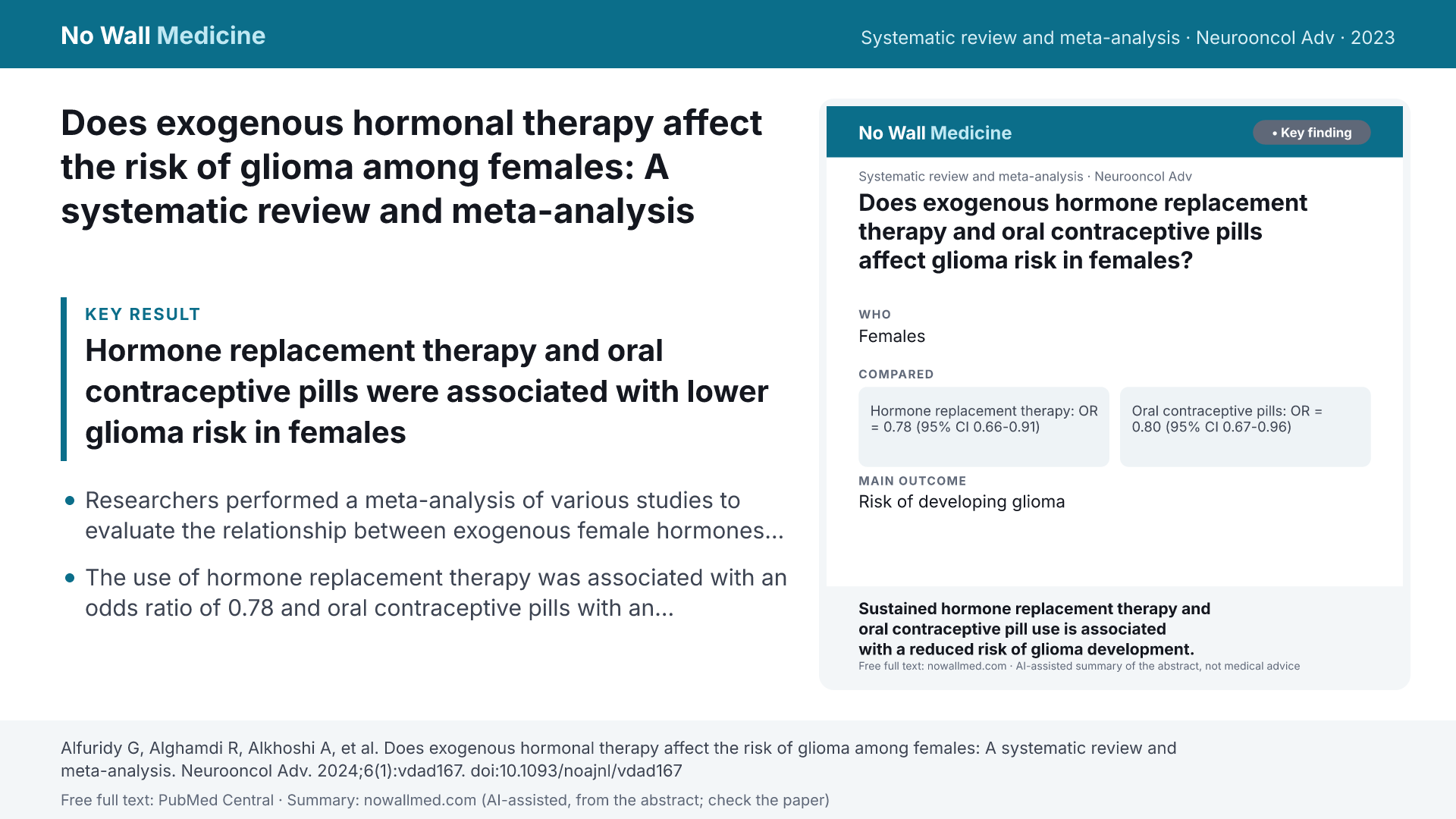
Headline, design, result, key points, caveat and citation as plain text.
Cite this article
Alfuridy G, Alghamdi R, Alkhoshi A, et al. Does exogenous hormonal therapy affect the risk of glioma among females: A systematic review and meta-analysis. Neurooncol Adv. 2024;6(1):vdad167. doi:10.1093/noajnl/vdad167
Spotted a mistake? Suggest a correction