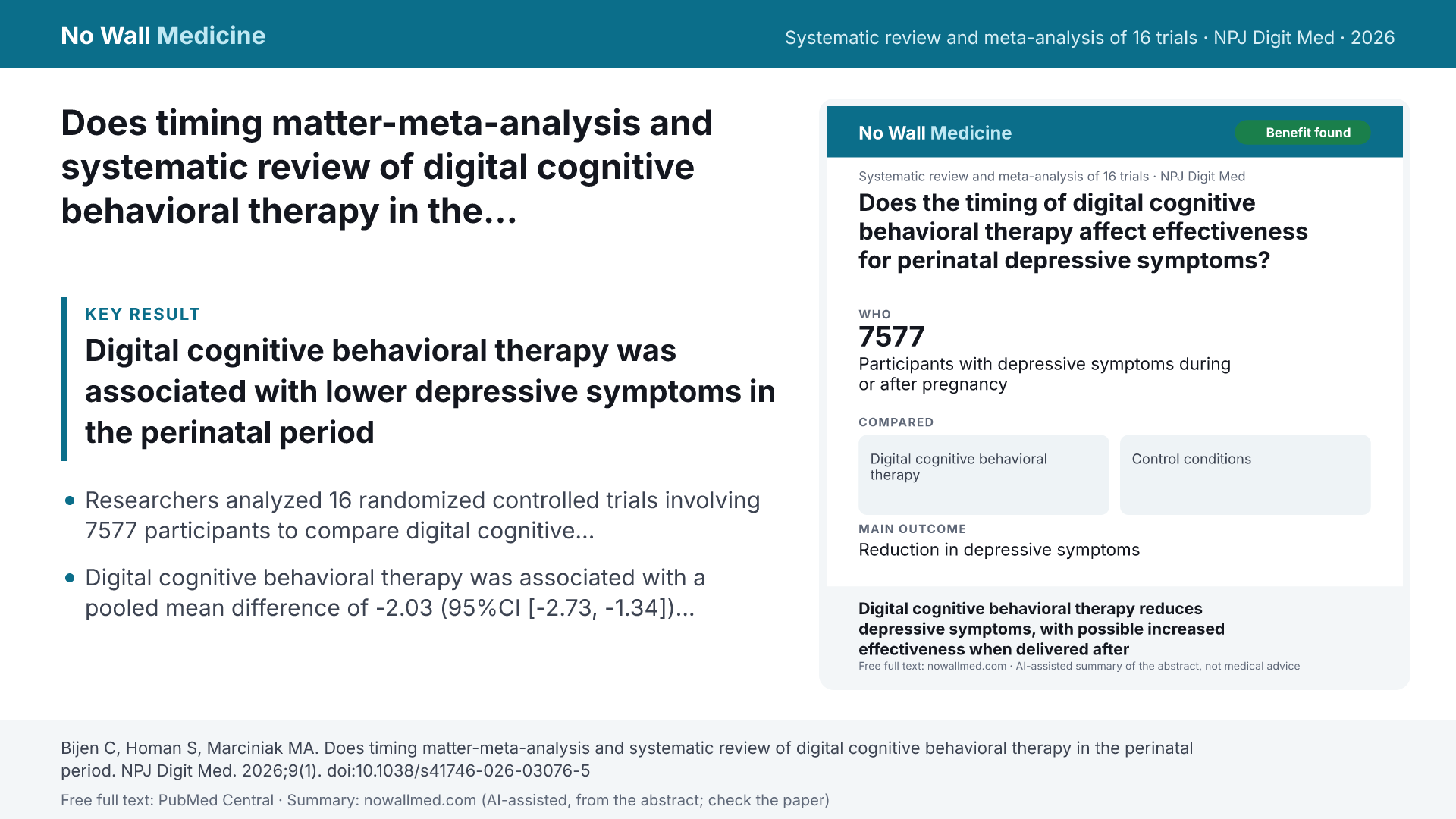
Digital cognitive behavioral therapy was associated with lower depressive symptoms in the perinatal period
Does timing matter-meta-analysis and systematic review of digital cognitive behavioral therapy in the perinatal period
Digital Health & AIAdult and pediatric
Systematic review and meta-analysis of 16 trialsBenefit found
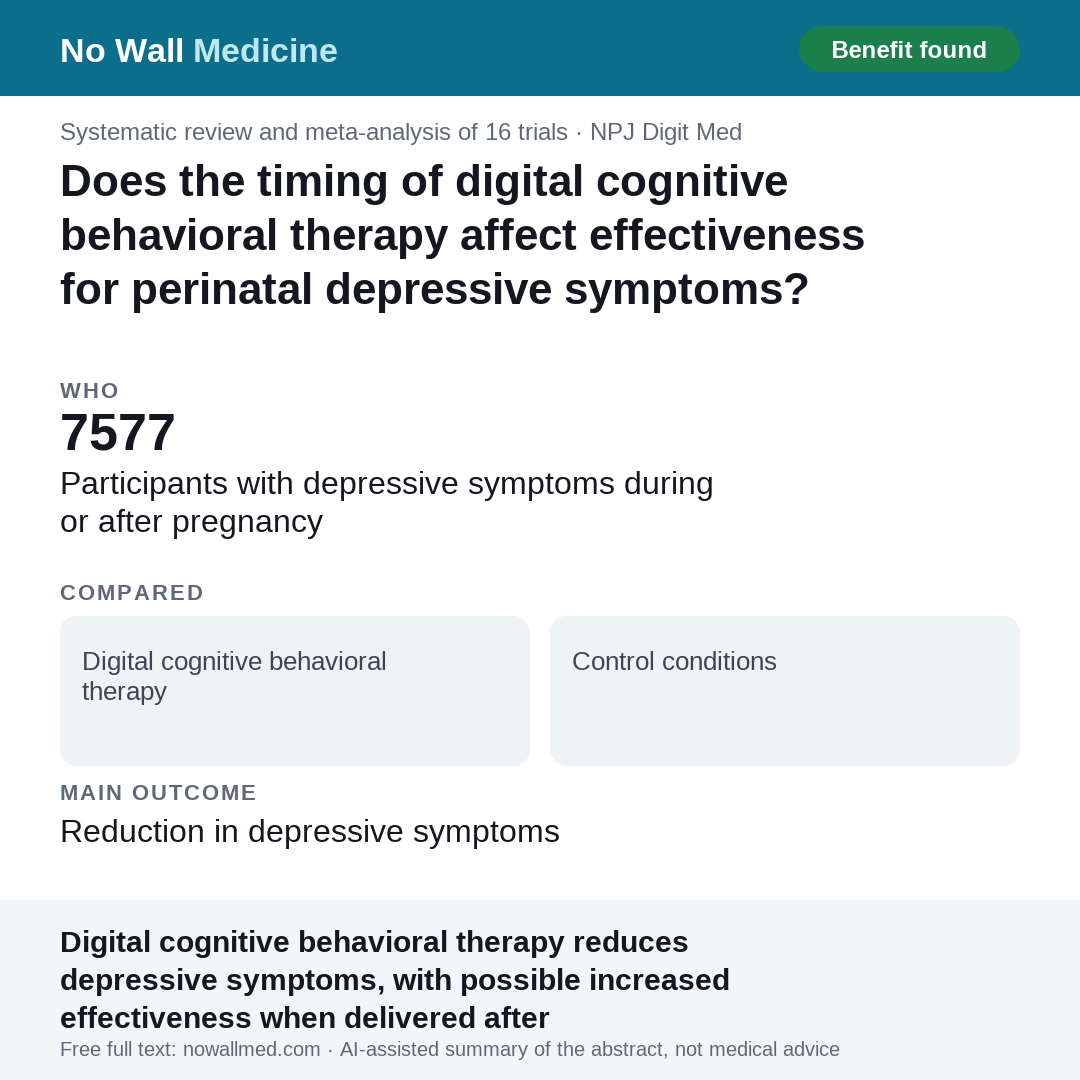
Does the timing of digital cognitive behavioral therapy affect effectiveness for perinatal depressive symptoms?
Who
7577
Participants with depressive symptoms during or after pregnancy
Compared
Digital cognitive behavioral therapy
Control conditions
Main outcome
Reduction in depressive symptoms
Result: pooled mean difference -2.03 (95%CI -2.73 to -1.34)
Bottom line: Digital cognitive behavioral therapy reduces depressive symptoms, with possible increased effectiveness when delivered after childbirth.
Limitation: Substantial heterogeneity was present and findings regarding timing were sensitive to one high-risk-of-bias study.
NPJ Digit Med · 2026-08-07Download image
Clinical question: Does the timing of digital cognitive behavioral therapy affect effectiveness for perinatal depressive symptoms?
Why it matters: It is unclear whether the effectiveness of digital cognitive behavioral therapy depends on whether it is delivered during pregnancy, after childbirth, or across both periods.
Key points
- Researchers analyzed 16 randomized controlled trials involving 7577 participants to compare digital cognitive behavioral therapy against control conditions.
- Digital cognitive behavioral therapy was associated with a pooled mean difference of -2.03 (95%CI [-2.73, -1.34]) in depressive symptoms.
- Interventions delivered after childbirth appeared more effective than those during pregnancy (b = -1.99, 95%CI [-3.90, -0.08], p = 0.04), though this became marginally non-significant in sensitivity analyses.
Limitation the authors note: The finding regarding timing became marginally non-significant in sensitivity analyses excluding one high-risk-of-bias study.
Headline and key points written with AI from the paper’s abstract, with every number checked against it. Read the paper before relying on them.
Was this summary helpful?
Cite this article
Bijen C, Homan S, Marciniak MA. Does timing matter-meta-analysis and systematic review of digital cognitive behavioral therapy in the perinatal period. NPJ Digit Med. 2026. doi:10.1038/s41746-026-03076-5
Spotted a mistake? Suggest a correction