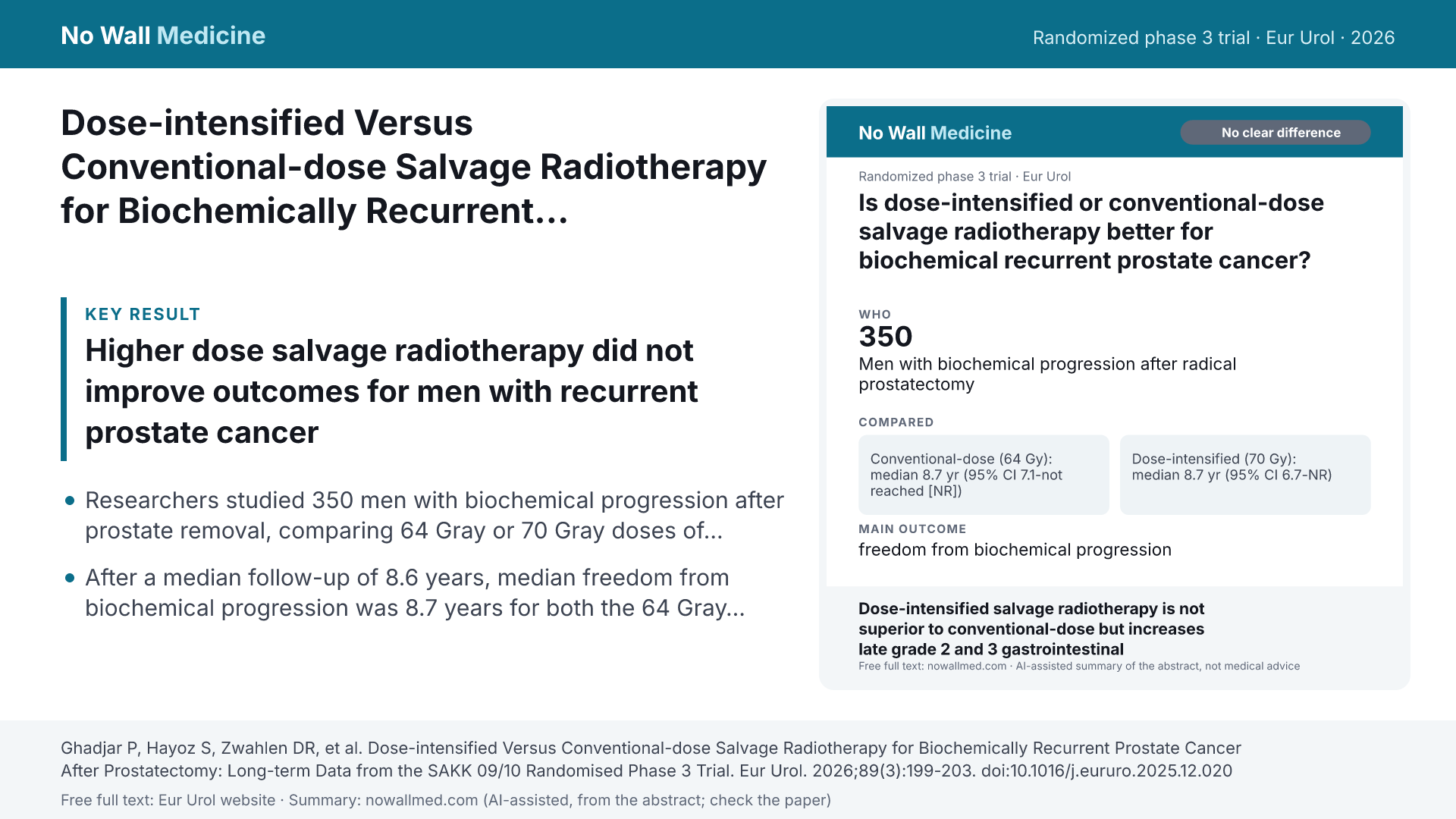
Higher dose salvage radiotherapy did not improve outcomes for men with recurrent prostate cancer
Dose-intensified Versus Conventional-dose Salvage Radiotherapy for Biochemically Recurrent Prostate Cancer After Prostatectomy: Long-term Data from the SAKK 09/10 Randomised Phase 3 Trial
Randomized phase 3 trialNo clear difference
Is dose-intensified or conventional-dose salvage radiotherapy better for biochemical recurrent prostate cancer?
Who
350
Men with biochemical progression after radical prostatectomy
Compared
Conventional-dose (64 Gy): median 8.7 yr (95% CI 7.1-not reached [NR])
Dose-intensified (70 Gy): median 8.7 yr (95% CI 6.7-NR)
Main outcome
freedom from biochemical progression
Result: hazard ratio 1.03 (95% CI 0.75-1.41)
Bottom line: Dose-intensified salvage radiotherapy is not superior to conventional-dose but increases late grade 2 and 3 gastrointestinal toxicity.
Eur Urol · 2026-01-05Download image
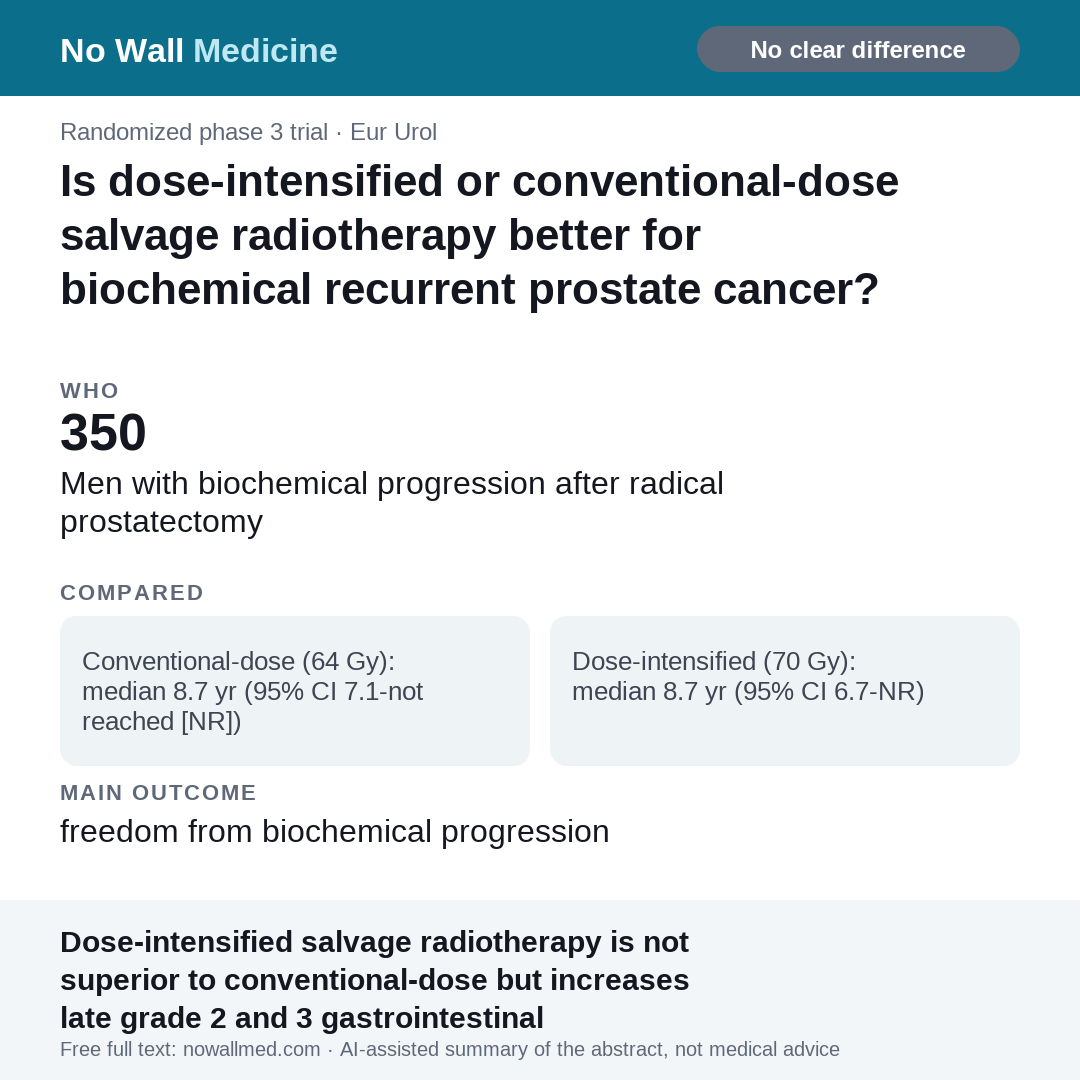
Clinical question: Is dose-intensified or conventional-dose salvage radiotherapy better for biochemical recurrent prostate cancer?
Why it matters: The optimal radiotherapy dose for patients with higher tumor marker levels after surgery for prostate cancer is unclear.
Key points
- Researchers studied 350 men with biochemical progression after prostate removal, comparing 64 Gray or 70 Gray doses of salvage radiotherapy.
- After a median follow-up of 8.6 years, median freedom from biochemical progression was 8.7 years for both the 64 Gray and 70 Gray groups.
- The 70 Gray dose was associated with more frequent late grade 2 and 3 gastrointestinal toxicity compared to the 64 Gray dose.
Headline and key points written with AI from the paper’s abstract, with every number checked against it. Read the paper before relying on them.
Was this summary helpful?
Subject terms
Cite this article
Ghadjar P, Hayoz S, Zwahlen DR, et al. Dose-intensified Versus Conventional-dose Salvage Radiotherapy for Biochemically Recurrent Prostate Cancer After Prostatectomy: Long-term Data from the SAKK 09/10 Randomised Phase 3 Trial. Eur Urol. 2026. doi:10.1016/j.eururo.2025.12.020
Spotted a mistake? Suggest a correction