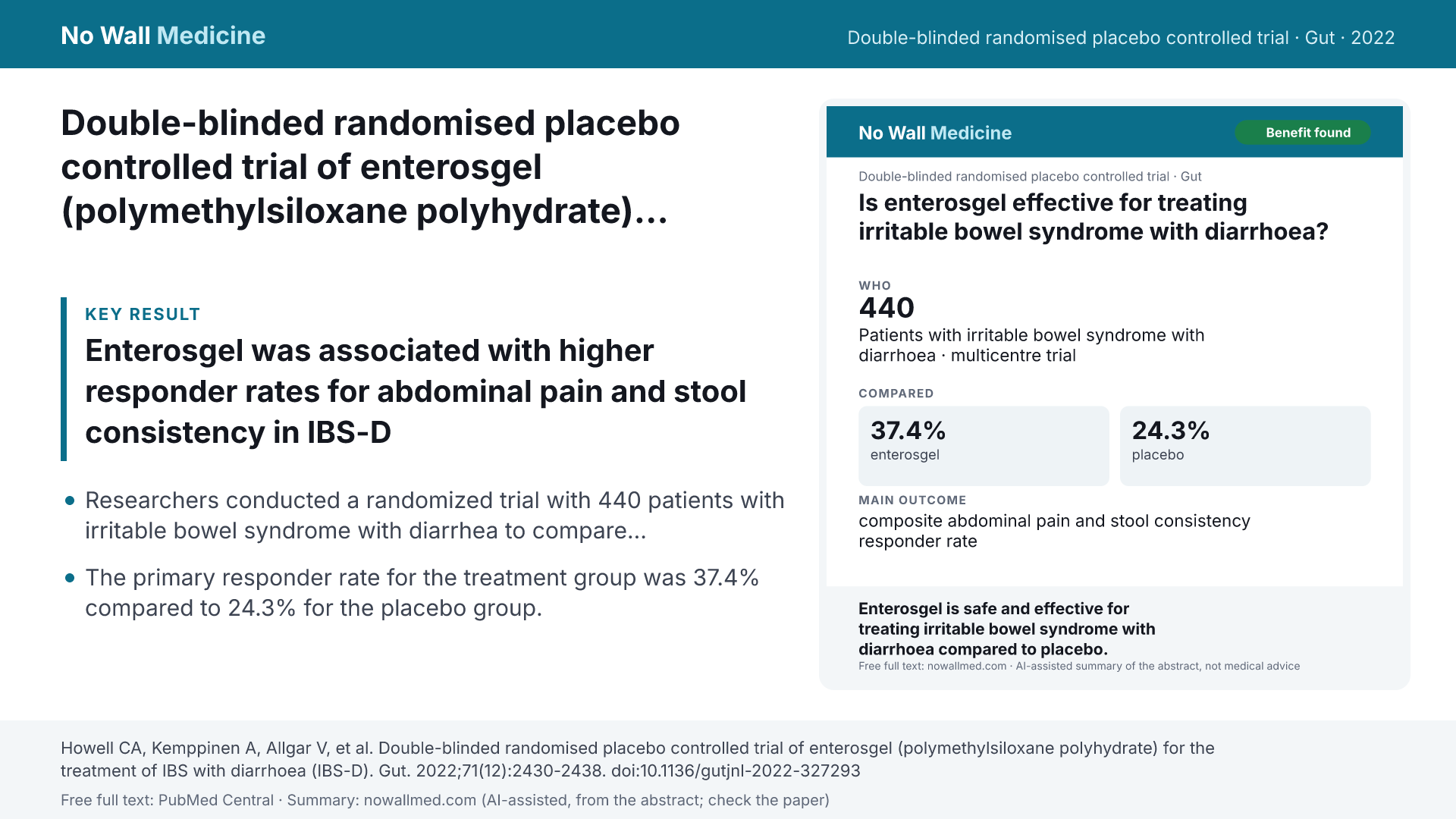
Enterosgel was associated with higher responder rates for abdominal pain and stool consistency in IBS-D
Double-blinded randomised placebo controlled trial of enterosgel (polymethylsiloxane polyhydrate) for the treatment of IBS with diarrhoea (IBS-D)
Double-blinded randomised placebo controlled trialBenefit found
Is enterosgel effective for treating irritable bowel syndrome with diarrhoea?
Who
440
Patients with irritable bowel syndrome with diarrhoea · multicentre trial
Compared
37.4%enterosgel
24.3%placebo
Main outcome
composite abdominal pain and stool consistency responder rate
Result: OR 1.95, NNT 8, p=0.002
Bottom line: Enterosgel is safe and effective for treating irritable bowel syndrome with diarrhoea compared to placebo.
Gut · 2022-06-27Download image
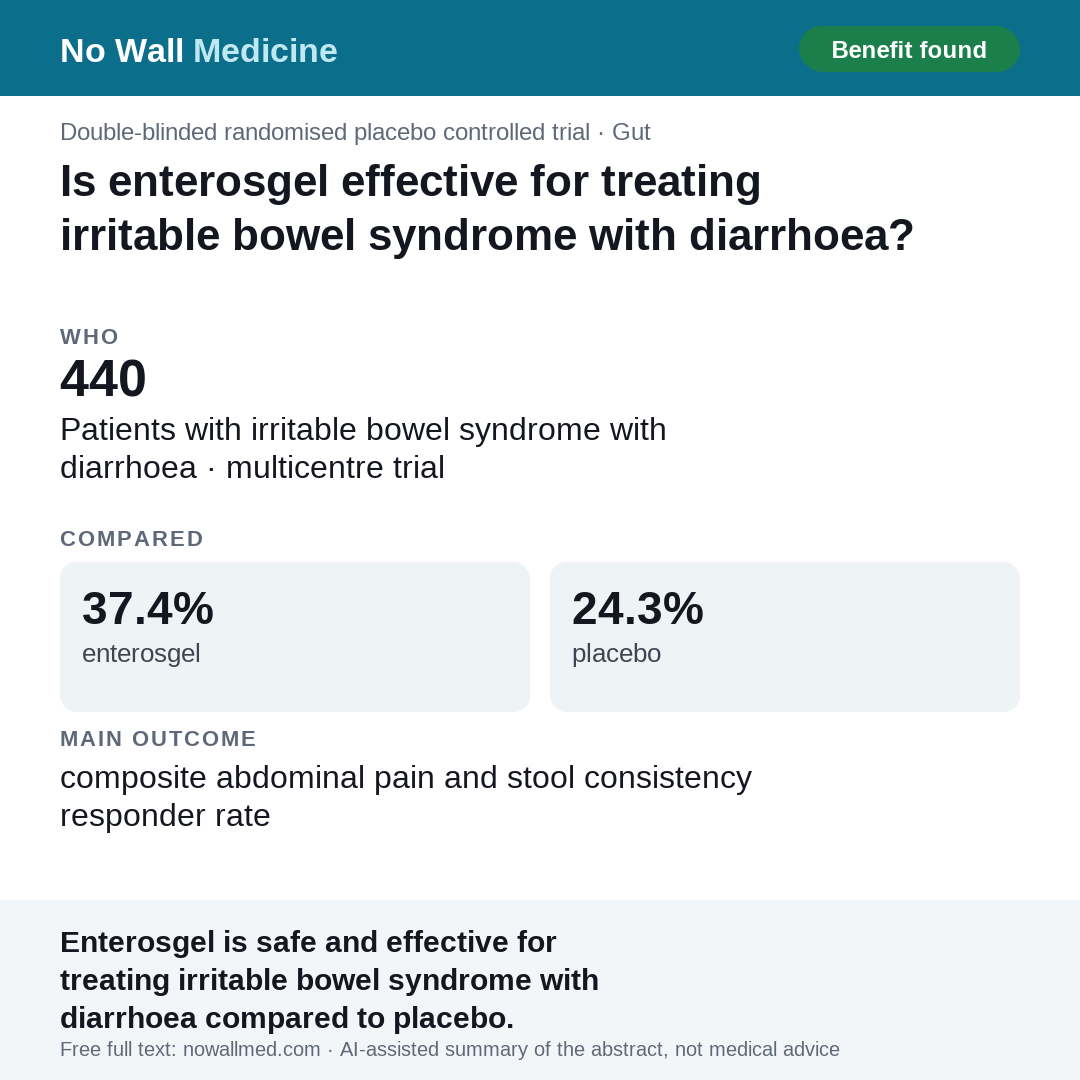
Clinical question: Is enterosgel effective for treating irritable bowel syndrome with diarrhoea?
Why it matters: Current treatment options for irritable bowel syndrome with diarrhea are limited, and the efficacy of the intestinal adsorbent enterosgel for this condition was unknown.
In absolute numbers
enterosgel: 37.4% · placebo: 24.3% → a difference of 13.1 percentage points, so about 8 people would need the treatment for 1 more to benefit (number needed to treat) over the trial’s follow-up.
Worked out by us from the two group results above, not reported by the authors. Check the paper for the exact outcome and timing.
Key points
- Researchers conducted a randomized trial with 440 patients with irritable bowel syndrome with diarrhea to compare the intestinal adsorbent enterosgel against a placebo.
- The primary responder rate for the treatment group was 37.4% compared to 24.3% for the placebo group.
- Enterosgel was associated with improved stool consistency at 48.5% versus 32.5% and improved abdominal pain at 53.3% versus 40.2%.
Headline and key points written with AI from the paper’s abstract, with every number checked against it. Read the paper before relying on them.
Was this summary helpful?
Abstract
Objective
Irritable bowel syndrome with diarrhoea (IBS-D) is a common and challenging condition that significantly reduces quality of life. Enterosgel (polymethylsiloxane polyhydrate) is an intestinal adsorbent which sequesters harmful molecules and is safe and effective in acute infective diarrhoea. This randomised controlled multicentre trial aimed to investigate its safety and efficacy in patients with IBS-D. Design
After a 2-week screening phase, participants were randomised into an 8-week double-blind phase, followed by an 8-week open-label and follow-up phase. Participants recorded stool consistency, pain and global symptoms in e-diaries and questionnaires. The primary outcome was the percentage of responders on a composite abdominal pain (≥30% decrease in the weekly score) and stool consistency (50% reduction in days per week with at least one stool of BSFS type 6 or 7) score during at least 4 weeks of the treatment period. Results
440 patients with IBS-D were randomised to the double-blind phase with 393 continuing to the open-label phase. The Primary outcome responder rate by intention-to-treat for enterosgel versus placebo was 37.4% vs 24.3% (OR 1.95, NNT 8, p=0.002). Enterosgel also improved stool consistency (48.5% vs 32.5%, p<0.0001) abdominal pain (53.3% vs 40.2%, p=0.003), stool frequency (treatment effect -0.32 (-0.62 to -0.02)) and urgency (treatment effect -0.59 (-0.85 to -0.33)). 60% of patients reported adequate relief of symptoms after open-label treatment. Adverse event frequency was similar in both groups, with no serious events attributable to enterosgel. Conclusion
Enterosgel is safe and effective in IBS-D, providing an alternative to the limited current treatment options. Trial registration number
ISRCTN17149988.
Abstract reproduced under the article’s CC BY NC licence.
Subject terms
Cite this article
Howell CA, Kemppinen A, Allgar V, Dodd M, Knowles CH, McLaughlin J. Double-blinded randomised placebo controlled trial of enterosgel (polymethylsiloxane polyhydrate) for the treatment of IBS with diarrhoea (IBS-D). Gut. 2022. doi:10.1136/gutjnl-2022-327293
Spotted a mistake? Suggest a correction
Top studies every Monday
The week’s key trials and guidelines in your specialties, plus any topics you follow. By email, free.
Get the weekly digest