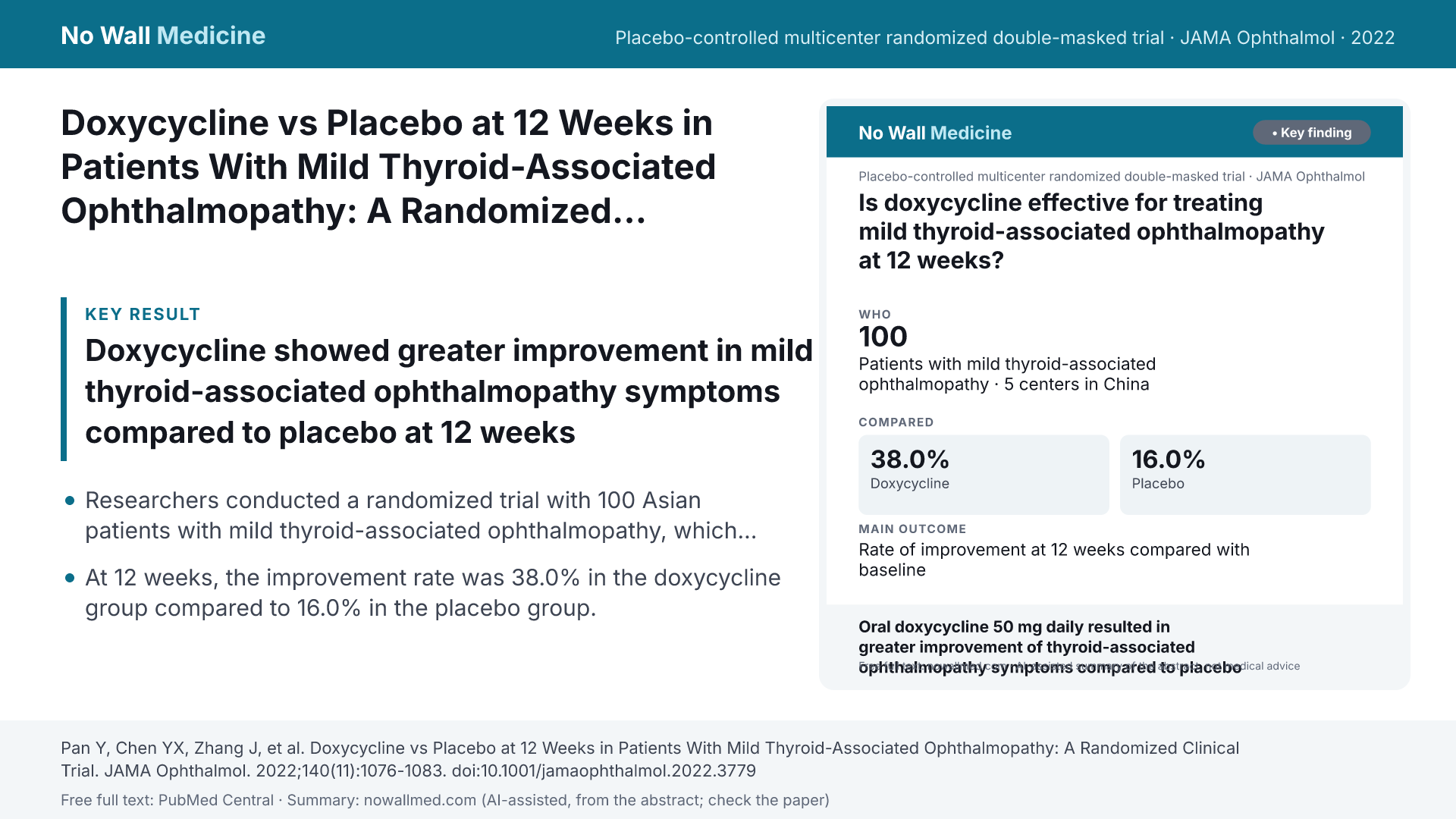
Doxycycline showed greater improvement in mild thyroid-associated ophthalmopathy symptoms compared to placebo at 12 weeks
Doxycycline vs Placebo at 12 Weeks in Patients With Mild Thyroid-Associated Ophthalmopathy: A Randomized Clinical Trial
Placebo-controlled multicenter randomized double-masked trialBenefit found
Is doxycycline effective for treating mild thyroid-associated ophthalmopathy at 12 weeks?
Who
100
Patients with mild thyroid-associated ophthalmopathy · 5 centers in China
Compared
38.0%Doxycycline (19 of 50)
16.0%Placebo (8 of 50)
Main outcome
Rate of improvement at 12 weeks compared with baseline
Result: difference, 22.0%; 95% CI, 5.0-39.0
Bottom line: Oral doxycycline 50 mg daily resulted in greater improvement of thyroid-associated ophthalmopathy symptoms compared to placebo at 12 weeks.
JAMA Ophthalmol · 2022-09-30Download image
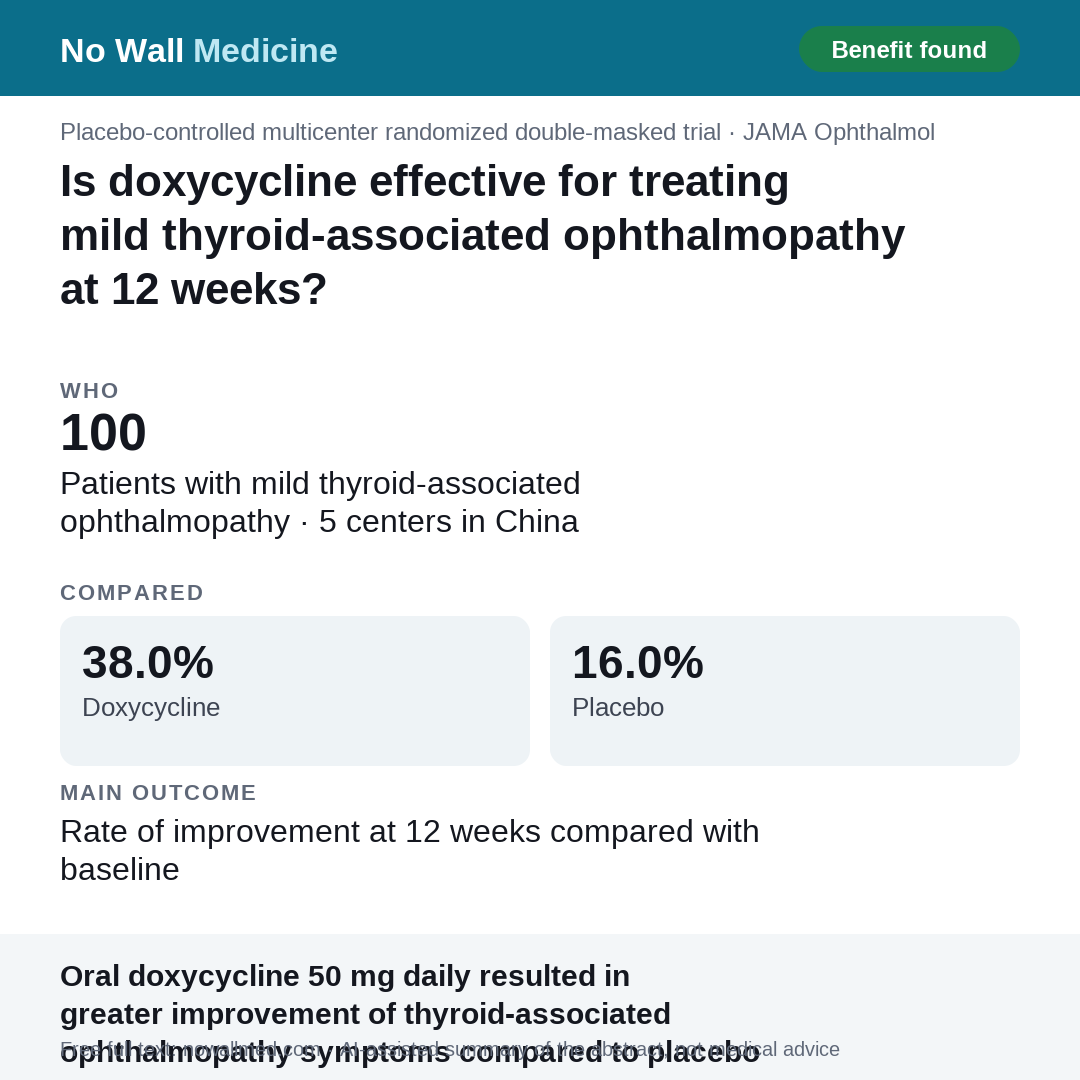
Clinical question: Is doxycycline effective for treating mild thyroid-associated ophthalmopathy at 12 weeks?
Why it matters: Clinical guidelines for treating mild thyroid-associated ophthalmopathy are currently unavailable.
In absolute numbers
Doxycycline: 38% · Placebo: 16% → a difference of 22 percentage points, so about 5 people would need the treatment for 1 more to benefit (number needed to treat) over the trial’s follow-up.
Worked out by us from the two group results above, not reported by the authors. Check the paper for the exact outcome and timing.
Key points
- Researchers conducted a randomized trial with 100 Asian patients with mild thyroid-associated ophthalmopathy, which is a condition where orbital soft tissue is mildly affected.
- At 12 weeks, the improvement rate was 38.0% in the doxycycline group compared to 16.0% in the placebo group.
- Only 1 case of mild gastric acid regurgitation, or acid reflux, was recorded during the study.
Limitation the authors note: The authors noted the relatively short follow-up and the size of the cohort.
Headline and key points written with AI from the paper’s abstract, with every number checked against it. Read the paper before relying on them.
Was this summary helpful?
Subject terms
Cite this article
Pan Y, Chen YX, Zhang J, Lin ML, Liu GM, Xu XL. Doxycycline vs Placebo at 12 Weeks in Patients With Mild Thyroid-Associated Ophthalmopathy: A Randomized Clinical Trial. JAMA Ophthalmol. 2022. doi:10.1001/jamaophthalmol.2022.3779
Spotted a mistake? Suggest a correction
Top studies every Monday
The week’s key trials and guidelines in your specialties, plus any topics you follow. By email, free.
Get the weekly digest