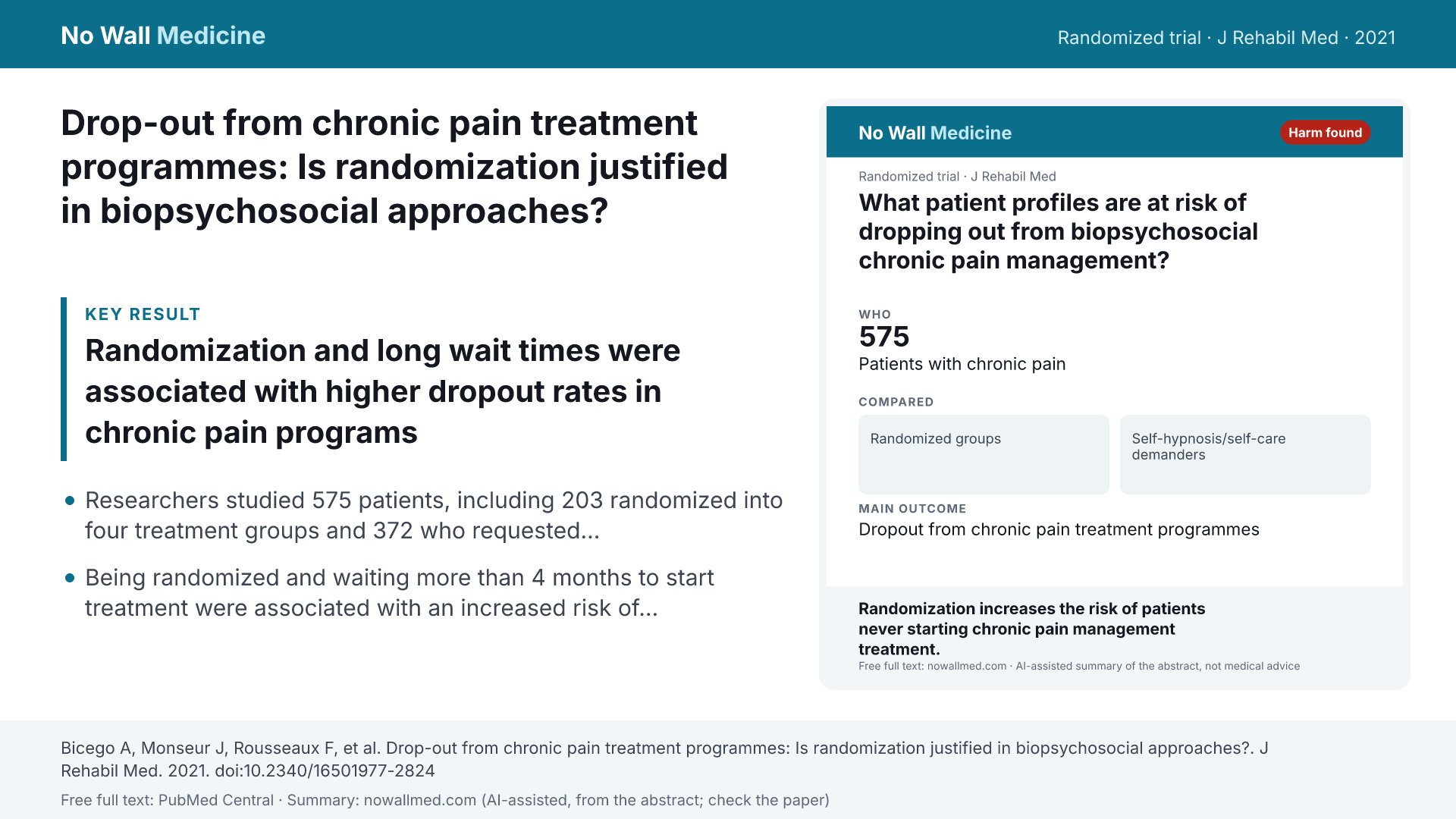
Drop-out from chronic pain treatment programmes: Is randomization justified in biopsychosocial approaches?
Key result: Randomization and long wait times were associated with higher dropout rates in chronic pain programs
Randomized trialHarm found
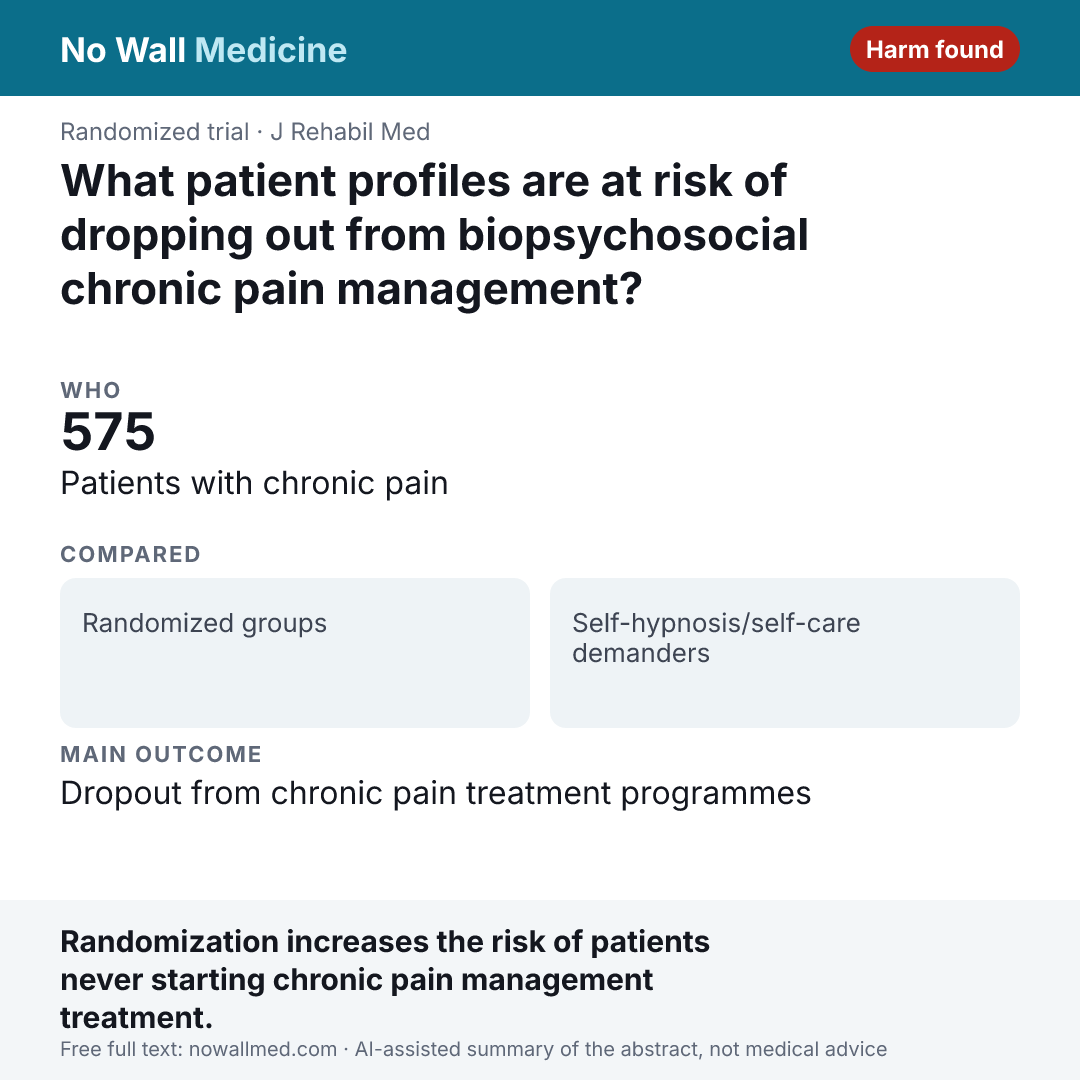
What patient profiles are at risk of dropping out from biopsychosocial chronic pain management?
Who
575
Patients with chronic pain
Compared
Randomized groups
Self-hypnosis/self-care demanders
Main outcome
Dropout from chronic pain treatment programmes
Bottom line: Randomization increases the risk of patients never starting chronic pain management treatment.
J Rehabil Med · 2021-04-28 · Save PNG
Key points
- Researchers studied 575 patients, including 203 randomized into four treatment groups and 372 who requested specific self-hypnosis or self-care treatments.
- Being randomized and waiting more than 4 months to start treatment were associated with an increased risk of never starting the treatment.
- Having an intermediate or high educational level was associated with protection against dropping out early or late in the pain management process.
Discussion prompts
- Would these patients look like yours? Who was left out?
- Is the main outcome one that matters to patients?
- Is the difference large enough to change what you do?
Cite: Bicego A, Monseur J, Rousseaux F, et al. Drop-out from chronic pain treatment programmes: Is randomization justified in biopsychosocial approaches?. J Rehabil Med. 2021. doi:10.2340/16501977-2824
Free full text: PubMed Central · Summary and visual abstract: nowallmed.com/a/drop-out-from-chronic-pain-treatment-programmes-is-randomization-1b05jon/ (AI-assisted from the abstract; check the paper before relying on it).