Systematic review identifies causes and consequences of medicine stock-outs for HIV, tuberculosis, and malaria
Drug stock-outs in HIV, tuberculosis, and malaria programs: a systematic review
Systematic reviewMixed results
What are the causes, consequences, and mitigation strategies of drug stock-outs?
Who
HIV, tuberculosis, and malaria medicine programs · Low- and middle-income countries
Compared
Causes: supply chain inefficiencies, procurement delays, inadequate funding, weak governance, and poor demand forecasting
Consequences: treatment interruptions, increased drug resistance, and higher morbidity and mortality
Main outcome
Causes, consequences, and mitigation strategies of medicine stock-outs
Bottom line: Stock-outs are largely preventable by fortifying supply chains with better forecasting, robust logistics, and sufficient financing.
Funded by: Wellcome trust CAMO-Net programme and Global Antibiotic Research and Development Partnership
eClinicalMedicine · 2026-07-31Download image
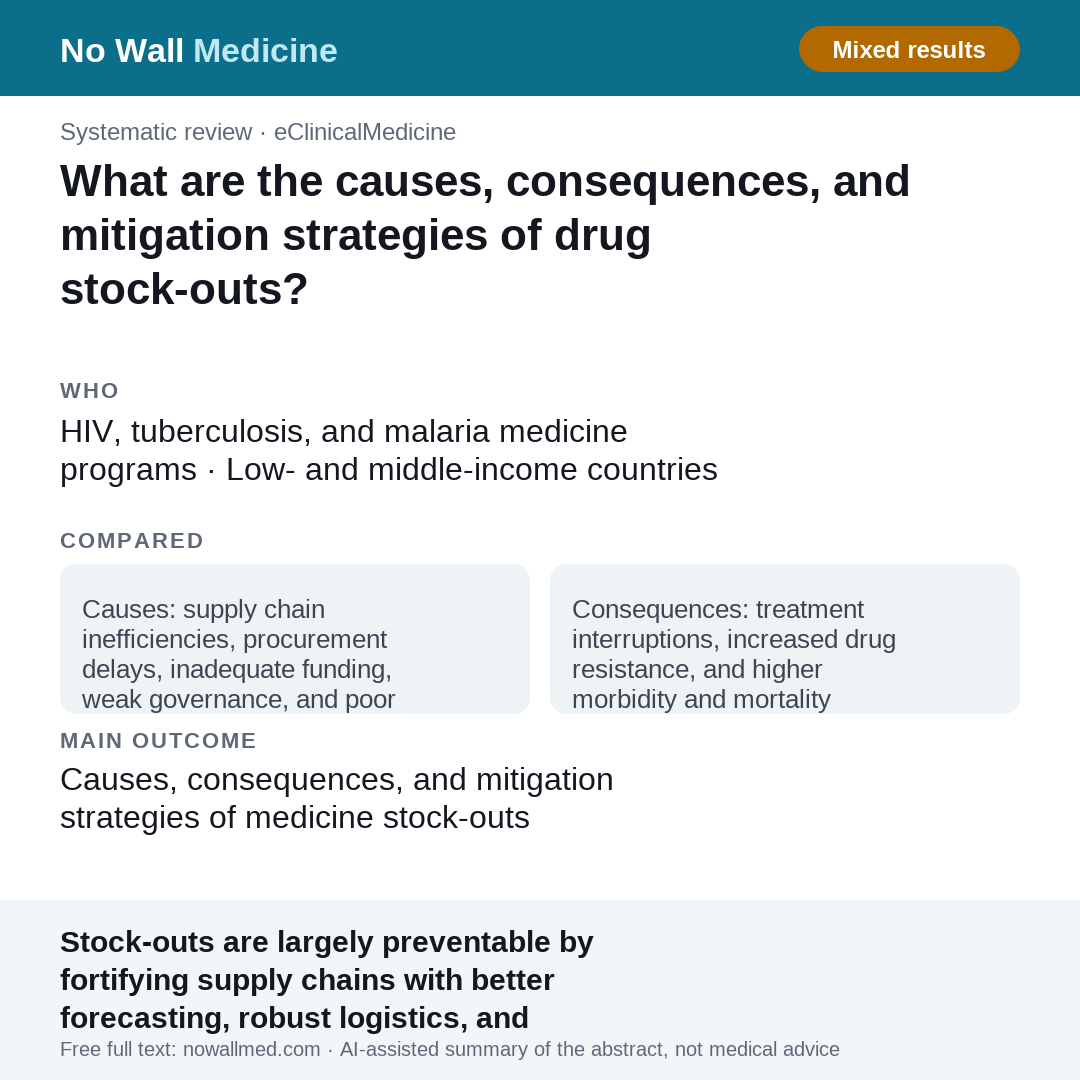
Clinical question: What are the causes, consequences, and mitigation strategies of drug stock-outs?
Why it matters: Medicine shortages for HIV, tuberculosis, and malaria remain a major challenge that affects health systems and patient outcomes in low- and middle-income countries.
Key points
- Researchers reviewed 56 studies from 10,158 screened records to examine medicine shortages in low- and middle-income countries.
- Key causes of shortages included supply chain inefficiencies, procurement delays, inadequate funding, weak governance, and poor demand forecasting.
- Consequences of these stock-outs included treatment interruptions, increased drug resistance, higher morbidity and mortality, and increased out-of-pocket costs.
Headline and key points written with AI from the paper’s abstract, with every number checked against it. Read the paper before relying on them.
Was this summary helpful?
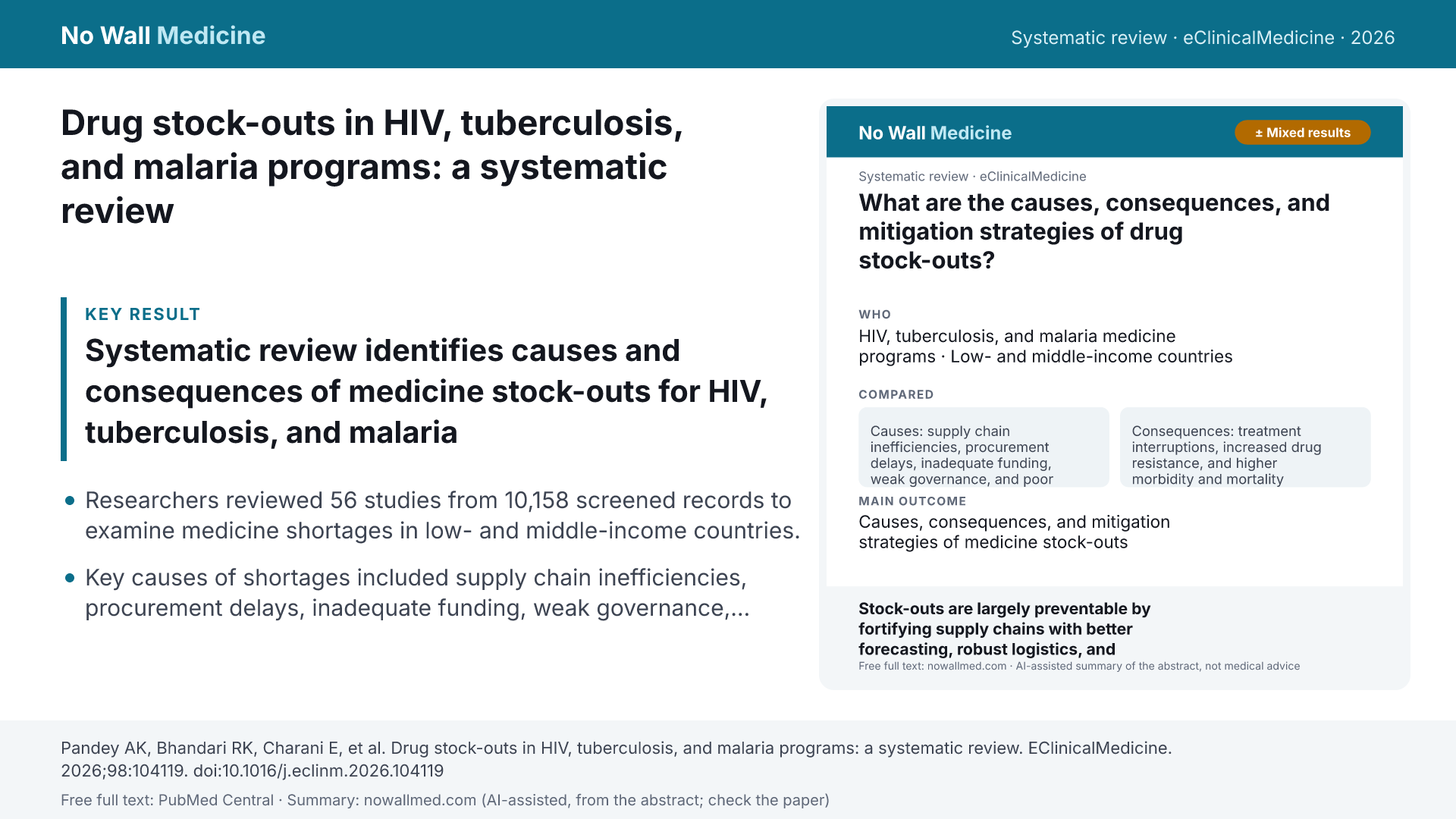
Cite this article
Pandey AK, Bhandari RK, Charani E, et al. Drug stock-outs in HIV, tuberculosis, and malaria programs: a systematic review. eClinicalMedicine. 2026. doi:10.1016/j.eclinm.2026.104119
Spotted a mistake? Suggest a correction