Shortened dual antiplatelet therapy duration was associated with lower bleeding and cardiovascular mortality in high bleeding risk patients
Dual antiplatelet therapy duration after percutaneous coronary intervention in high bleeding risk: a meta-analysis of randomized trials
Meta-analysis of 11 randomized clinical trialsBenefit found
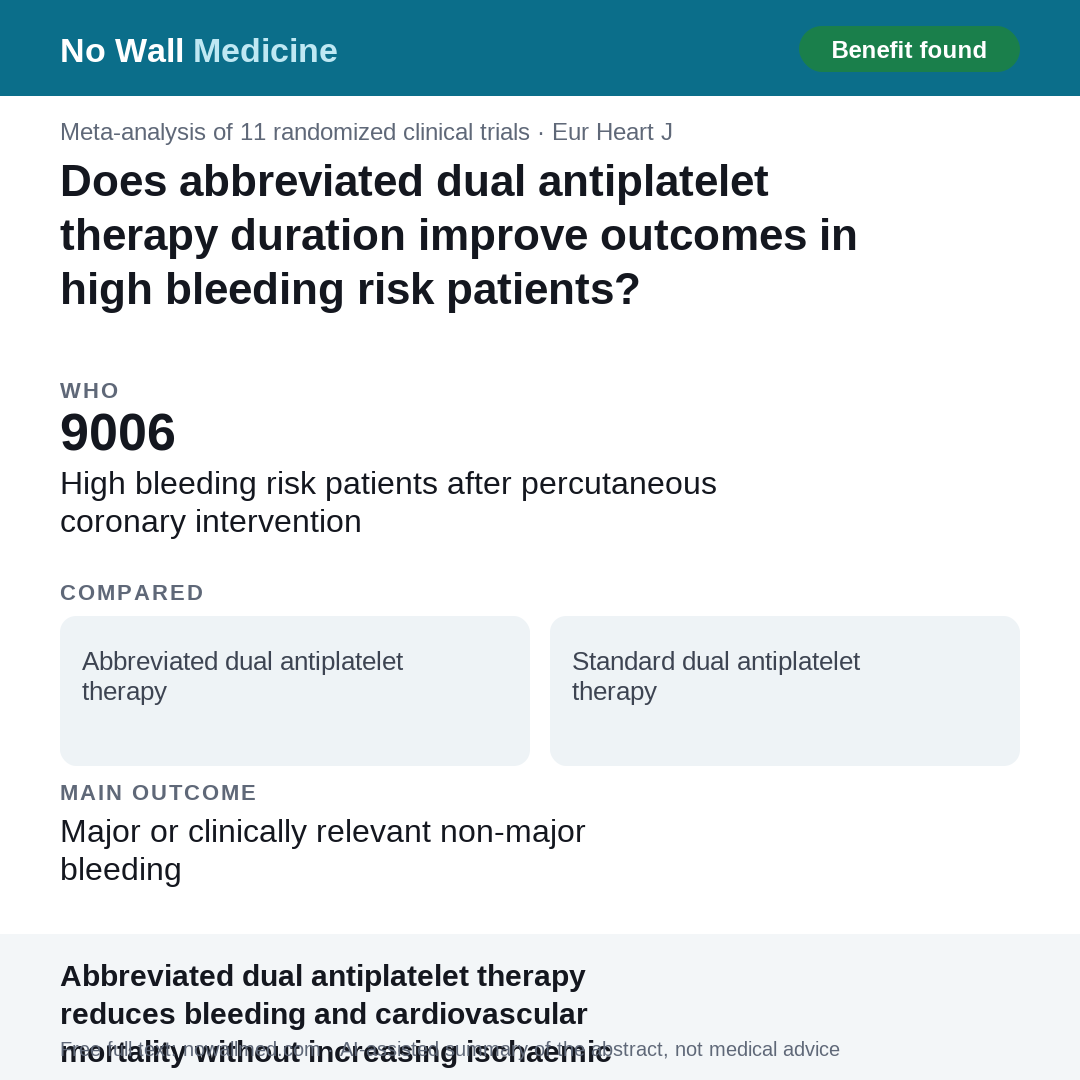
Does abbreviated dual antiplatelet therapy duration improve outcomes in high bleeding risk patients?
Who
9006
High bleeding risk patients after percutaneous coronary intervention
Compared
Abbreviated dual antiplatelet therapy
Standard dual antiplatelet therapy
Main outcome
Major or clinically relevant non-major bleeding
Result: risk ratio 0.76 (95% CI 0.61-0.94)
Bottom line: Abbreviated dual antiplatelet therapy reduces bleeding and cardiovascular mortality without increasing ischaemic events in high bleeding risk patients.
Eur Heart J · 2022-12-09Download image
Clinical question: Does abbreviated dual antiplatelet therapy duration improve outcomes in high bleeding risk patients?
Why it matters: The optimal duration of dual antiplatelet therapy, a combination of two blood-thinning medications, remains debated for patients at high bleeding risk.
Key points
- Researchers analyzed 11 randomized clinical trials involving 9006 patients at high bleeding risk who underwent percutaneous coronary intervention, a procedure to open blocked heart arteries.
- Abbreviated dual antiplatelet therapy, lasting 1 or 3 months, was associated with a lower risk of major or clinically relevant non-major bleeding (risk ratio 0.76) and cardiovascular mortality (risk ratio 0.79).
- The abbreviated regimens showed no difference in all-cause mortality, major adverse cardiovascular events, heart attack, or stent thrombosis compared to standard therapy of 6 months or longer.
Headline and key points written with AI from the paper’s abstract, with every number checked against it. Read the paper before relying on them.
Was this summary helpful?
Subject terms
Cite this article
Costa F, Montalto C, Branca M, Hong SJ, Watanabe H, Franzone A. Dual antiplatelet therapy duration after percutaneous coronary intervention in high bleeding risk: a meta-analysis of randomized trials. Eur Heart J. 2022. doi:10.1093/eurheartj/ehac706
Spotted a mistake? Suggest a correction
Top studies every Monday
The week’s key trials and guidelines in your specialties, plus any topics you follow. By email, free.
Get the weekly digest