Dual-energy catheter was non-inferior to conventional ablation for atrial fibrillation
Dual-energy lattice-tip ablation system for persistent atrial fibrillation: a randomized trial
Randomized, single-blind, non-inferiority trialBenefit found
Is dual-energy lattice-tip ablation non-inferior to conventional radiofrequency ablation for persistent atrial fibrillation?
Who
420
Patients with persistent atrial fibrillation
Compared
73.8%dual pulsed field and radiofrequency energies
65.8%conventional radiofrequency ablation system
Main outcome
freedom from acute procedural failure, repeat ablation, arrhythmia recurrence, drug changes, or cardioversion
Result: P < 0.0001 for non-inferiority
Bottom line: Dual-energy lattice-tip ablation is non-inferior in safety and effectiveness compared to conventional radiofrequency ablation for persistent atrial fibrillation.
Nat Med · 2024-05-17Download image
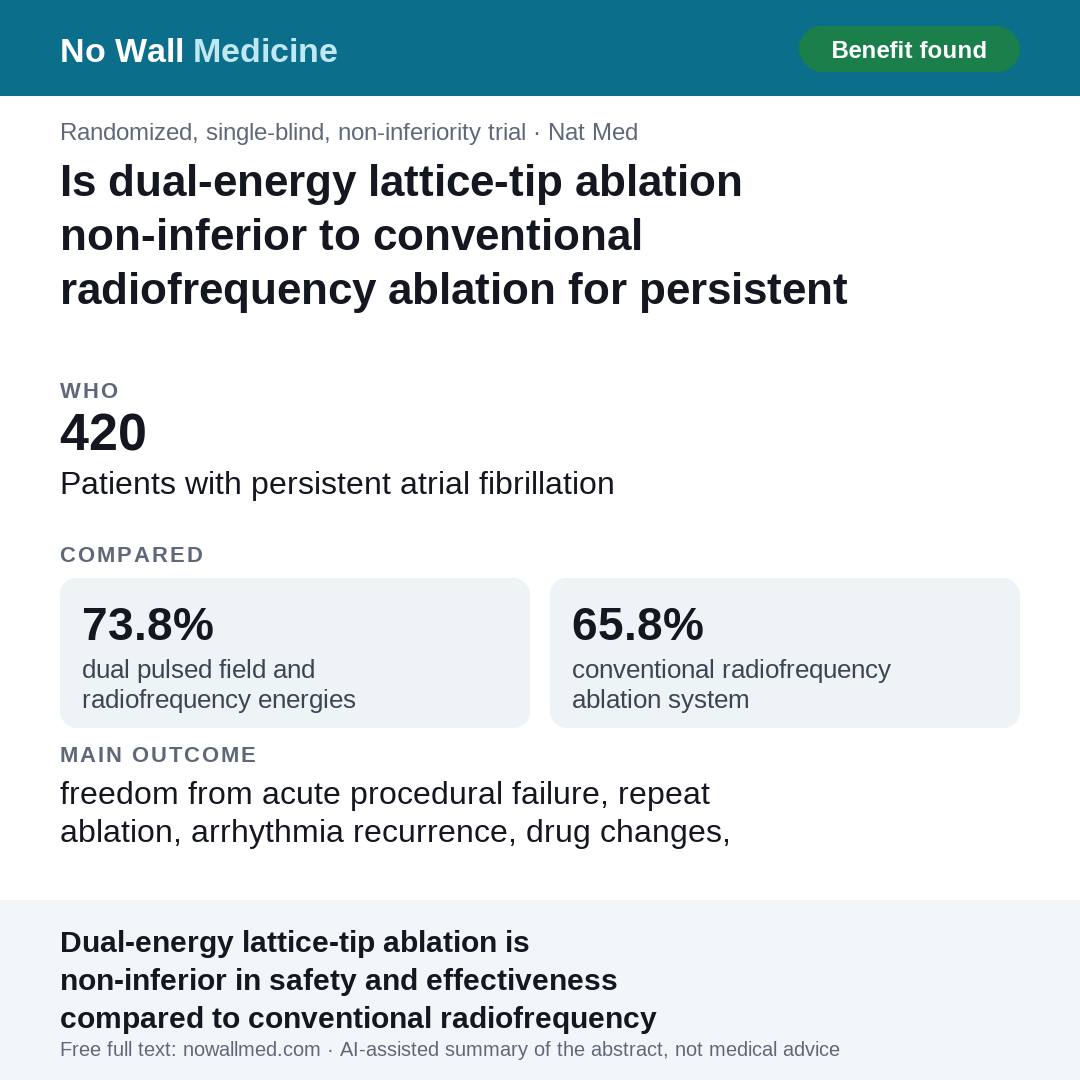
Clinical question: Is dual-energy lattice-tip ablation non-inferior to conventional radiofrequency ablation for persistent atrial fibrillation?
Why it matters: Catheter ablation outcomes for atrial fibrillation are often suboptimal due to challenges in achieving durable lesions
In absolute numbers
dual pulsed field and radiofrequency energies: 73.8% · conventional radiofrequency ablation system: 65.8% → a difference of 8 percentage points, so about 13 people would need the treatment for 1 more to benefit (number needed to treat) over the trial’s follow-up.
Worked out by us from the two group results above, not reported by the authors. Check the paper for the exact outcome and timing.
Key points
- 420 patients with persistent atrial fibrillation were randomized to two ablation systems.
- 73.8% of dual-energy patients met the primary effectiveness endpoint, versus 65.8% of controls.
- Procedural times were shorter with the dual-energy catheter.
Headline and key points written with AI from the paper’s abstract, with every number checked against it. Read the paper before relying on them.
Topics
Cite this article
Anter E, Mansour M, Nair DG, Sharma D, Taigen TL, Neuzil P. Dual-energy lattice-tip ablation system for persistent atrial fibrillation: a randomized trial. Nat Med. 2024. doi:10.1038/s41591-024-03022-6
Spotted a mistake? Suggest a correction