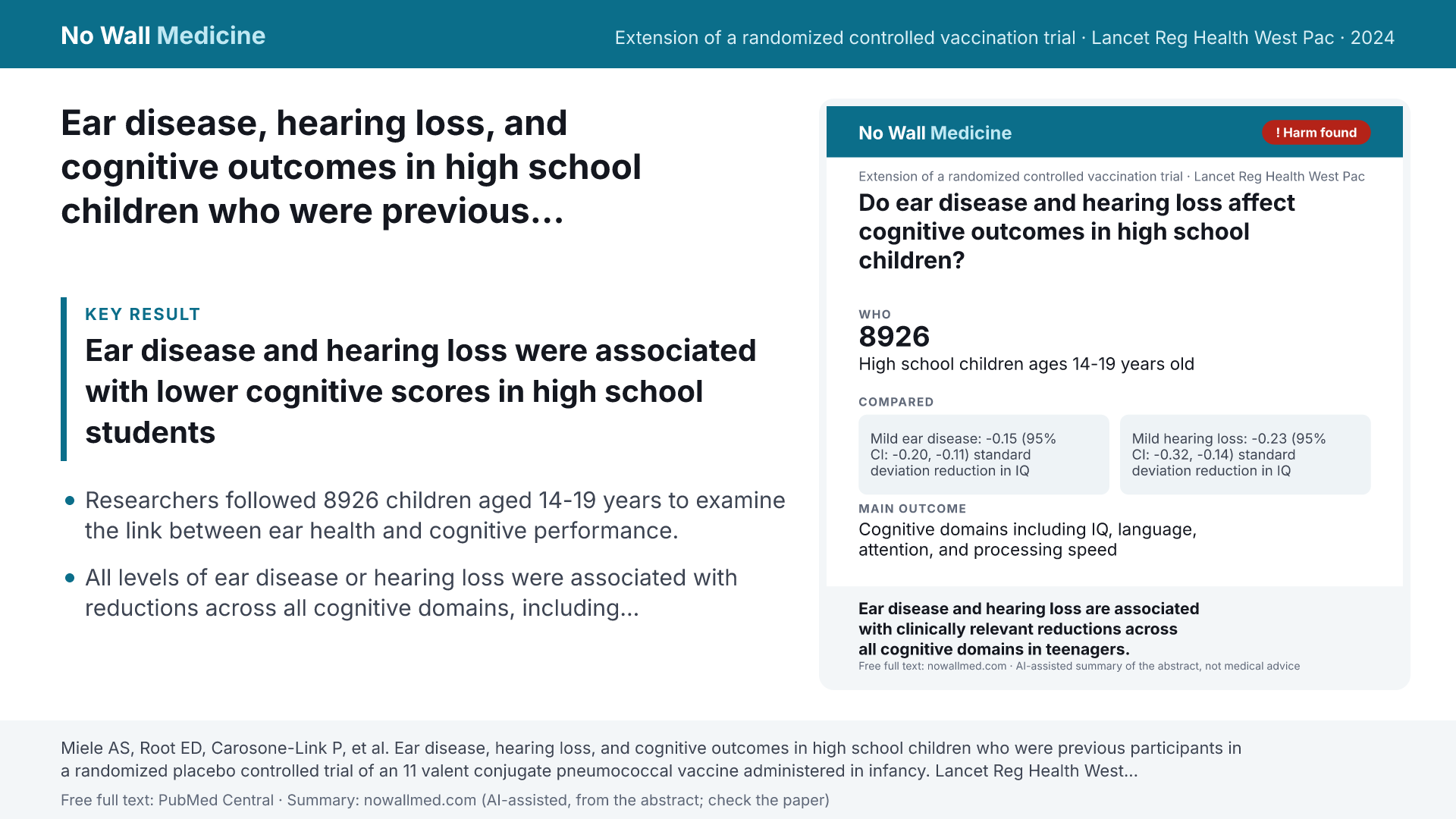
Ear disease and hearing loss were associated with lower cognitive scores in high school students
Ear disease, hearing loss, and cognitive outcomes in high school children who were previous participants in a randomized placebo controlled trial of an 11 valent conjugate pneumococcal vaccine administered in infancy
Extension of a randomized controlled vaccination trialHarm found
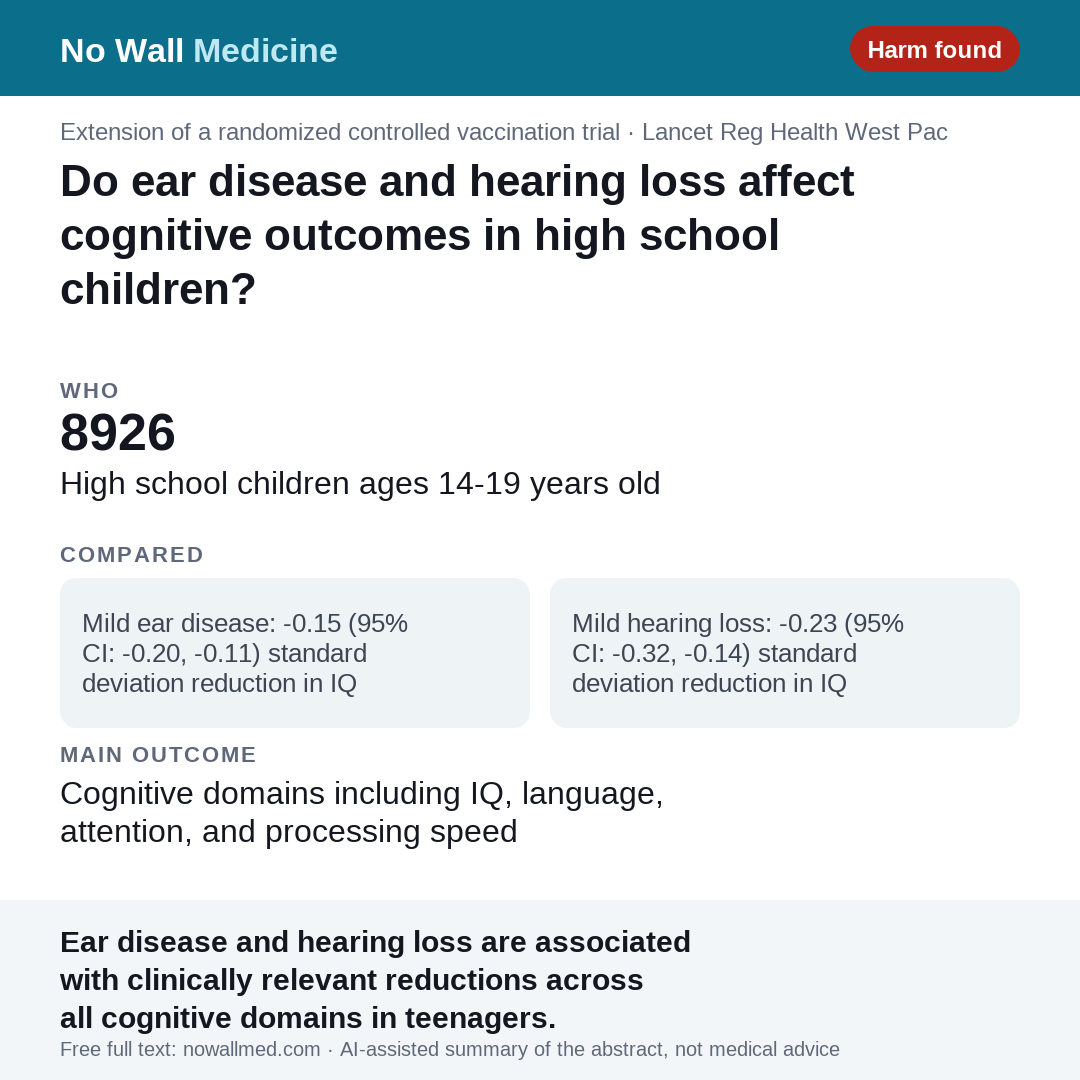
Do ear disease and hearing loss affect cognitive outcomes in high school children?
Who
8926
High school children ages 14-19 years old
Compared
Mild ear disease: -0.15 (95% CI: -0.20, -0.11) standard deviation reduction in IQ
Mild hearing loss: -0.23 (95% CI: -0.32, -0.14) standard deviation reduction in IQ
Main outcome
Cognitive domains including IQ, language, attention, and processing speed
Bottom line: Ear disease and hearing loss are associated with clinically relevant reductions across all cognitive domains in teenagers.
Funded by: Bill and Melinda Gates Foundation
Lancet Reg Health West Pac · 2024-07-31Download image
Clinical question: Do ear disease and hearing loss affect cognitive outcomes in high school children?
Why it matters: It was unknown how ear disease and hearing loss affect intellectual and other cognitive domains in children.
Key points
- Researchers followed 8926 children aged 14-19 years to examine the link between ear health and cognitive performance.
- All levels of ear disease or hearing loss were associated with reductions across all cognitive domains, including IQ, language, and memory.
- Mild ear disease was associated with a -0.15 (95% CI: -0.20, -0.11) standard deviation reduction in IQ, while mild hearing loss was associated with a -0.23 (95% CI: -0.32, -0.14) reduction.
Headline and key points written with AI from the paper’s abstract, with every number checked against it. Read the paper before relying on them.
Was this summary helpful?
Cite this article
Miele AS, Root ED, Carosone-Link P, et al. Ear disease, hearing loss, and cognitive outcomes in high school children who were previous participants in a randomized placebo controlled trial of an 11 valent conjugate pneumococcal vaccine administered in infancy. Lancet Reg Health West Pac. 2024. doi:10.1016/j.lanwpc.2024.101128
Spotted a mistake? Suggest a correction