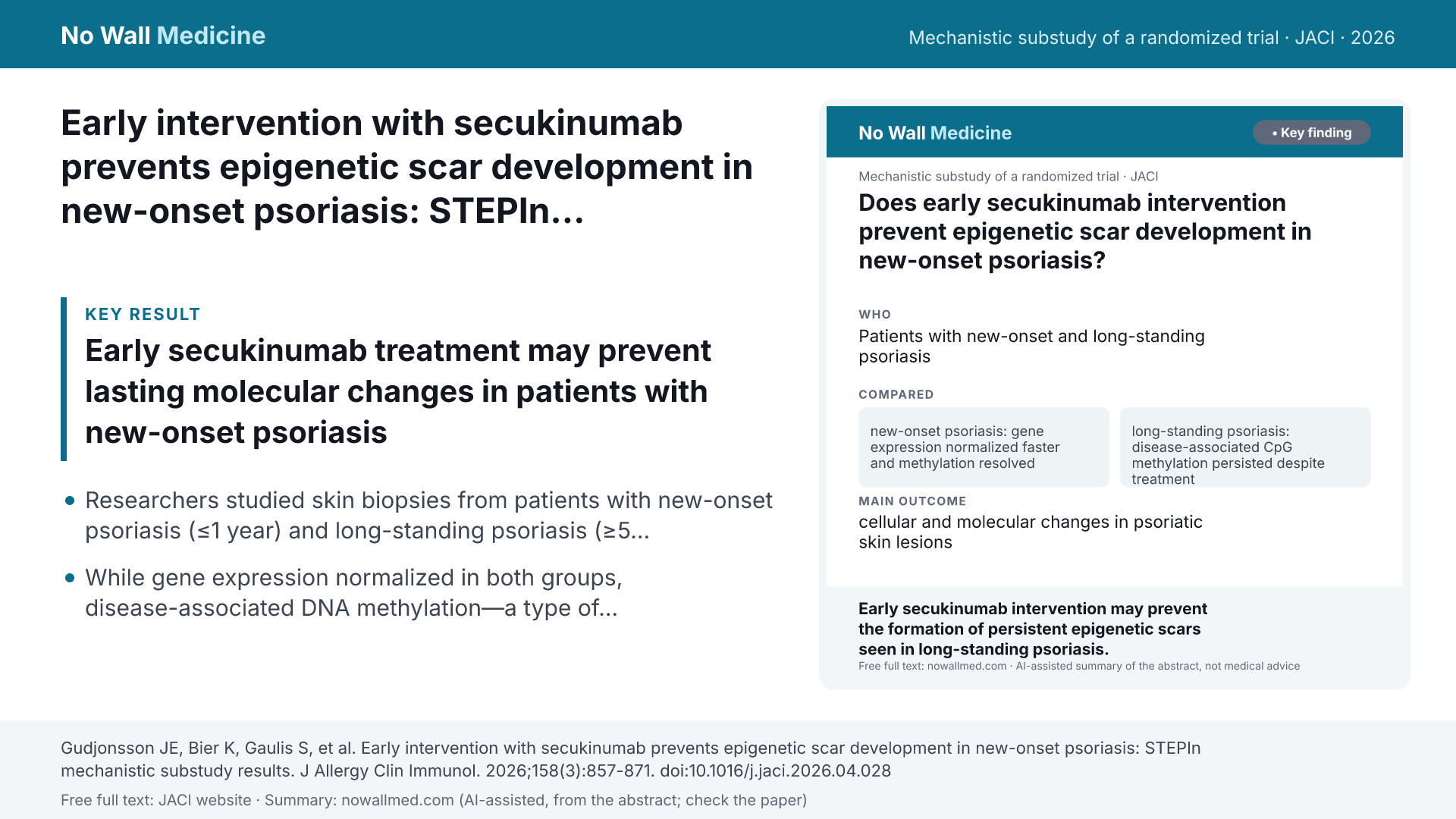
Early secukinumab treatment may prevent lasting molecular changes in patients with new-onset psoriasis
Early intervention with secukinumab prevents epigenetic scar development in new-onset psoriasis: STEPIn mechanistic substudy results
Mechanistic substudy of a randomized trialBenefit found
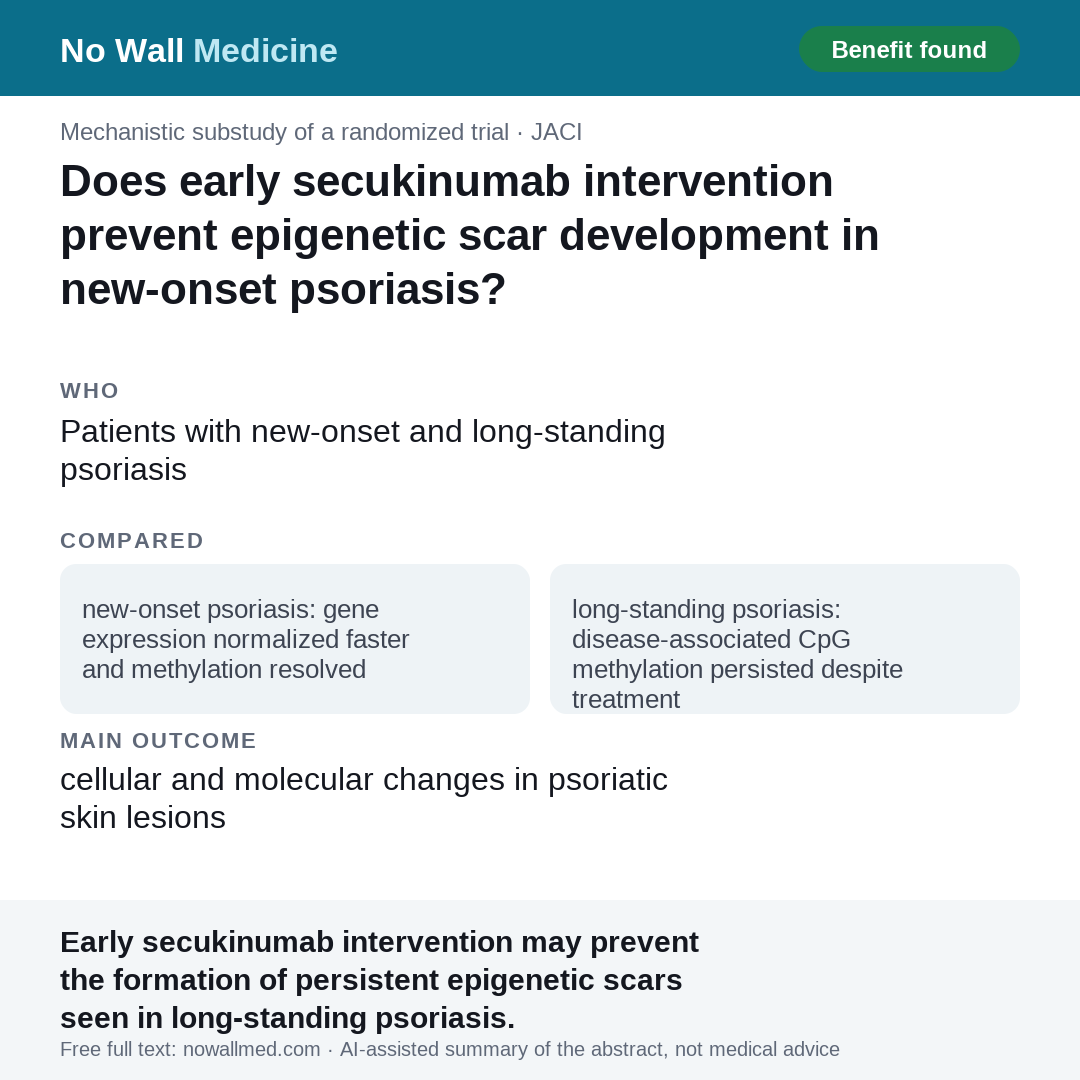
Does early secukinumab intervention prevent epigenetic scar development in new-onset psoriasis?
Who
Patients with new-onset and long-standing psoriasis
Compared
new-onset psoriasis: gene expression normalized faster and methylation resolved
long-standing psoriasis: disease-associated CpG methylation persisted despite treatment
Main outcome
cellular and molecular changes in psoriatic skin lesions
Bottom line: Early secukinumab intervention may prevent the formation of persistent epigenetic scars seen in long-standing psoriasis.
JACI · 2026-05-25Download image
Clinical question: Does early secukinumab intervention prevent epigenetic scar development in new-onset psoriasis?
Why it matters: Clinically resolved skin in psoriasis patients often retains molecular changes that may predispose them to future disease relapses.
Key points
- Researchers studied skin biopsies from patients with new-onset psoriasis (≤1 year) and long-standing psoriasis (≥5 years) treated with secukinumab, an anti-interleukin-17A antibody.
- While gene expression normalized in both groups, disease-associated DNA methylation—a type of molecular marker—persisted in patients with long-standing psoriasis despite treatment.
- In long-standing disease, persistent methylation changes were linked to genes involved in small GTPase pathways and transcription factor binding sites.
Headline and key points written with AI from the paper’s abstract, with every number checked against it. Read the paper before relying on them.
Was this summary helpful?
Subject terms
Cite this article
Gudjonsson JE, Bier K, Gaulis S, et al. Early intervention with secukinumab prevents epigenetic scar development in new-onset psoriasis: STEPIn mechanistic substudy results. JACI. 2026. doi:10.1016/j.jaci.2026.04.028
Spotted a mistake? Suggest a correction