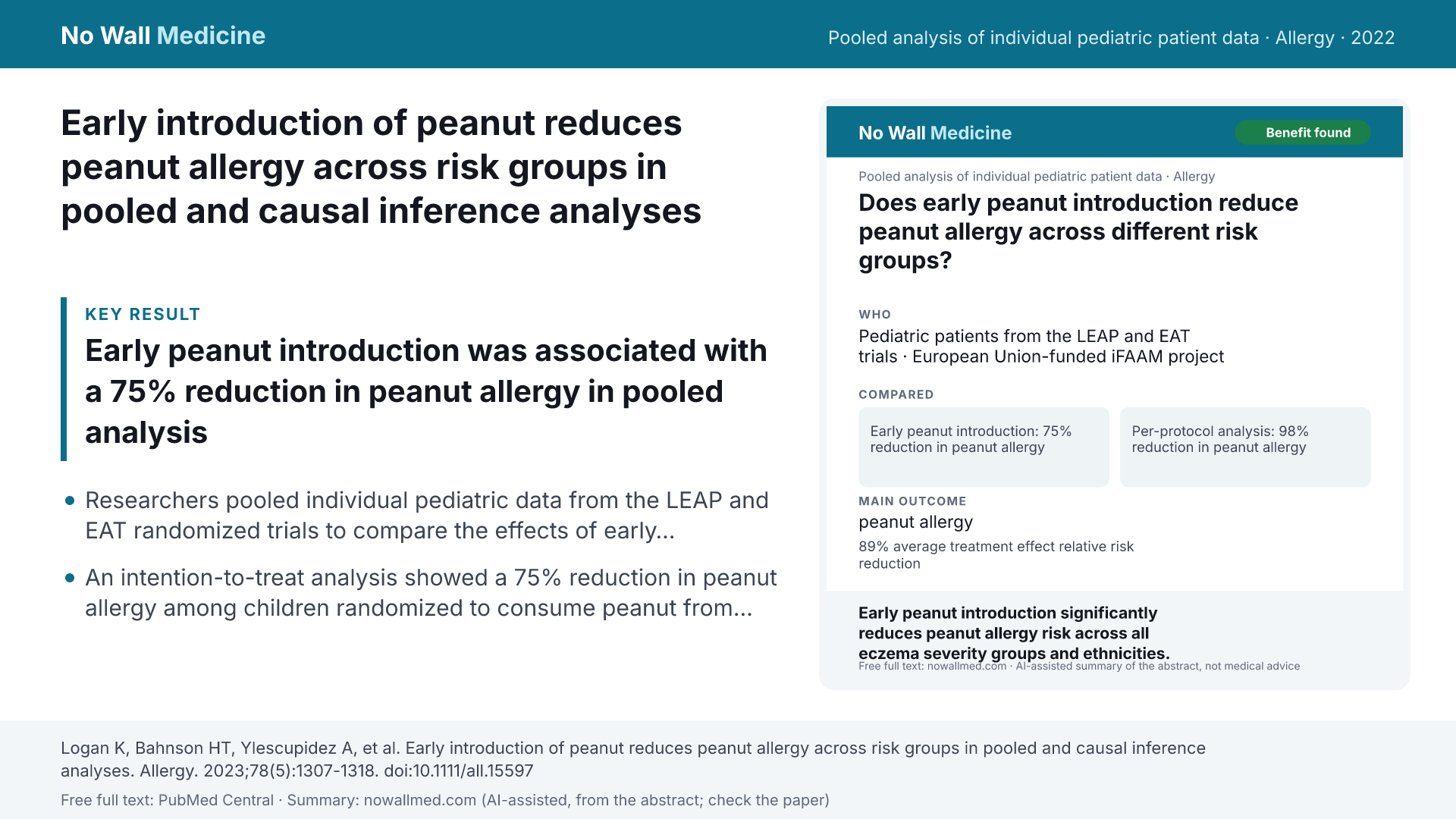
Early peanut introduction was associated with a 75% reduction in peanut allergy in pooled analysis
Early introduction of peanut reduces peanut allergy across risk groups in pooled and causal inference analyses
Pooled analysis of individual pediatric patient dataBenefit found
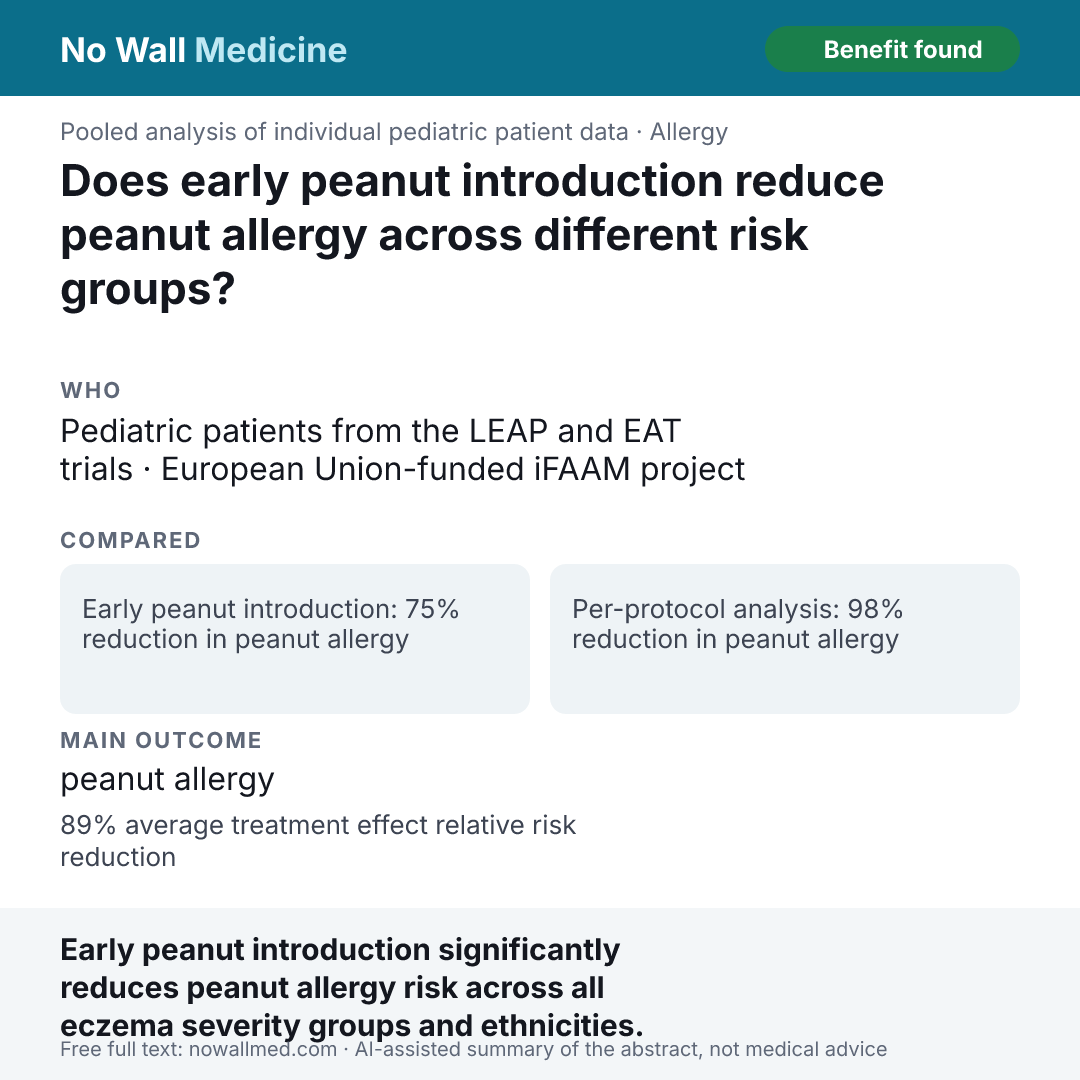
Does early peanut introduction reduce peanut allergy across different risk groups?
Who
Pediatric patients from the LEAP and EAT trials · European Union-funded iFAAM project
Compared
Early peanut introduction: 75% reduction in peanut allergy
Per-protocol analysis: 98% reduction in peanut allergy
Main outcome
peanut allergy
Result: 89% average treatment effect relative risk reduction
Bottom line: Early peanut introduction significantly reduces peanut allergy risk across all eczema severity groups and ethnicities.
Funded by: European Union-funded iFAAM project
Allergy · 2022-12-11 · Save PNG
Clinical question: Does early peanut introduction reduce peanut allergy across different risk groups?
Key points
- Researchers pooled individual pediatric data from the LEAP and EAT randomized trials to compare the effects of early peanut introduction across different risk groups.
- An intention-to-treat analysis showed a 75% reduction in peanut allergy among children randomized to consume peanut from early infancy.
- The protective effect was observed across all eczema severity groups, different ethnicities, and was associated with improved effectiveness when peanut was introduced at an earlier age.
Headline and key points written with AI from the paper’s abstract, with every number checked against it. Read the paper before relying on them.
Was this summary helpful?
Subject terms
Headline, design, result, key points, caveat and citation as plain text.
Cite this article
Logan K, Bahnson HT, Ylescupidez A, et al. Early introduction of peanut reduces peanut allergy across risk groups in pooled and causal inference analyses. Allergy. 2023;78(5):1307-1318. doi:10.1111/all.15597
Spotted a mistake? Suggest a correction