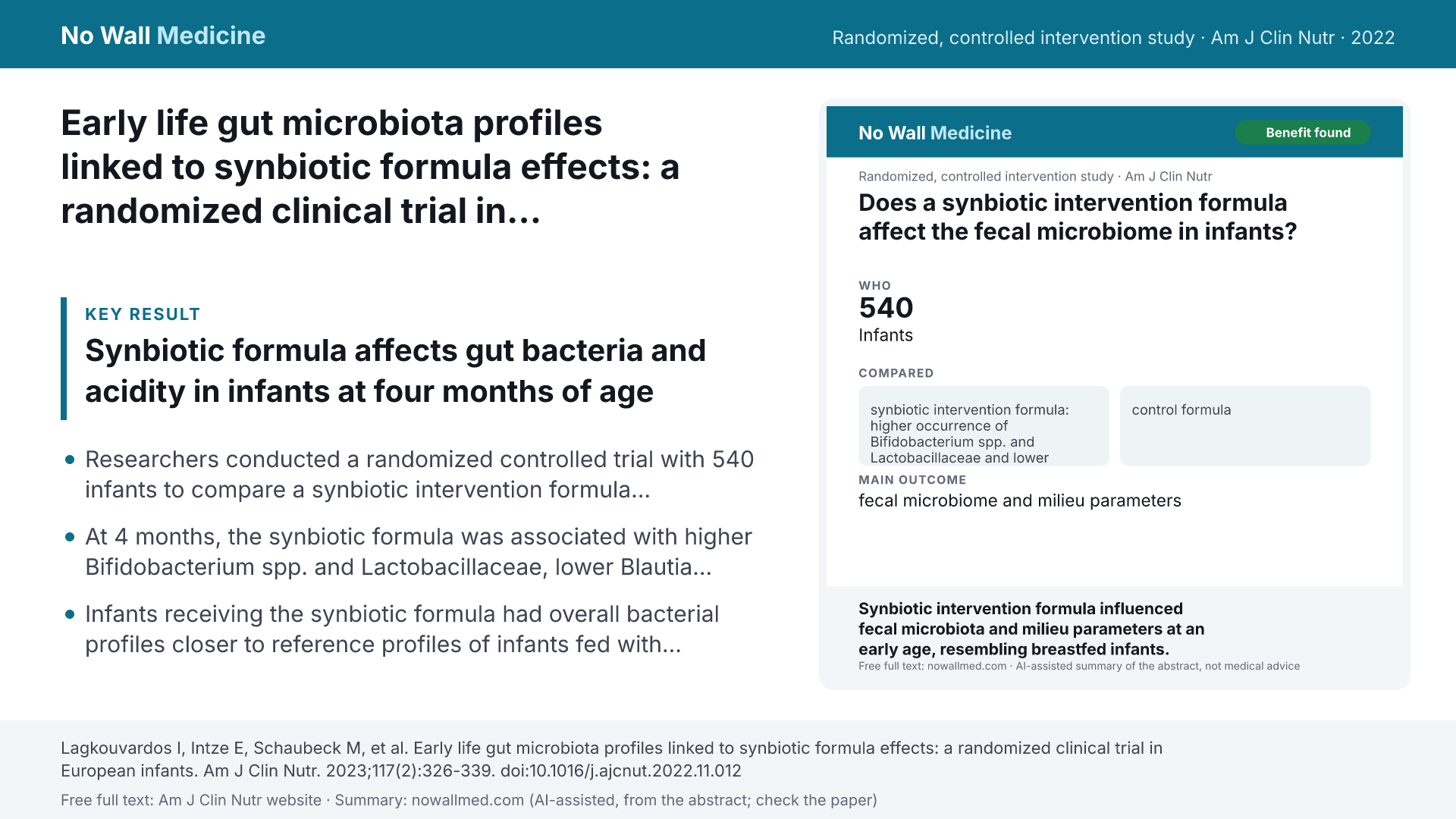
Synbiotic formula affects gut bacteria and acidity in infants at four months of age
Early life gut microbiota profiles linked to synbiotic formula effects: a randomized clinical trial in European infants
Randomized, controlled intervention studyBenefit found
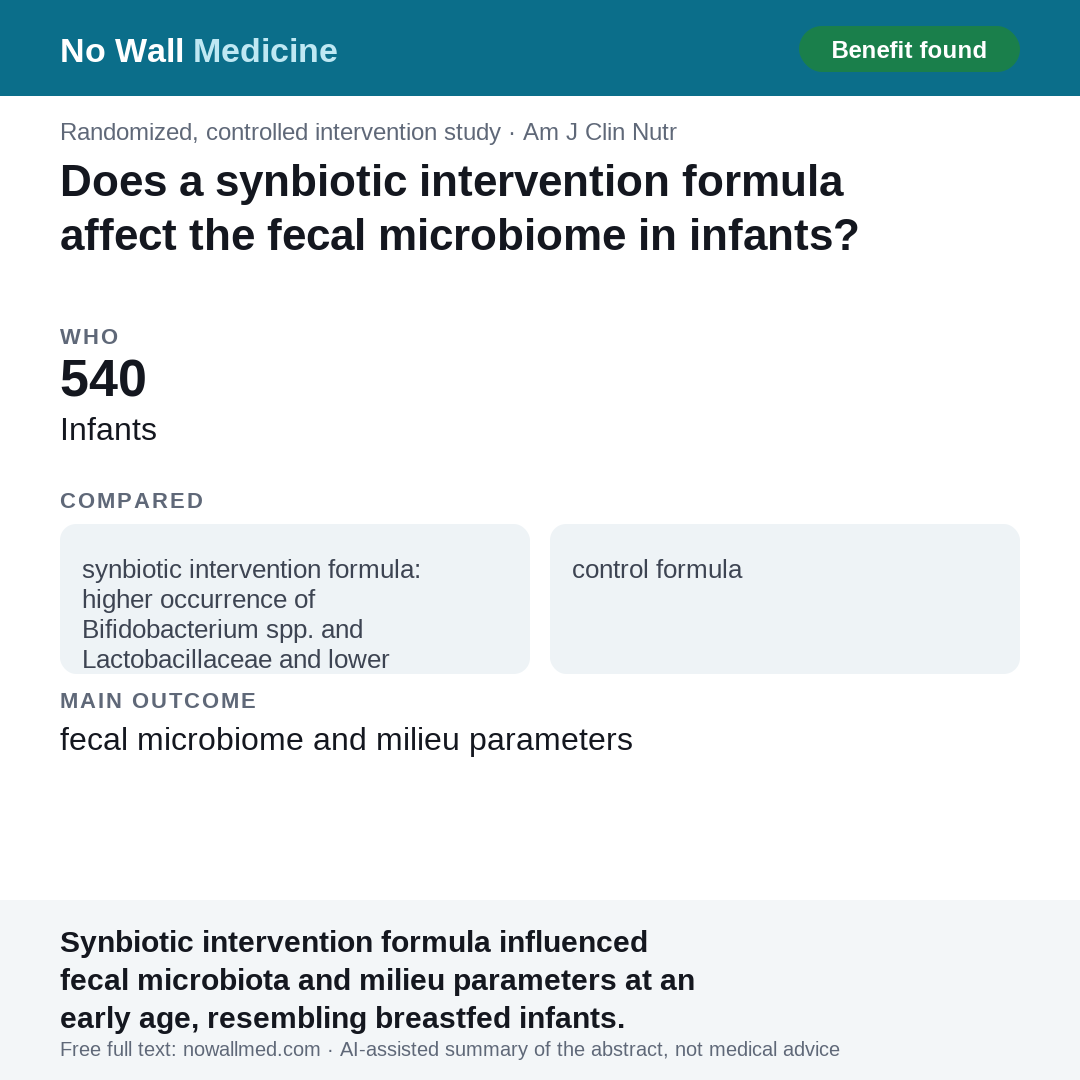
Does a synbiotic intervention formula affect the fecal microbiome in infants?
Who
540
Infants
Compared
synbiotic intervention formula: higher occurrence of Bifidobacterium spp. and Lactobacillaceae and lower occurrence of Blautia spp., as well as Ruminococcus gnavus and relatives
control formula
Main outcome
fecal microbiome and milieu parameters
Bottom line: Synbiotic intervention formula influenced fecal microbiota and milieu parameters at an early age, resembling breastfed infants.
Am J Clin Nutr · 2022-12-21Download image
Clinical question: Does a synbiotic intervention formula affect the fecal microbiome in infants?
Why it matters: It is unknown how a synbiotic intervention formula containing specific bacteria and prebiotics influences the development of the gut microbiome and stool environment in infants.
Key points
- Researchers conducted a randomized controlled trial with 540 infants to compare a synbiotic intervention formula containing Limosilactobacillus fermentum CECT5716 and galacto-oligosaccharides against a control formula.
- At 4 months, the synbiotic formula was associated with higher Bifidobacterium spp. and Lactobacillaceae, lower Blautia spp. and Ruminococcus gnavus, and lower fecal pH and butyrate concentrations.
- Infants receiving the synbiotic formula had overall bacterial profiles closer to reference profiles of infants fed with human milk than those receiving the control formula.
Headline and key points written with AI from the paper’s abstract, with every number checked against it. Read the paper before relying on them.
Was this summary helpful?
Subject terms
Cite this article
Lagkouvardos I, Intze E, Schaubeck M, Rooney JP, Hecht C, Piloquet H. Early life gut microbiota profiles linked to synbiotic formula effects: a randomized clinical trial in European infants. Am J Clin Nutr. 2022. doi:10.1016/j.ajcnut.2022.11.012
Spotted a mistake? Suggest a correction
Top studies every Monday
The week’s key trials and guidelines in your specialties, plus any topics you follow. By email, free.
Get the weekly digest