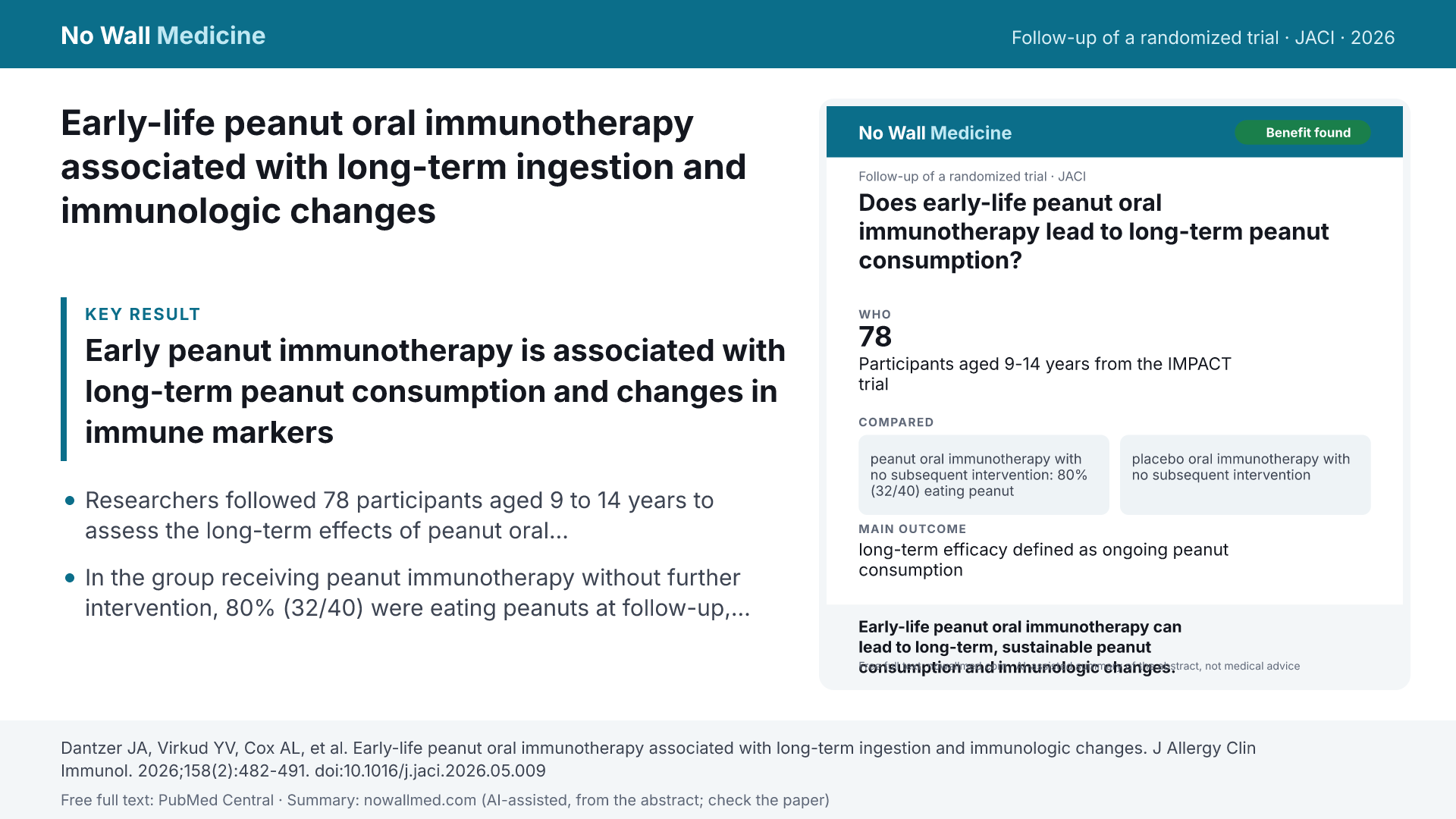
Early peanut immunotherapy is associated with long-term peanut consumption and changes in immune markers
Early-life peanut oral immunotherapy associated with long-term ingestion and immunologic changes
Follow-up of a randomized trialBenefit found
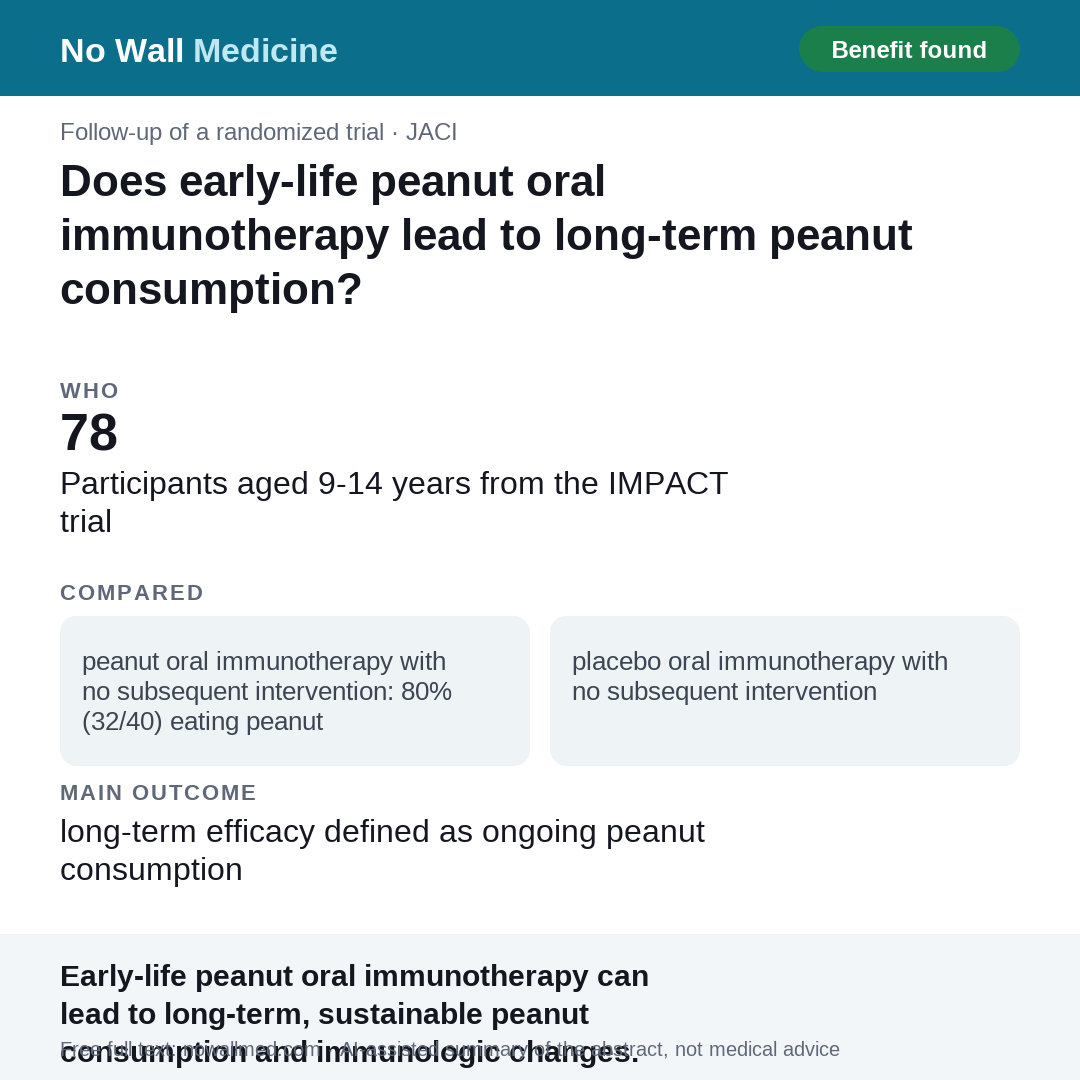
Does early-life peanut oral immunotherapy lead to long-term peanut consumption?
Who
78
Participants aged 9-14 years from the IMPACT trial
Compared
peanut oral immunotherapy with no subsequent intervention: 80% (32/40) eating peanut
placebo oral immunotherapy with no subsequent intervention
Main outcome
long-term efficacy defined as ongoing peanut consumption
Bottom line: Early-life peanut oral immunotherapy can lead to long-term, sustainable peanut consumption and immunologic changes.
Limitation: Follow-up data were available for only 78 of the 146 participants.
JACI · 2026-05-20Download image
Clinical question: Does early-life peanut oral immunotherapy lead to long-term peanut consumption?
Why it matters: Data on the long-term outcomes of early intervention oral immunotherapy for peanut allergies are limited.
Key points
- Researchers followed 78 participants aged 9 to 14 years to assess the long-term effects of peanut oral immunotherapy, which involves eating small amounts of peanut to build tolerance.
- In the group receiving peanut immunotherapy without further intervention, 80% (32/40) were eating peanuts at follow-up, and 35% (14/40) were eating 1000 mg or more.
- Compared to the placebo group, those receiving peanut immunotherapy had lower levels of peanut and Ara h 2 IgE (allergy-related antibodies) and higher levels of peanut and Ara h 2 IgG4 (protective antibodies).
Limitation the authors note: Follow-up data were available for only 78 of the 146 original participants.
Headline and key points written with AI from the paper’s abstract, with every number checked against it. Read the paper before relying on them.
Was this summary helpful?
Subject terms
Cite this article
Dantzer JA, Virkud YV, Cox AL, et al. Early-life peanut oral immunotherapy associated with long-term ingestion and immunologic changes. JACI. 2026. doi:10.1016/j.jaci.2026.05.009
Spotted a mistake? Suggest a correction