Relative phosphate decreases were linked to worse outcomes for patients receiving early parenteral nutrition
Early phosphate changes as potential indicator of unreadiness for artificial feeding: a secondary analysis of the EPaNIC RCT
Randomized trial analysisHarm found
Does early phosphate change predict harm from early parenteral nutrition?
Who
3520
Critically ill patients in intensive care unit
Compared
23.7%Relative hypophosphatemia
No relative hypophosphatemia
Main outcome
Discharge alive from ICU
Result: hazard ratio 0.75 (0.65-0.87)
Bottom line: Early phosphate drop predicts harm from early nutrition.
Crit Care · 2025-01-28Download image
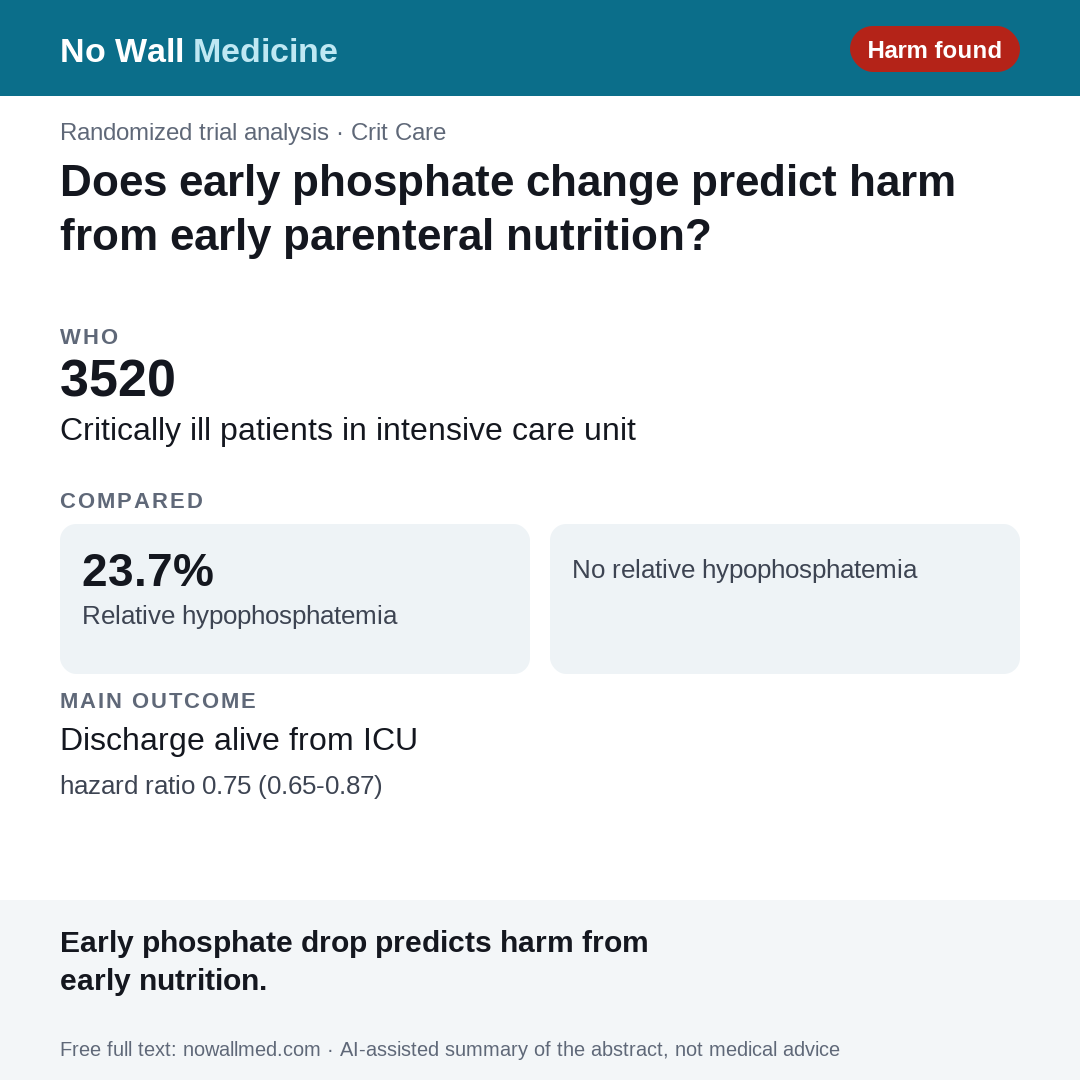
Clinical question: Does early phosphate change predict harm from early parenteral nutrition?
Why it matters: It is unknown if specific changes in phosphate levels can identify critically ill patients who may be harmed by early intravenous feeding.
Key points
- Researchers analyzed 3520 patients from a randomized trial to see if phosphate levels could identify who might be harmed by early parenteral nutrition, which is intravenous feeding.
- A relative phosphate decrease of >0.16 mmol/L over the first 2 days was linked to a lower likelihood of earlier discharge from the intensive care unit for those receiving early feeding.
- Absolute phosphate levels below 0.65 mmol/L or a combination of both absolute and relative changes did not show a significant interaction with the feeding strategy.
Headline and key points written with AI from the paper’s abstract, with every number checked against it. Read the paper before relying on them.
Was this summary helpful?
Subject terms
Cite this article
Lauwers C, Langouche L, Wouters PJ, Wilmer A, Van den Berghe G, Casaer MP. Early phosphate changes as potential indicator of unreadiness for artificial feeding: a secondary analysis of the EPaNIC RCT. Crit Care. 2025. doi:10.1186/s13054-025-05273-2
Spotted a mistake? Suggest a correction
Top studies every Monday
The week’s key trials and guidelines in your specialties, plus any topics you follow. By email, free.
Get the weekly digest