Early magnetic brain stimulation reduced chronic pain after lung cancer surgery in older adults
Early repetitive transcranial magnetic stimulation for preventing chronic postoperative pain in older adults: a randomized clinical sub-study
Randomized controlled trialBenefit found
Does early postoperative repetitive transcranial magnetic stimulation prevent chronic postsurgical pain?
Who
230
Older adults undergoing thoracoscopic lung cancer surgery
Compared
24.3%active repetitive transcranial magnetic stimulation
43.5%sham repetitive transcranial magnetic stimulation
Main outcome
incidence of chronic postsurgical pain
Result: relative risk 0.56 (95% CI 0.39-0.80)
Bottom line: Early postoperative repetitive transcranial magnetic stimulation effectively reduces chronic postsurgical pain development after thoracoscopic surgery.
BMC Med · 2026-04-06Download image
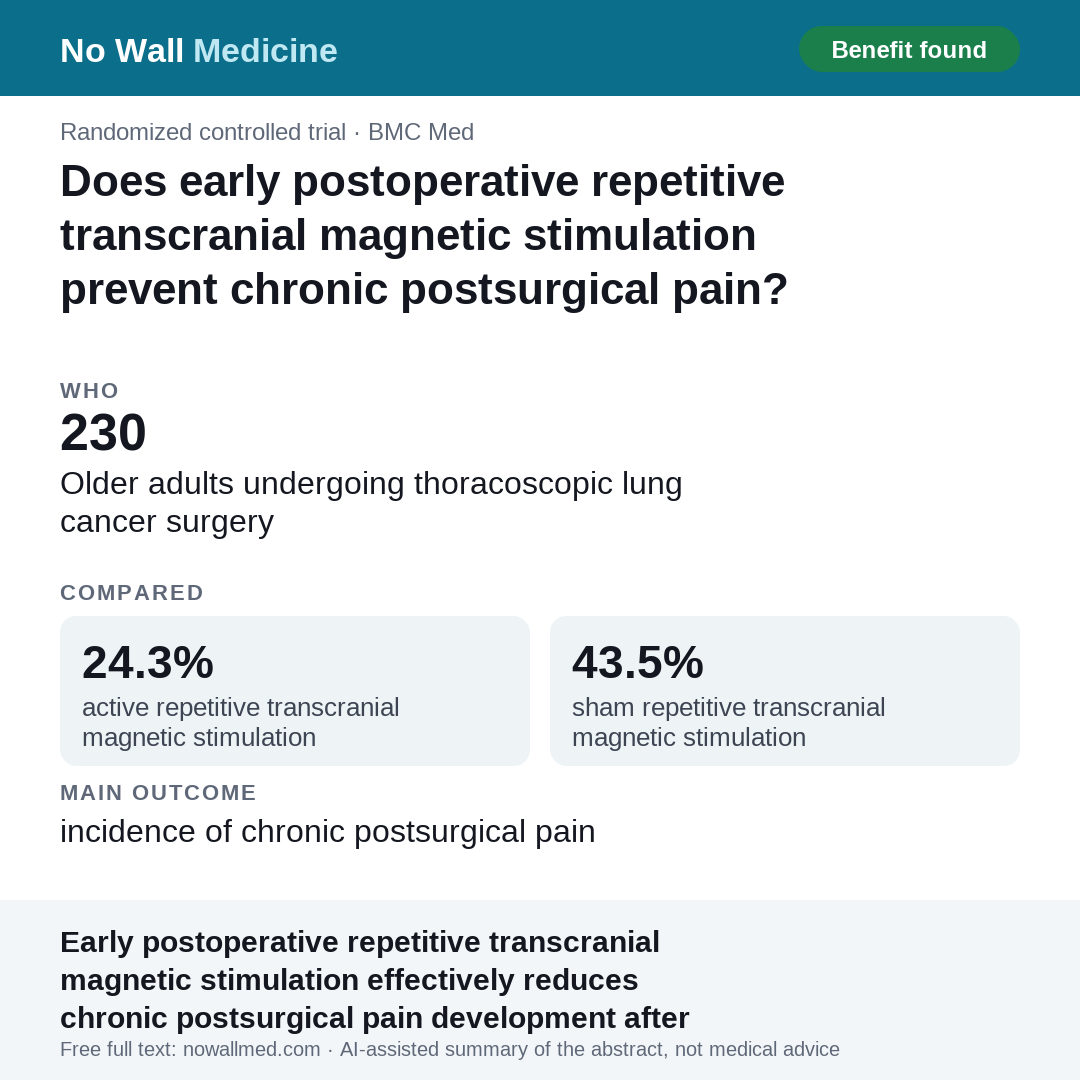
Clinical question: Does early postoperative repetitive transcranial magnetic stimulation prevent chronic postsurgical pain?
Why it matters: There are few effective preventive strategies for chronic postsurgical pain following thoracoscopic lung cancer surgery in older adults.
In absolute numbers
active repetitive transcranial magnetic stimulation: 24.3% · sham repetitive transcranial magnetic stimulation: 43.5% → a difference of 19.2 percentage points, so about 6 people would need the treatment for 1 more to benefit (number needed to treat) over the trial’s follow-up.
Worked out by us from the two group results above, not reported by the authors. Check the paper for the exact outcome and timing.
Key points
- Researchers studied 230 patients undergoing thoracoscopic lung cancer surgery who were randomized to receive either active or sham repetitive transcranial magnetic stimulation.
- The incidence of chronic postsurgical pain was 24.3% in the active group compared to 43.5% in the sham group.
- Patients receiving active magnetic brain stimulation also showed significant improvements in anxiety levels compared to the sham group.
Headline and key points written with AI from the paper’s abstract, with every number checked against it. Read the paper before relying on them.
Topics
Spotted a mistake? Suggest a correction