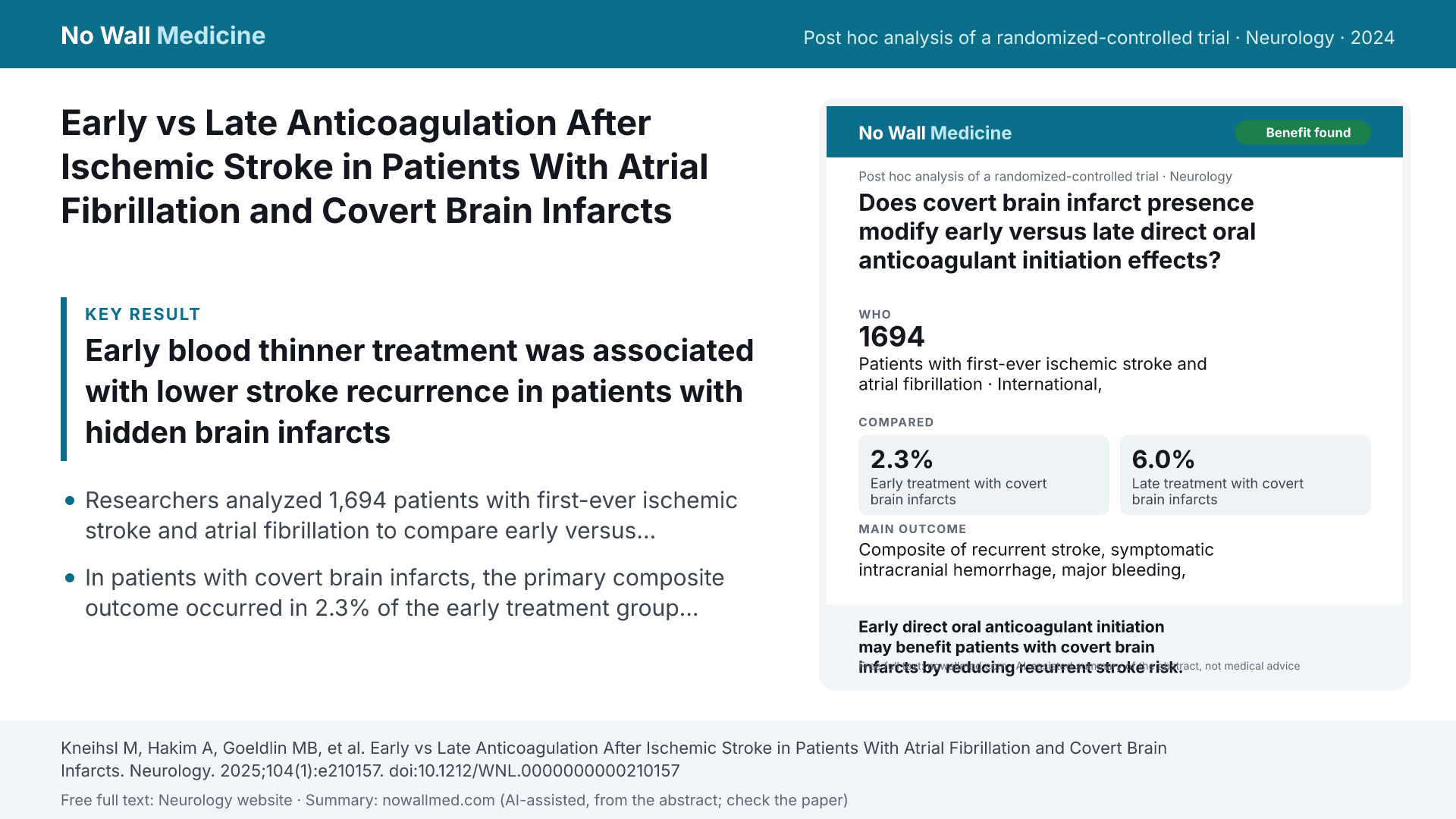
Early blood thinner treatment was associated with lower stroke recurrence in patients with hidden brain infarcts
Early vs Late Anticoagulation After Ischemic Stroke in Patients With Atrial Fibrillation and Covert Brain Infarcts
Post hoc analysis of a randomized-controlled trialBenefit found
Does covert brain infarct presence modify early versus late direct oral anticoagulant initiation effects?
Who
1694
Patients with first-ever ischemic stroke and atrial fibrillation · International, multicenter
Compared
2.3%Early treatment with covert brain infarcts
6.0%Late treatment with covert brain infarcts
Main outcome
Composite of recurrent stroke, symptomatic intracranial hemorrhage, major bleeding, embolism, or vascular death
Result: adjusted risk difference -3.6%, 95% CI -6.6 to -0.6
Bottom line: Early direct oral anticoagulant initiation may benefit patients with covert brain infarcts by reducing recurrent stroke risk.
Neurology · 2024-12-19Download image
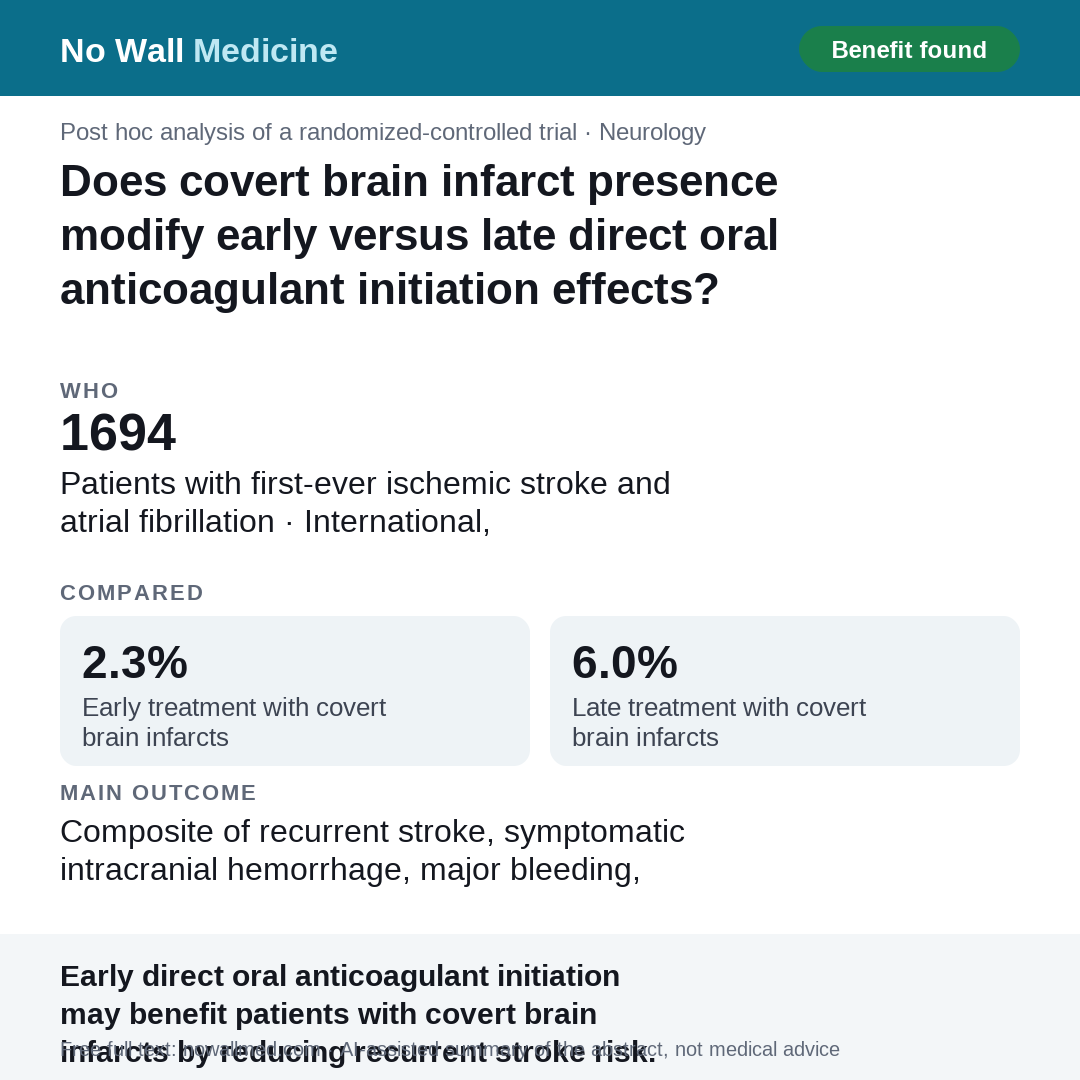
Clinical question: Does covert brain infarct presence modify early versus late direct oral anticoagulant initiation effects?
Why it matters: It was unknown if the presence of covert brain infarcts, or small areas of brain damage not initially seen, changes the effect of early versus late blood thinner initiation.
Key points
- Researchers analyzed 1,694 patients with first-ever ischemic stroke and atrial fibrillation to compare early versus late initiation of direct oral anticoagulants, which are blood-thinning medications.
- In patients with covert brain infarcts, the primary composite outcome occurred in 2.3% of the early treatment group compared to 6.0% in the late treatment group.
- Among those with covert brain infarcts, the risk of recurrent ischemic stroke was lower with early treatment, while no symptomatic intracranial hemorrhage was observed in the early group.
Headline and key points written with AI from the paper’s abstract, with every number checked against it. Read the paper before relying on them.
Was this summary helpful?
Subject terms
Cite this article
Kneihsl M, Hakim A, Goeldlin MB, et al. Early vs Late Anticoagulation After Ischemic Stroke in Patients With Atrial Fibrillation and Covert Brain Infarcts. Neurology. 2024. doi:10.1212/WNL.0000000000210157
Spotted a mistake? Suggest a correction