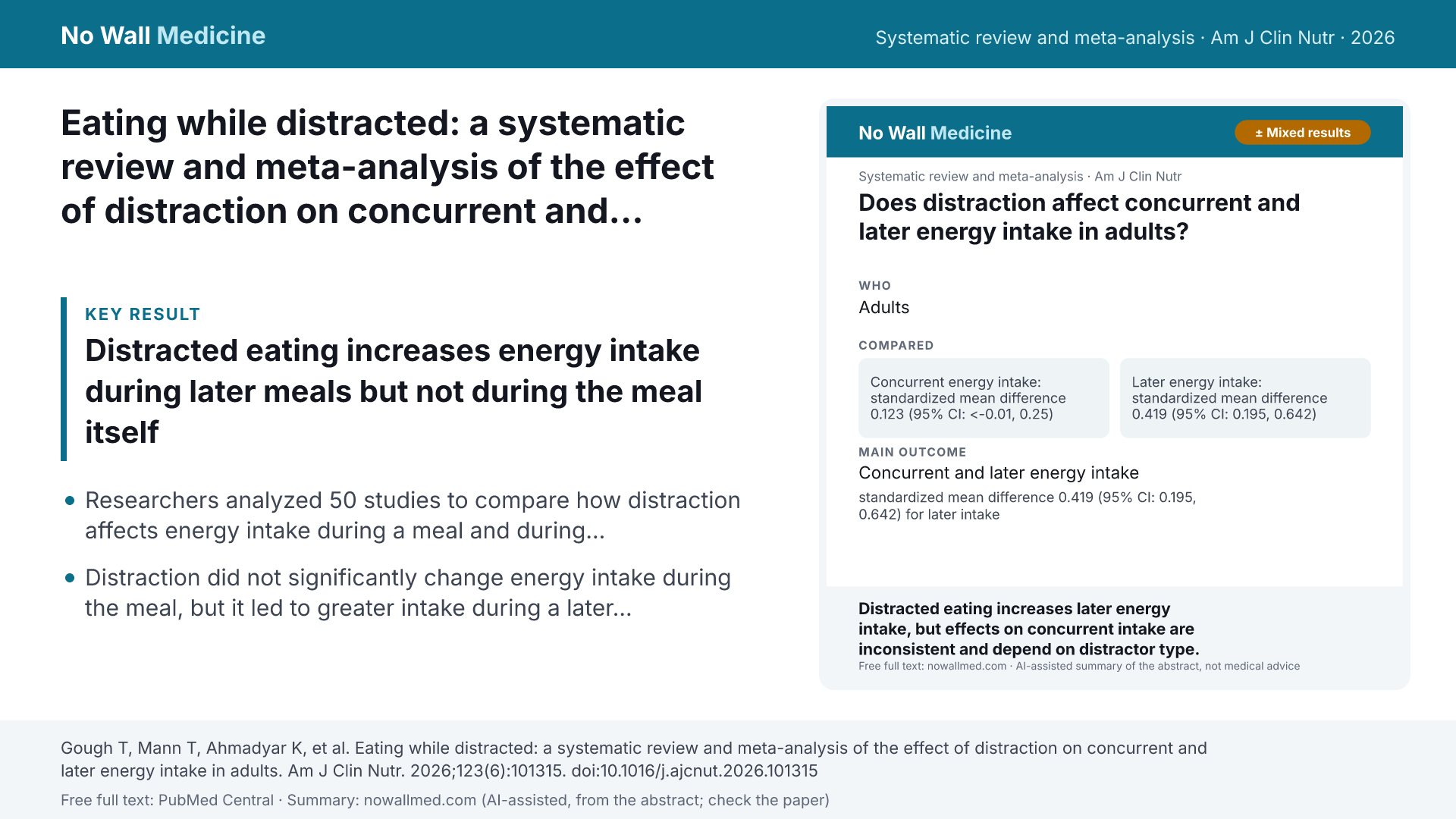
Distracted eating increases energy intake during later meals but not during the meal itself
Eating while distracted: a systematic review and meta-analysis of the effect of distraction on concurrent and later energy intake in adults
Systematic review and meta-analysisMixed results
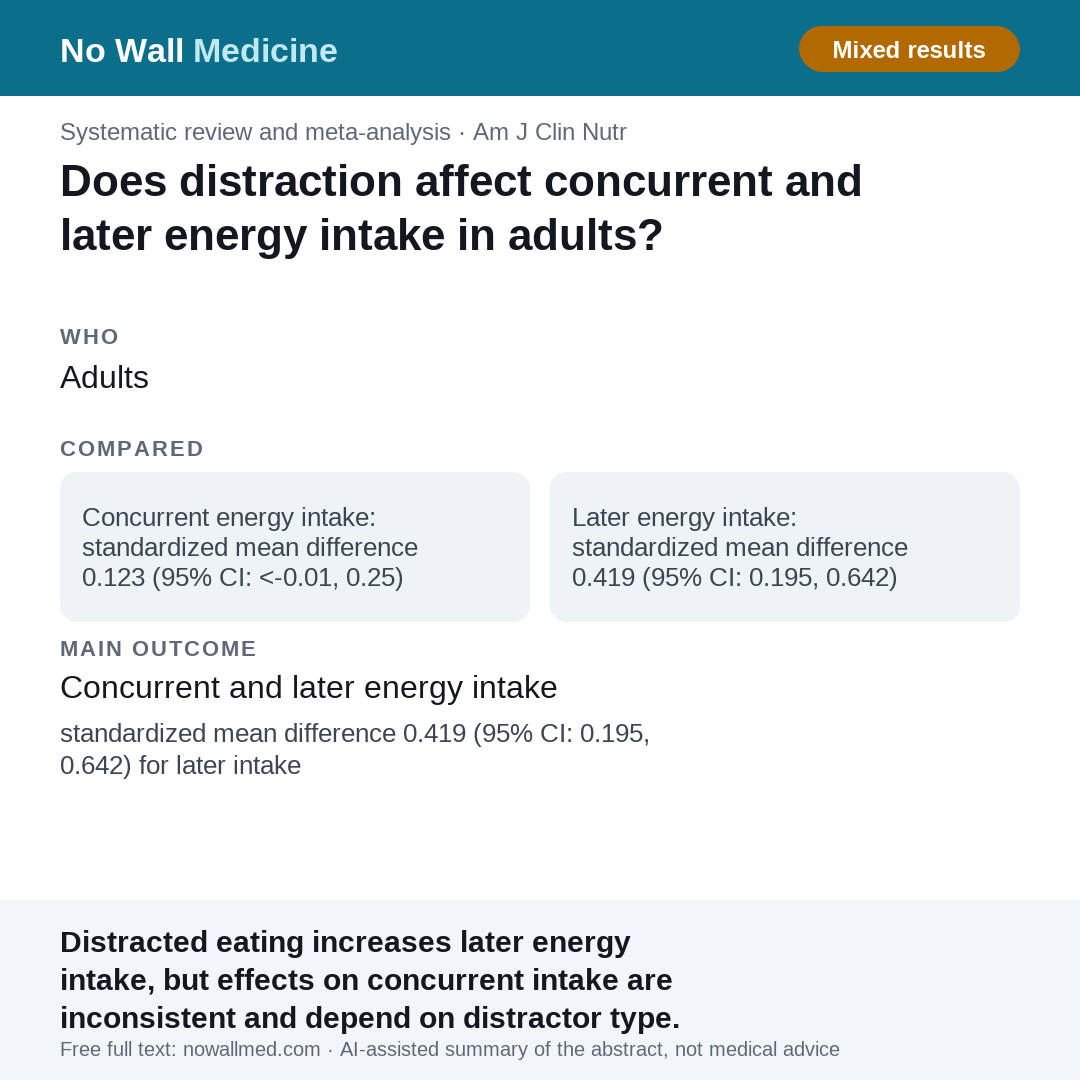
Does distraction affect concurrent and later energy intake in adults?
Who
Adults
Compared
Concurrent energy intake: standardized mean difference 0.123 (95% CI: <-0.01, 0.25)
Later energy intake: standardized mean difference 0.419 (95% CI: 0.195, 0.642)
Main outcome
Concurrent and later energy intake
Result: standardized mean difference 0.419 (95% CI: 0.195, 0.642) for later intake
Bottom line: Distracted eating increases later energy intake, but effects on concurrent intake are inconsistent and depend on distractor type.
Am J Clin Nutr · 2026-04-16Download image
Clinical question: Does distraction affect concurrent and later energy intake in adults?
Why it matters: An updated analysis was needed because previous meta-analyses of experimental studies on distracted eating were small and outdated.
Key points
- Researchers analyzed 50 studies to compare how distraction affects energy intake during a meal and during subsequent eating episodes.
- Distraction did not significantly change energy intake during the meal, but it led to greater intake during a later eating episode.
- Passive distractions like watching television increased energy intake, while physically or cognitively demanding tasks did not show a significant effect.
Headline and key points written with AI from the paper’s abstract, with every number checked against it. Read the paper before relying on them.
Was this summary helpful?
Subject terms
Cite this article
Gough T, Mann T, Ahmadyar K, et al. Eating while distracted: a systematic review and meta-analysis of the effect of distraction on concurrent and later energy intake in adults. Am J Clin Nutr. 2026. doi:10.1016/j.ajcnut.2026.101315
Spotted a mistake? Suggest a correction