Economic analysis of an AI-enabled ECG alert system: impact on mortality outcomes from a pragmatic randomized trial
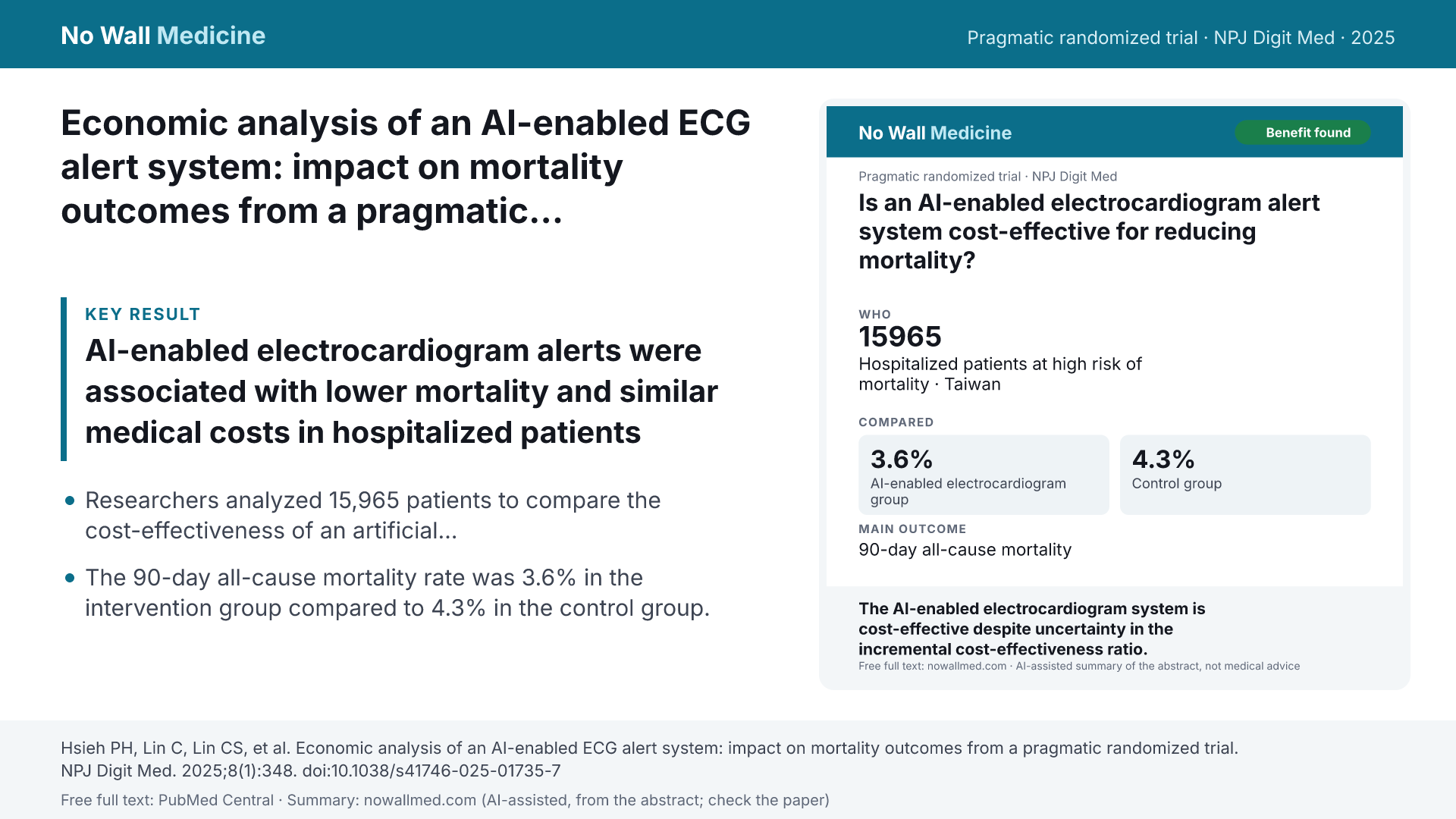
Key result: AI-enabled electrocardiogram alerts were associated with lower mortality and similar medical costs in hospitalized patients
Pragmatic randomized trialBenefit found
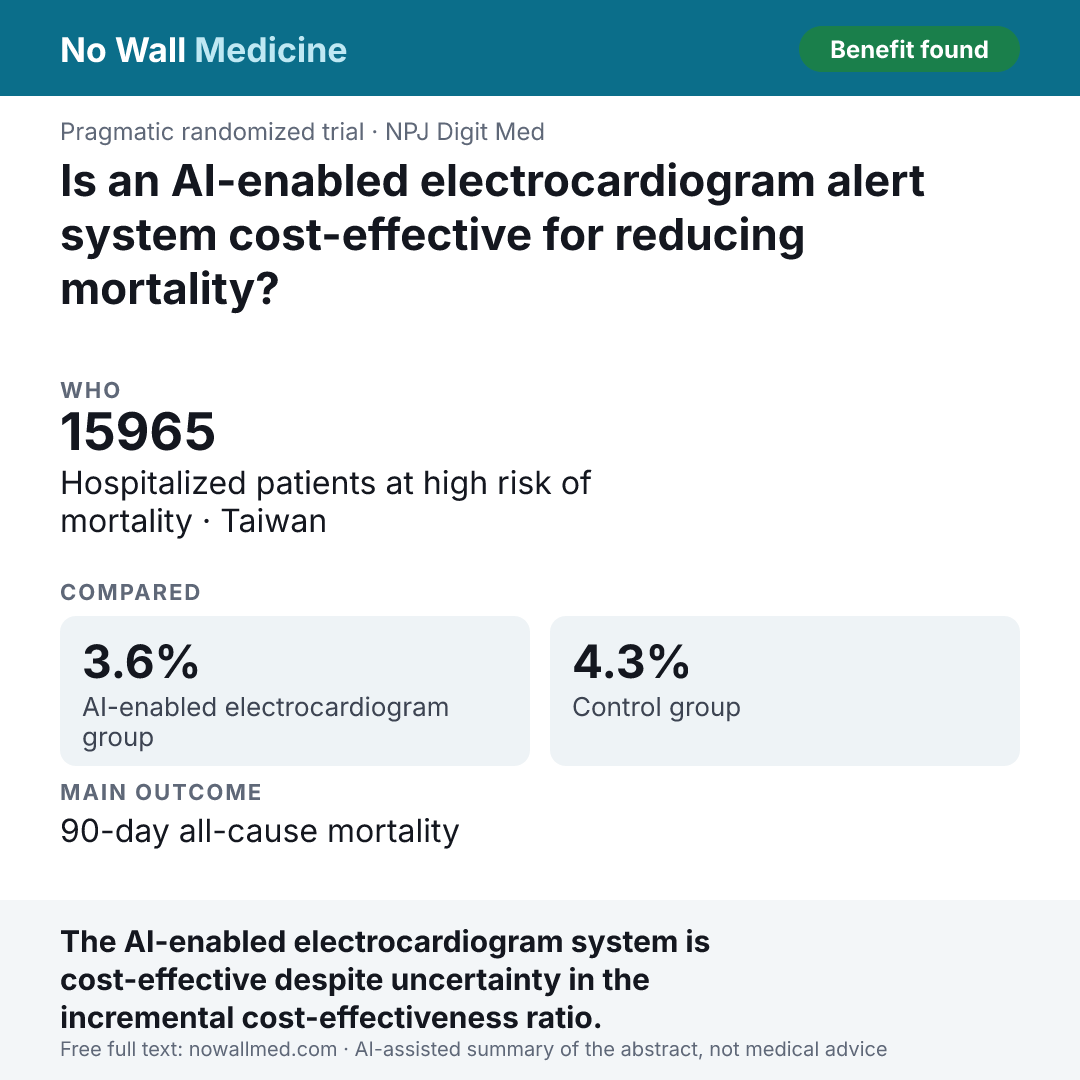
Is an AI-enabled electrocardiogram alert system cost-effective for reducing mortality?
Who
15965
Hospitalized patients at high risk of mortality · Taiwan
Compared
3.6%AI-enabled electrocardiogram group
4.3%Control group
Main outcome
90-day all-cause mortality
Bottom line: The AI-enabled electrocardiogram system is cost-effective despite uncertainty in the incremental cost-effectiveness ratio.
NPJ Digit Med · 2025-06-11 · Save PNG
Key points
- Researchers analyzed 15,965 patients to compare the cost-effectiveness of an artificial intelligence-enabled electrocardiogram system against standard care.
- The 90-day all-cause mortality rate was 3.6% in the intervention group compared to 4.3% in the control group.
- Overall medical costs were similar between groups at $6204 for the intervention group and $5803 for the control group.
Discussion prompts
- Would these patients look like yours? Who was left out?
- Is the main outcome one that matters to patients?
- Is the difference large enough to change what you do?
Cite: Hsieh PH, Lin C, Lin CS, et al. Economic analysis of an AI-enabled ECG alert system: impact on mortality outcomes from a pragmatic randomized trial. NPJ Digit Med. 2025;8(1):348. doi:10.1038/s41746-025-01735-7
Free full text: PubMed Central · Summary and visual abstract: nowallmed.com/a/economic-analysis-of-an-ai-enabled-ecg-alert-system-impact-on-162s43d/ (AI-assisted from the abstract; check the paper before relying on it).