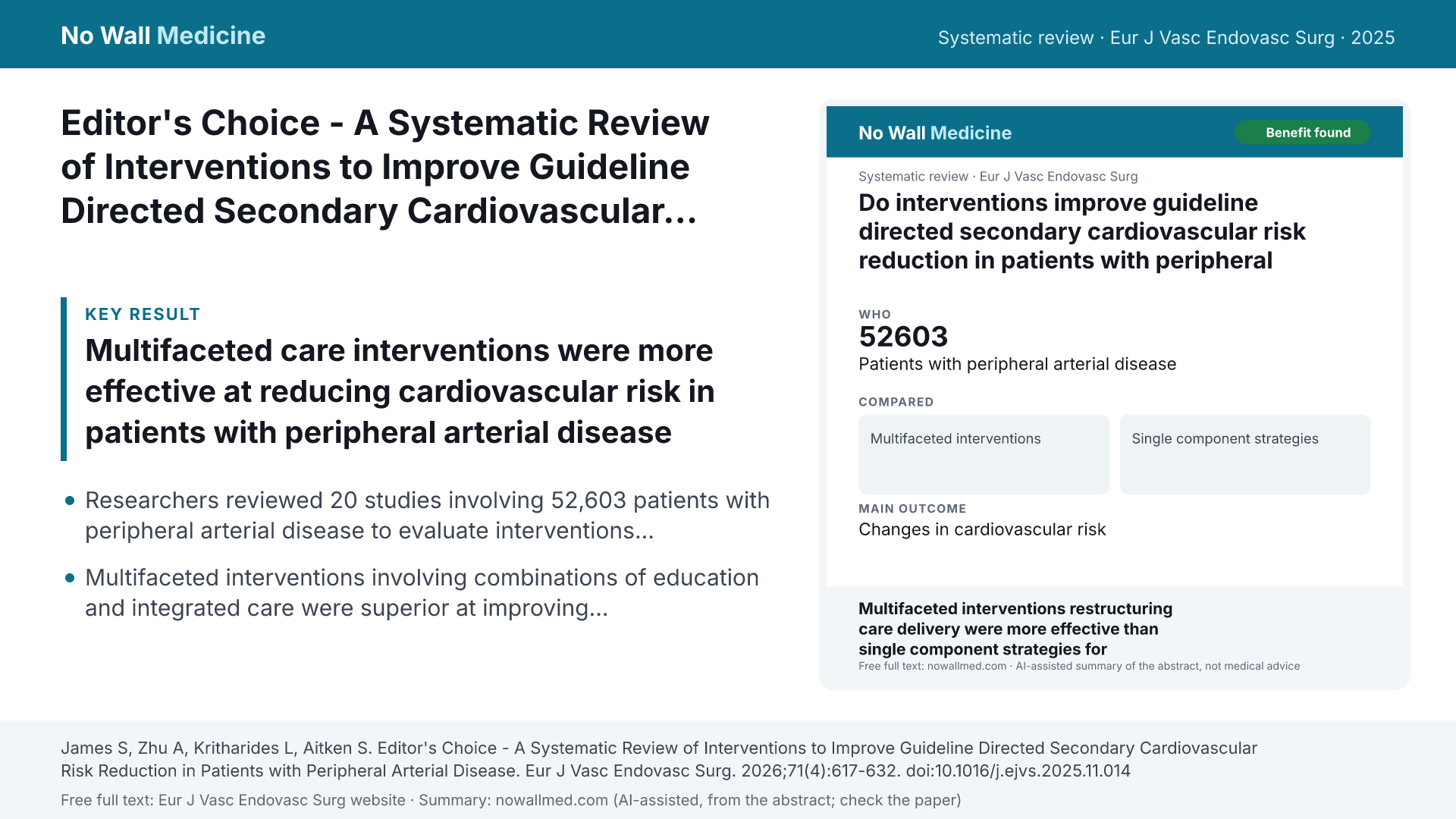
Multifaceted care interventions were more effective at reducing cardiovascular risk in patients with peripheral arterial disease
Editor's Choice - A Systematic Review of Interventions to Improve Guideline Directed Secondary Cardiovascular Risk Reduction in Patients with Peripheral Arterial Disease
Systematic reviewBenefit found
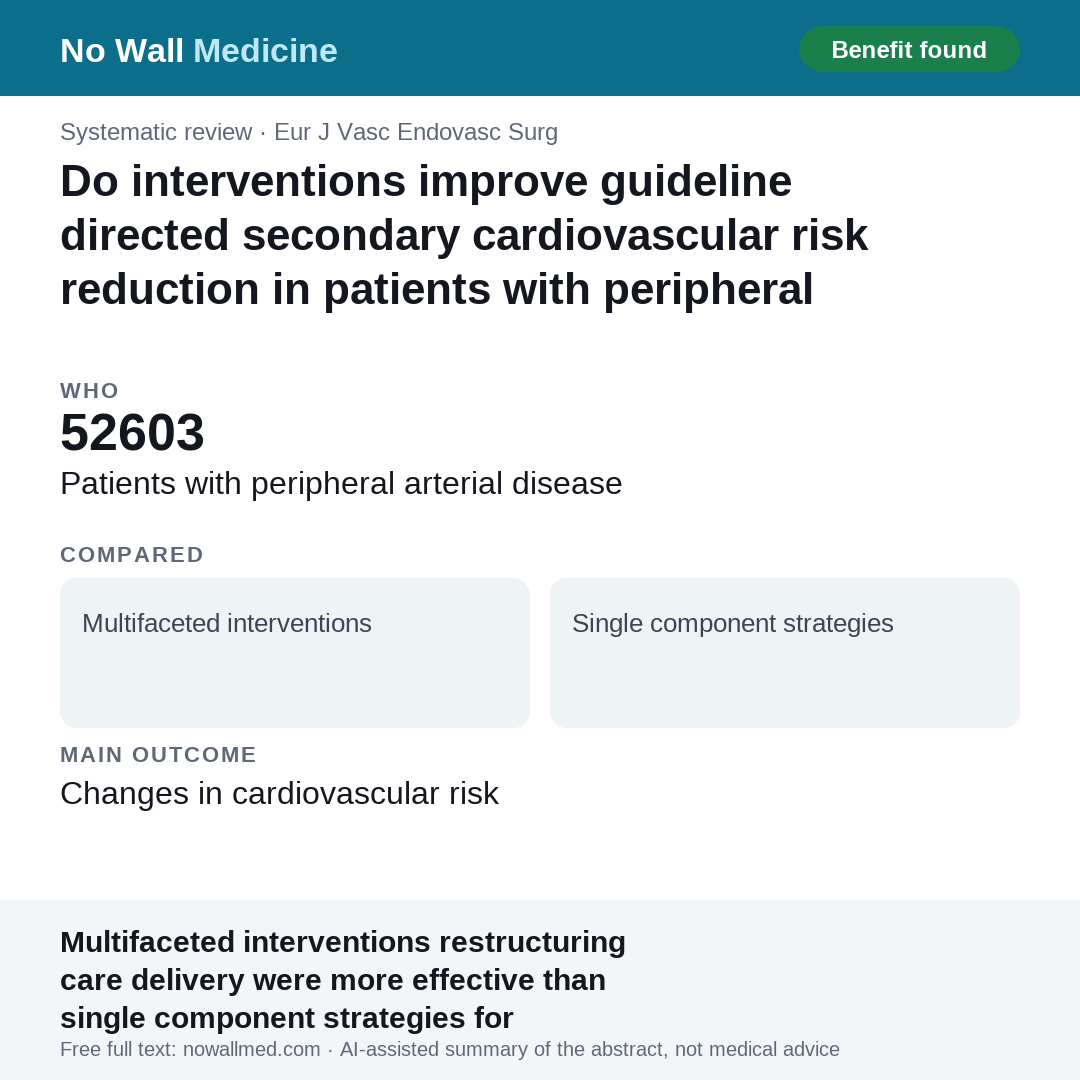
Do interventions improve guideline directed secondary cardiovascular risk reduction in patients with peripheral arterial disease?
Who
52603
Patients with peripheral arterial disease
Compared
Multifaceted interventions
Single component strategies
Main outcome
Changes in cardiovascular risk
Bottom line: Multifaceted interventions restructuring care delivery were more effective than single component strategies for cardiovascular risk reduction.
Limitation: Study quality was limited, and consistent outcome measurements were lacking.
Eur J Vasc Endovasc Surg · 2025-11-17Download image
Clinical question: Do interventions improve guideline directed secondary cardiovascular risk reduction in patients with peripheral arterial disease?
Why it matters: Clinicians often underuse cardioprotective medications for patients with peripheral arterial disease, and effective strategies to support adherence are poorly understood.
Key points
- Researchers reviewed 20 studies involving 52,603 patients with peripheral arterial disease to evaluate interventions for cardiovascular risk reduction.
- Multifaceted interventions involving combinations of education and integrated care were superior at improving cardiovascular risk reduction and were associated with improved survival.
- Interventions focused solely on changing patient behavior were largely ineffective at improving outcomes.
Limitation the authors note: Study quality was limited and consistent outcome measurements were lacking.
Headline and key points written with AI from the paper’s abstract, with every number checked against it. Read the paper before relying on them.
Was this summary helpful?
Subject terms
Cite this article
James S, Zhu A, Kritharides L, Aitken S. Editor's Choice - A Systematic Review of Interventions to Improve Guideline Directed Secondary Cardiovascular Risk Reduction in Patients with Peripheral Arterial Disease. Eur J Vasc Endovasc Surg. 2025. doi:10.1016/j.ejvs.2025.11.014
Spotted a mistake? Suggest a correction