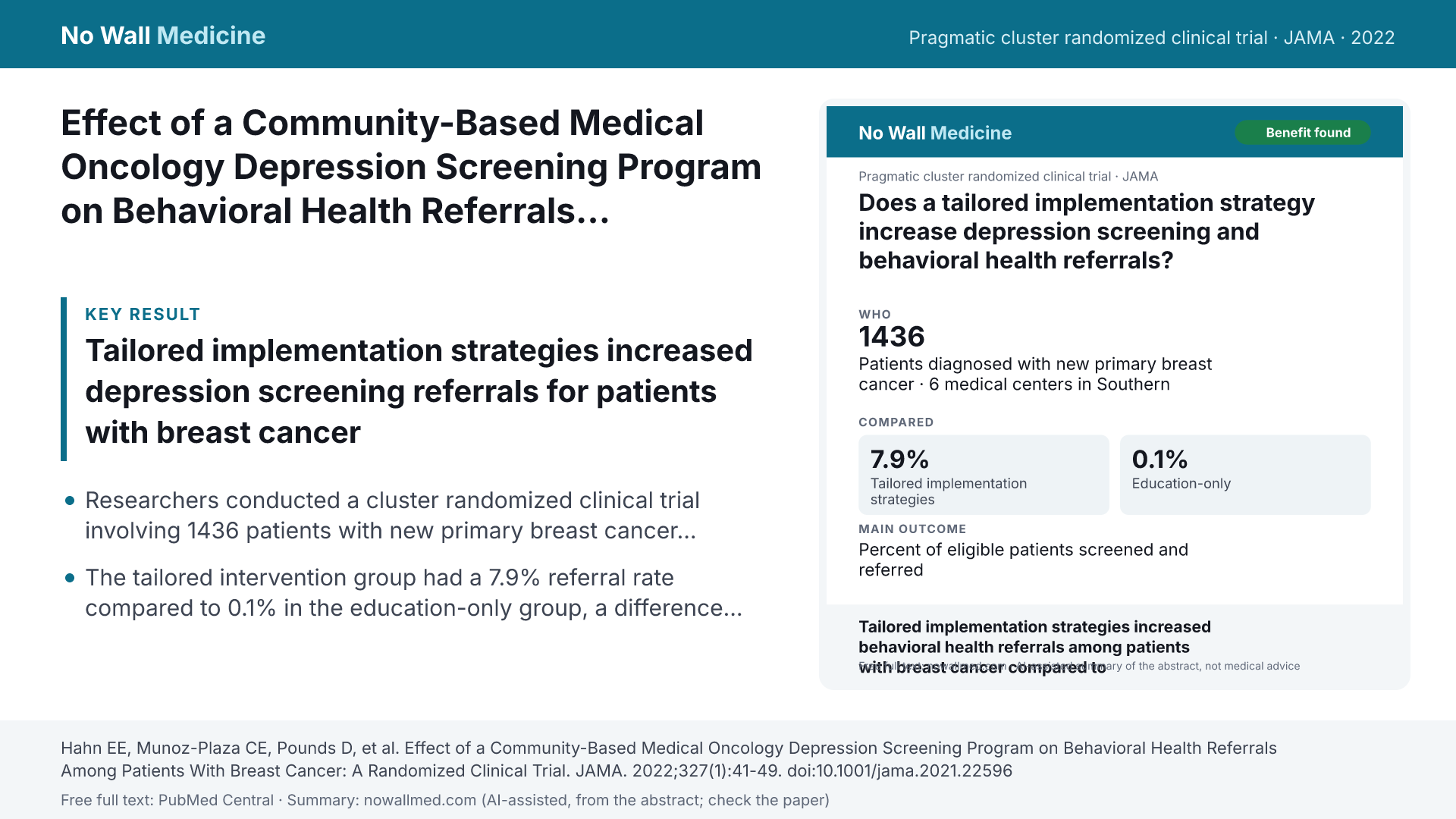
Tailored implementation strategies increased depression screening referrals for patients with breast cancer
Effect of a Community-Based Medical Oncology Depression Screening Program on Behavioral Health Referrals Among Patients With Breast Cancer: A Randomized Clinical Trial
Pragmatic cluster randomized clinical trialBenefit found
Does a tailored implementation strategy increase depression screening and behavioral health referrals?
Who
1436
Patients diagnosed with new primary breast cancer · 6 medical centers in Southern California
Compared
7.9%Tailored implementation strategies (59 of 744)
0.1%Education-only (1 of 692)
Main outcome
Percent of eligible patients screened and referred
Result: difference, 7.8%; 95% CI, 5.8%-9.8%
Bottom line: Tailored implementation strategies increased behavioral health referrals among patients with breast cancer compared to education-only approaches.
Limitation: Further research is needed to understand the clinical benefit and cost-effectiveness of this program.
JAMA · 2022-01-04 · Save PNG
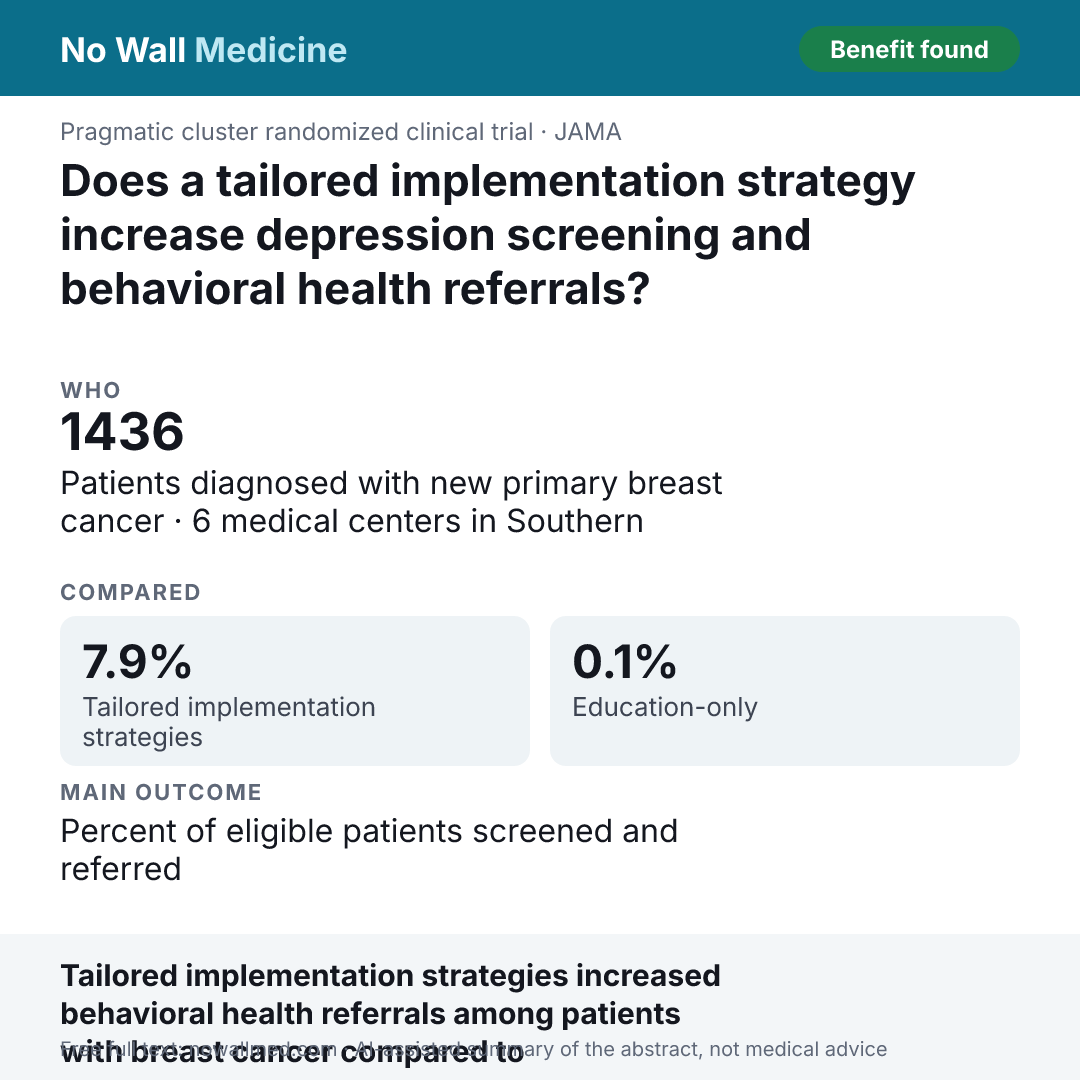
Clinical question: Does a tailored implementation strategy increase depression screening and behavioral health referrals?
Key points
- Researchers conducted a cluster randomized clinical trial involving 1436 patients with new primary breast cancer across six medical centers.
- The tailored intervention group had a 7.9% referral rate compared to 0.1% in the education-only group, a difference of 7.8%.
- Patients in the tailored intervention sites had a lower rate of outpatient medical oncology visits, with a rate ratio of 0.86.
Headline and key points written with AI from the paper’s abstract, with every number checked against it. Read the paper before relying on them.
Was this summary helpful?
Subject terms
Headline, design, result, key points, caveat and citation as plain text.
Cite this article
Hahn EE, Munoz-Plaza CE, Pounds D, et al. Effect of a Community-Based Medical Oncology Depression Screening Program on Behavioral Health Referrals Among Patients With Breast Cancer: A Randomized Clinical Trial. JAMA. 2022;327(1):41-49. doi:10.1001/jama.2021.22596
Spotted a mistake? Suggest a correction