Effect of a Multifactorial Intervention on Fracture in Patients With Type 2 Diabetes: Subanalysis of the J-DOIT3 Study
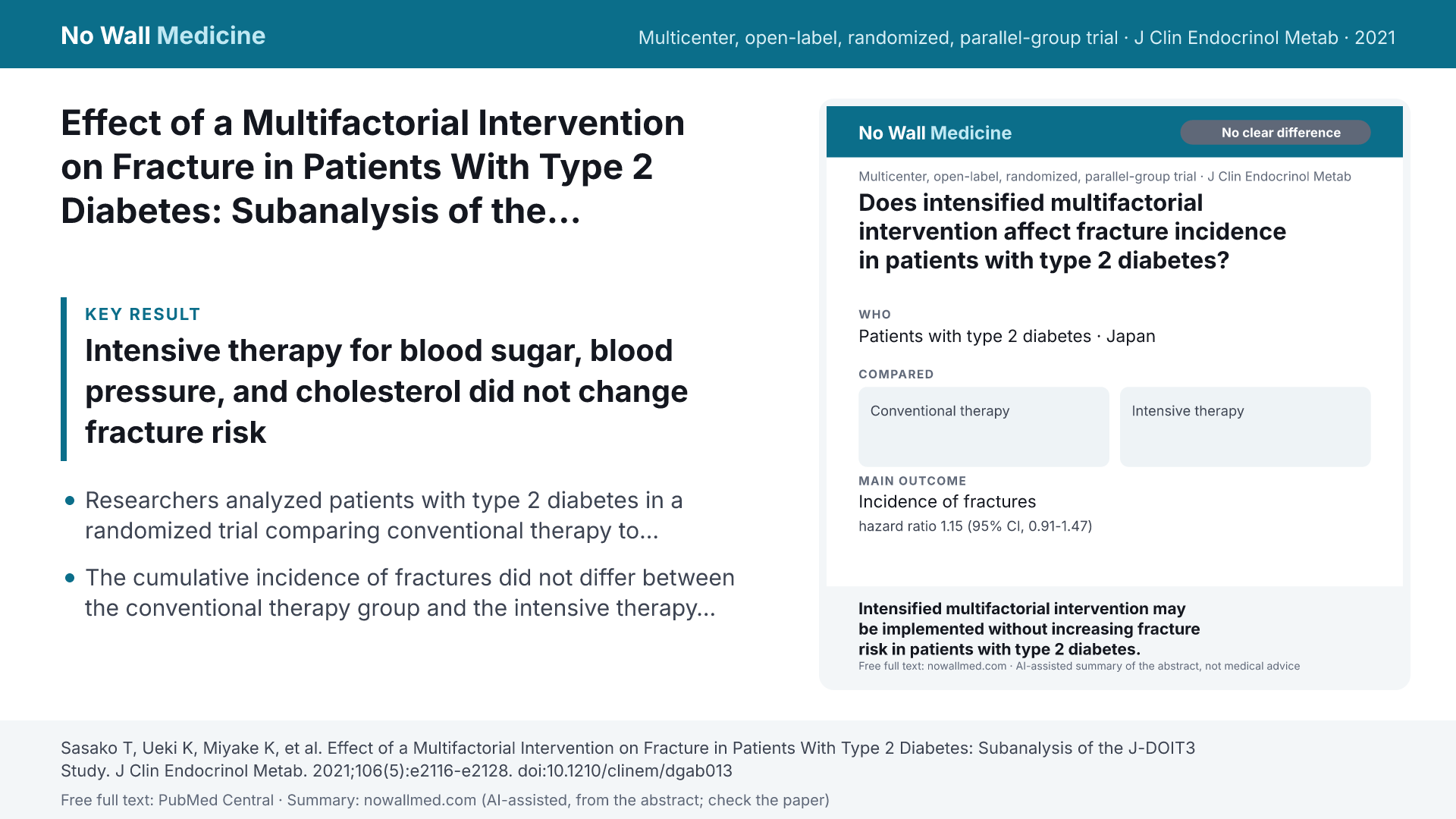
Key result: Intensive therapy for blood sugar, blood pressure, and cholesterol did not change fracture risk
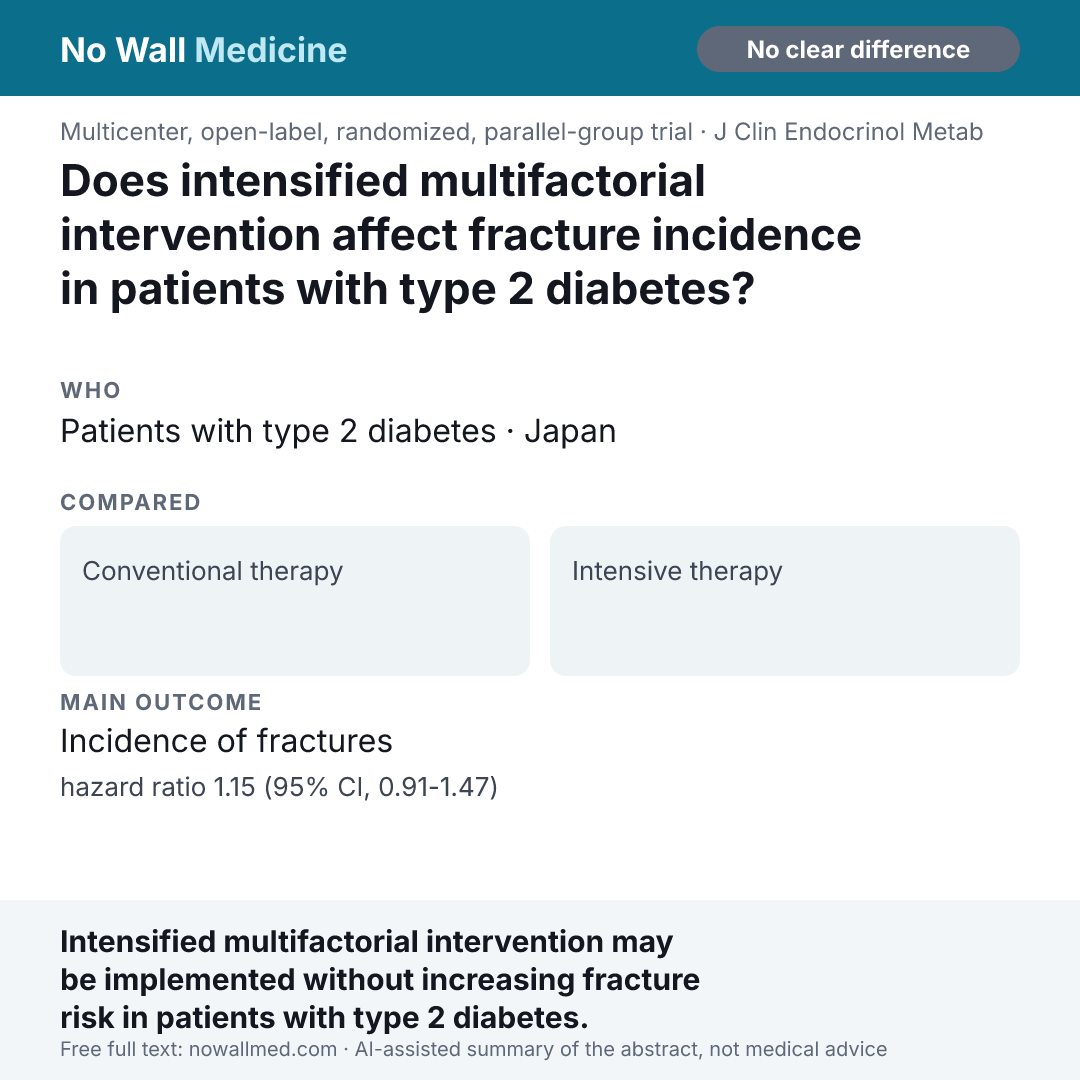
Multicenter, open-label, randomized, parallel-group trialNo clear difference
Does intensified multifactorial intervention affect fracture incidence in patients with type 2 diabetes?
Who
Patients with type 2 diabetes · Japan
Compared
Conventional therapy
Intensive therapy
Main outcome
Incidence of fractures
Result: hazard ratio 1.15 (95% CI, 0.91-1.47)
Bottom line: Intensified multifactorial intervention may be implemented without increasing fracture risk in patients with type 2 diabetes.
J Clin Endocrinol Metab · 2021-01-26 · Save PNG
Key points
- Researchers analyzed patients with type 2 diabetes in a randomized trial comparing conventional therapy to intensive therapy for glucose, blood pressure, and lipids.
- The cumulative incidence of fractures did not differ between the conventional therapy group and the intensive therapy group (hazard ratio 1.15; 95% CI, 0.91-1.47; P = 0.241).
- In men, smoking history was associated with fracture incidence, while in women, fracture risk was associated with FRAX scores and pioglitazone use.
Discussion prompts
- Would these patients look like yours? Who was left out?
- Is the main outcome one that matters to patients?
- Is the difference large enough to change what you do?
Cite: Sasako T, Ueki K, Miyake K, et al. Effect of a Multifactorial Intervention on Fracture in Patients With Type 2 Diabetes: Subanalysis of the J-DOIT3 Study. J Clin Endocrinol Metab. 2021;106(5):e2116-e2128. doi:10.1210/clinem/dgab013
Free full text: PubMed Central · Summary and visual abstract: nowallmed.com/a/effect-of-a-multifactorial-intervention-on-fracture-in-patients-with-yn2peq/ (AI-assisted from the abstract; check the paper before relying on it).