Peer support program improved medication adherence and self-care among patients with diabetes in Ethiopia
Effect of a peer support group intervention on medication adherence, self- care practices, and diabetes knowledge among patients with diabetes in Northern Ethiopia: a randomized controlled trial
Randomized controlled trialBenefit found
Does a peer support group intervention improve diabetes management outcomes?
Who
97
Adults with diabetes attending follow-up at a tertiary hospital · Ayder Comprehensive Specialized Hospital, Ethiopia
Compared
Peer-support intervention group: significant improvements across all outcome measures
Control group
Main outcome
Medication adherence, self-care practices, and diabetes knowledge
Result: DiD = + 1.5 points
Bottom line: Structured peer-support interventions may improve medication adherence, self-care, and diabetes knowledge in low-resource settings.
Limitation: Future research should evaluate sustainability, scalability, cost-effectiveness, and long-term impact.
BMC Prim Care · 2026-06-19Download image
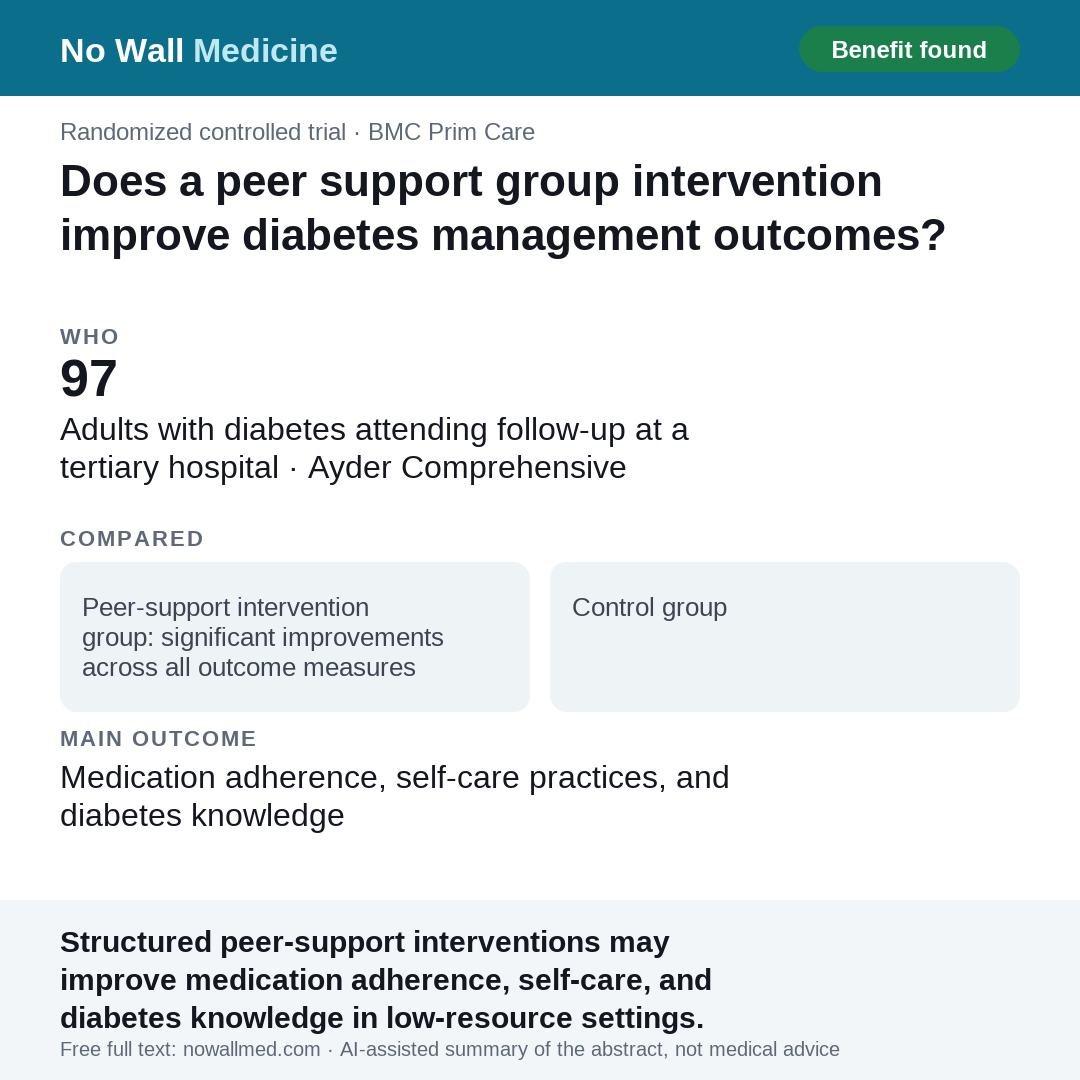
Clinical question: Does a peer support group intervention improve diabetes management outcomes?
Why it matters: Many patients with diabetes struggle to maintain consistent treatment adherence, regular self-care, and adequate disease knowledge.
Key points
- Researchers studied 97 adults with diabetes at a hospital in Ethiopia, comparing a peer-led support group to a control group over six months.
- The intervention group showed significant improvements in medication adherence, self-care practices, and diabetes knowledge compared to the control group.
- Medication adherence in the intervention group increased by a net difference-in-differences estimate of +1.5 points.
Headline and key points written with AI from the paper’s abstract, with every number checked against it. Read the paper before relying on them.
Topics
Spotted a mistake? Suggest a correction