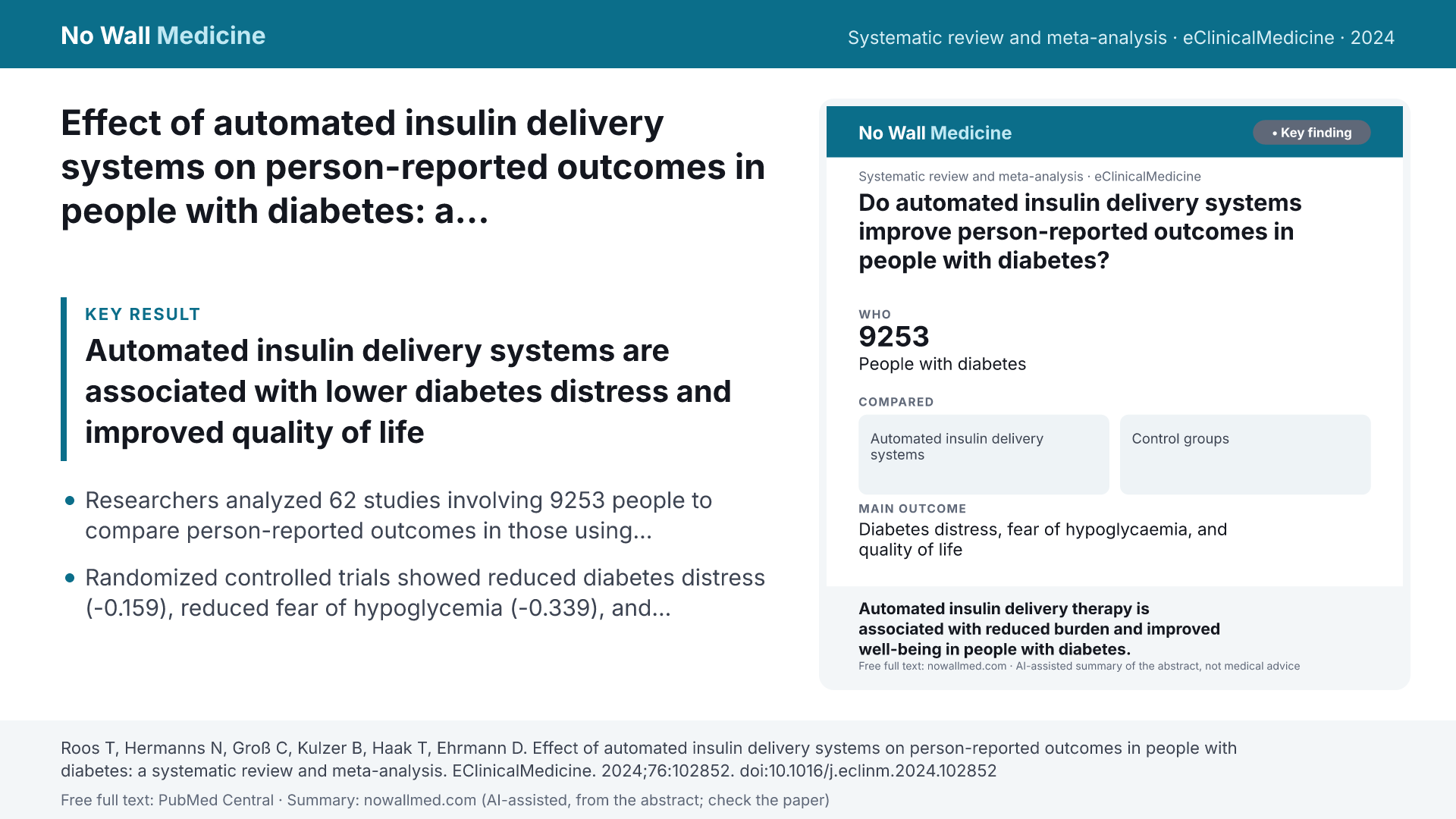
Automated insulin delivery systems are associated with lower diabetes distress and improved quality of life
Effect of automated insulin delivery systems on person-reported outcomes in people with diabetes: a systematic review and meta-analysis
Endocrinology & DiabetesAdult and pediatric
Systematic review and meta-analysisKey finding
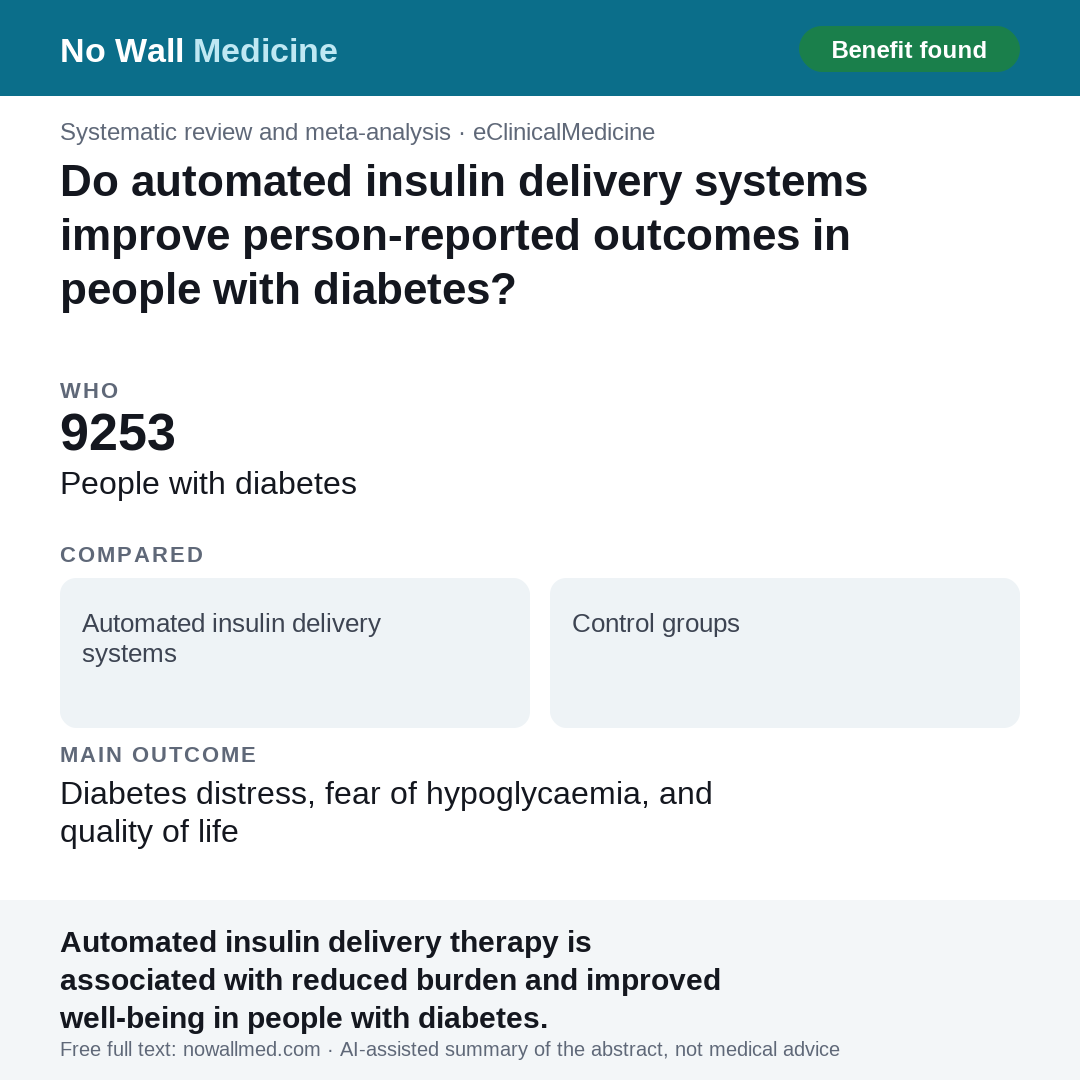
Do automated insulin delivery systems improve person-reported outcomes in people with diabetes?
Who
9253
People with diabetes
Compared
Automated insulin delivery systems
Control groups
Main outcome
Diabetes distress, fear of hypoglycaemia, and quality of life
Result: standardised mean difference [-0.159 (-0.309, -0.010) to 0.347 (0.134, 0.560)]
Bottom line: Automated insulin delivery therapy is associated with reduced burden and improved well-being in people with diabetes.
Limitation: Limited number of studies pooled for some outcomes and large heterogeneity in questionnaires used.
eClinicalMedicine · 2024-09-21Download image
Clinical question: Do automated insulin delivery systems improve person-reported outcomes in people with diabetes?
Why it matters: Conclusive evidence on how automated insulin delivery systems affect person-reported outcomes in people with diabetes is missing.
Key points
- Researchers analyzed 62 studies involving 9253 people to compare person-reported outcomes in those using automated insulin delivery systems.
- Randomized controlled trials showed reduced diabetes distress (-0.159), reduced fear of hypoglycemia (-0.339), and improved quality of life in adults (0.347) and children (0.249).
- Observational studies showed improvements in diabetes distress (-0.217), fear of hypoglycemia (-0.445), hypoglycemia unawareness (-0.212), and sleep quality (-0.158).
Limitation the authors note: For some person-reported outcomes, only a limited number of studies could be pooled due to large heterogeneity in the questionnaires used.
Headline and key points written with AI from the paper’s abstract, with every number checked against it. Read the paper before relying on them.
Was this summary helpful?
Cite this article
Roos T, Hermanns N, Groß C, Kulzer B, Haak T, Ehrmann D. Effect of automated insulin delivery systems on person-reported outcomes in people with diabetes: a systematic review and meta-analysis. EClinicalMedicine. 2024;76:102852. doi:10.1016/j.eclinm.2024.102852
Spotted a mistake? Suggest a correction