Adding posterior wall isolation to pulmonary vein isolation did not reduce arrhythmia recurrence in persistent atrial fibrillation
Effect of Catheter Ablation Using Pulmonary Vein Isolation With vs Without Posterior Left Atrial Wall Isolation on Atrial Arrhythmia Recurrence in Patients With Persistent Atrial Fibrillation: The CAPLA Randomized Clinical Trial
Multicenter, randomized clinical trialNo clear difference
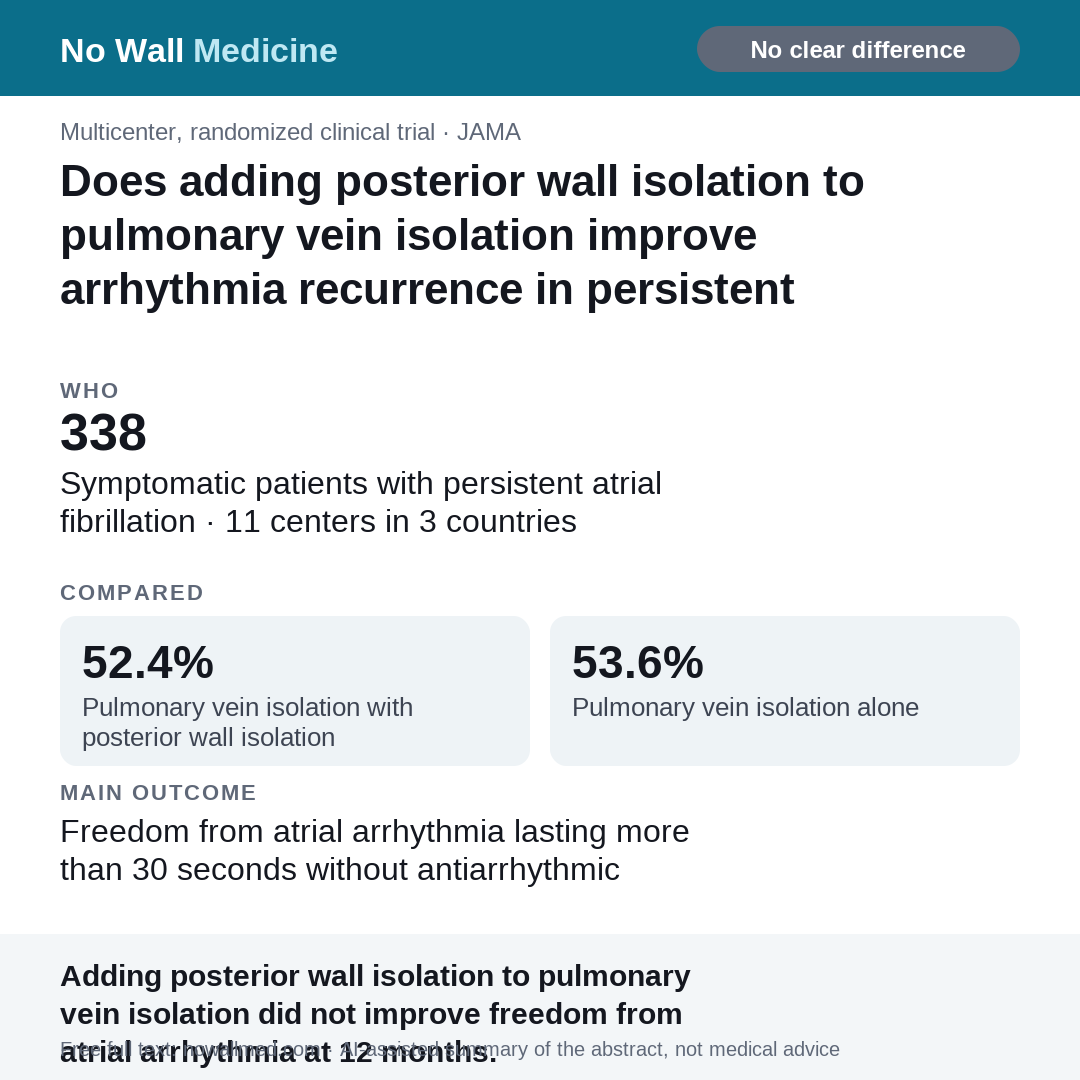
Does adding posterior wall isolation to pulmonary vein isolation improve arrhythmia recurrence in persistent atrial fibrillation?
Who
338
Symptomatic patients with persistent atrial fibrillation · 11 centers in 3 countries
Compared
52.4%Pulmonary vein isolation with posterior wall isolation
53.6%Pulmonary vein isolation alone
Main outcome
Freedom from atrial arrhythmia lasting more than 30 seconds without antiarrhythmic medication
Result: hazard ratio 0.99 (95% CI 0.73-1.36)
Bottom line: Adding posterior wall isolation to pulmonary vein isolation did not improve freedom from atrial arrhythmia at 12 months.
JAMA · 2023-01-10Download image
Clinical question: Does adding posterior wall isolation to pulmonary vein isolation improve arrhythmia recurrence in persistent atrial fibrillation?
Why it matters: It is unknown if adding posterior wall isolation to pulmonary vein isolation improves outcomes for patients undergoing their first catheter ablation for persistent atrial fibrillation.
Key points
- Researchers conducted a randomized trial of 338 patients with persistent atrial fibrillation to compare pulmonary vein isolation alone against pulmonary vein isolation plus posterior wall isolation.
- At 12 months, 52.4% of patients in the combined group were free from recurrent atrial arrhythmia without medication, compared with 53.6% in the pulmonary vein isolation alone group.
- The addition of posterior wall isolation was associated with longer mean procedural times of 142 minutes compared to 121 minutes for pulmonary vein isolation alone.
Headline and key points written with AI from the paper’s abstract, with every number checked against it. Read the paper before relying on them.
Was this summary helpful?
Subject terms
Cite this article
Kistler PM, Chieng D, Sugumar H, Ling LH, Segan L, Azzopardi S. Effect of Catheter Ablation Using Pulmonary Vein Isolation With vs Without Posterior Left Atrial Wall Isolation on Atrial Arrhythmia Recurrence in Patients With Persistent Atrial Fibrillation: The CAPLA Randomized Clinical Trial. JAMA. 2023. doi:10.1001/jama.2022.23722
Spotted a mistake? Suggest a correction
Top studies every Monday
The week’s key trials and guidelines in your specialties, plus any topics you follow. By email, free.
Get the weekly digest