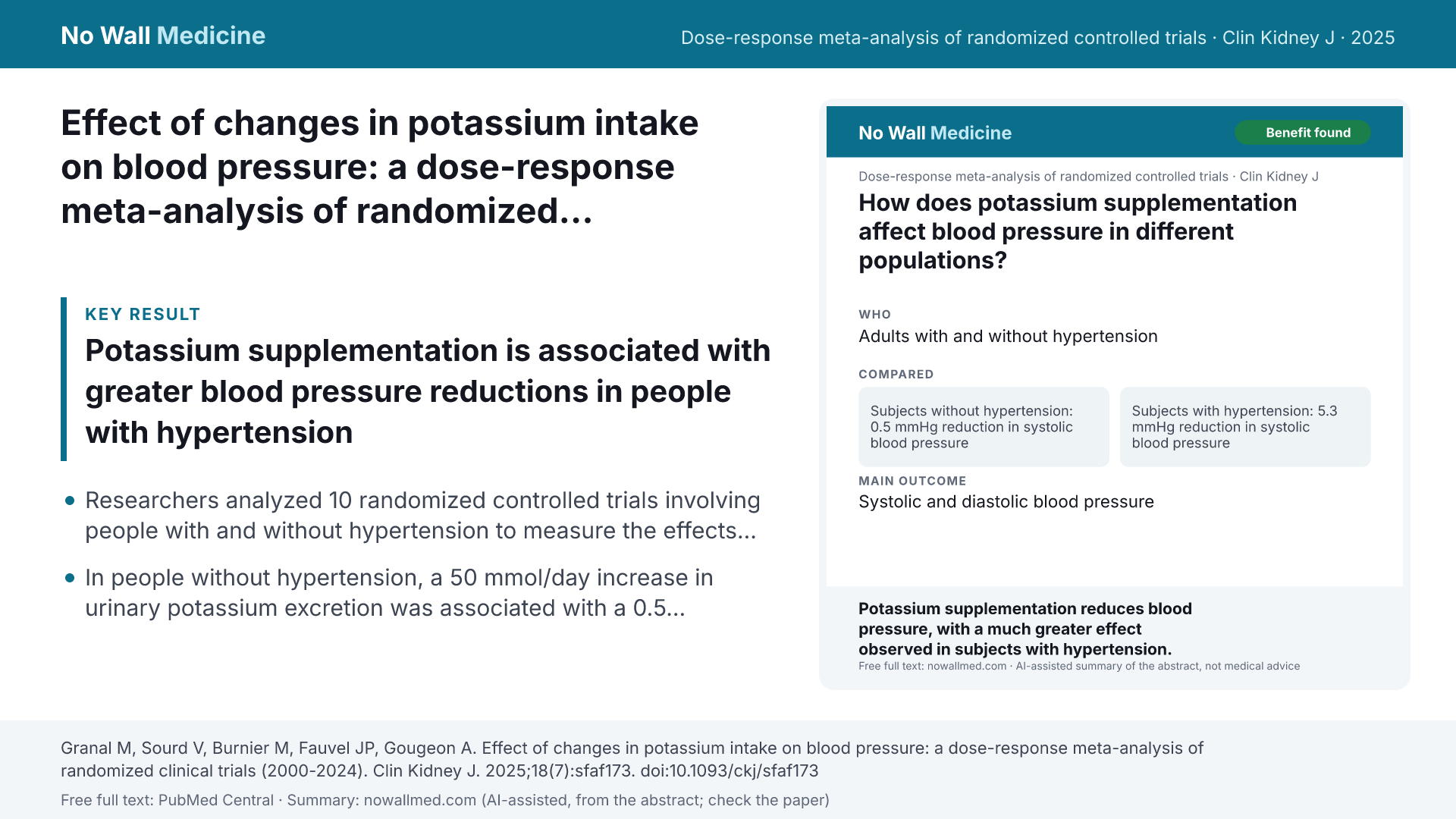
Effect of changes in potassium intake on blood pressure: a dose-response meta-analysis of randomized clinical trials (2000-2024)
Key result: Potassium supplementation is associated with greater blood pressure reductions in people with hypertension
Key points
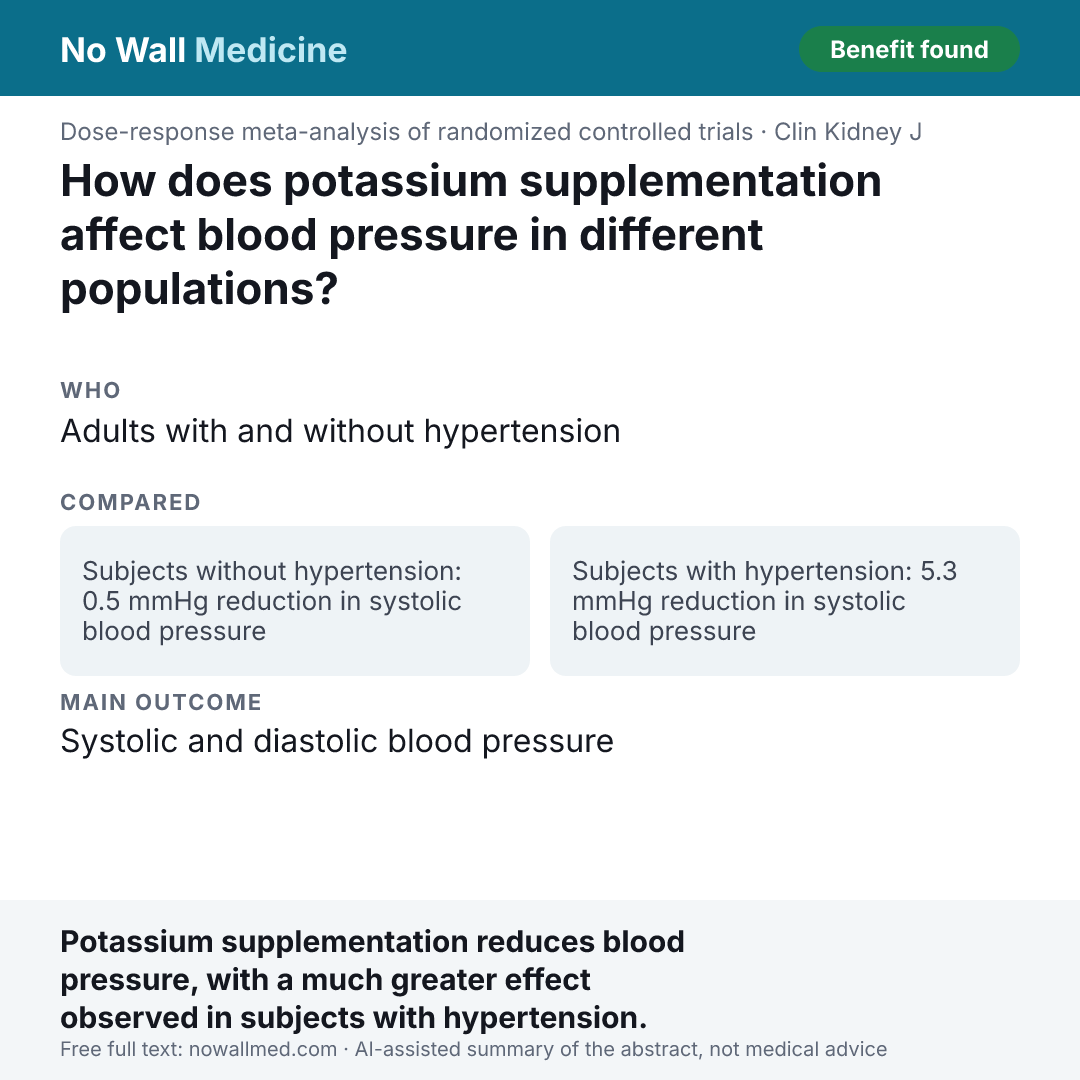
- Researchers analyzed 10 randomized controlled trials involving people with and without hypertension to measure the effects of potassium supplementation on blood pressure.
- In people without hypertension, a 50 mmol/day increase in urinary potassium excretion was associated with a 0.5 mmHg reduction in systolic blood pressure and a 0.12 mmHg reduction in diastolic blood pressure.
- In people with hypertension, the same 50 mmol/day increase was associated with a 5.3 mmHg reduction in systolic blood pressure and a 3.62 mmHg reduction in diastolic blood pressure.
Why it matters: The precise dose-dependent effects of potassium on blood pressure remain inadequately defined despite guidelines emphasizing its importance.
Limitation the authors note: The authors note caution is warranted due to the limited number of randomized controlled trials included in the analysis.
Discussion prompts
- Would these patients look like yours? Who was left out?
- Is the main outcome one that matters to patients?
- Is the difference large enough to change what you do?
Cite: Granal M, Sourd V, Burnier M, Fauvel JP, Gougeon A. Effect of changes in potassium intake on blood pressure: a dose-response meta-analysis of randomized clinical trials (2000-2024). Clin Kidney J. 2025;18(7):sfaf173. doi:10.1093/ckj/sfaf173
Free full text: PubMed Central · Summary and visual abstract: nowallmed.com/a/effect-of-changes-in-potassium-intake-on-blood-pressure-a-dose-8pv7z4/ (AI-assisted from the abstract; check the paper before relying on it).