Financial incentives for medication adherence or cholesterol targets did not improve cholesterol levels
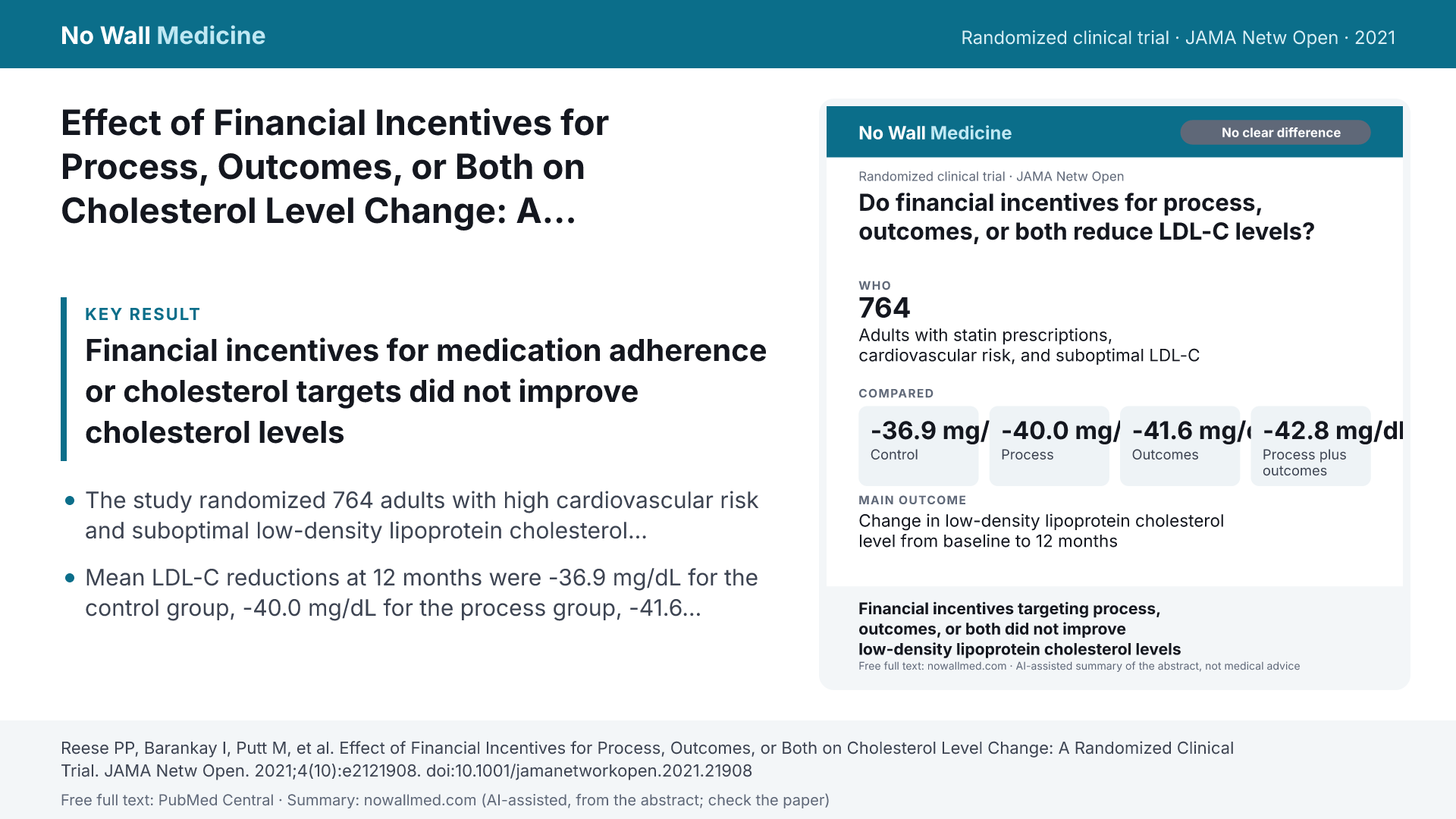
Effect of Financial Incentives for Process, Outcomes, or Both on Cholesterol Level Change: A Randomized Clinical Trial
Randomized clinical trialNo clear difference
Do financial incentives for process, outcomes, or both reduce LDL-C levels?
Who
764
Adults with statin prescriptions, cardiovascular risk, and suboptimal LDL-C levels · University of Pennsylvania Health System, Philadelphia
Compared
-36.9 mg/dLControl (95% CI, -42.0 to -31.9 mg/dL)
-40.0 mg/dLProcess (95% CI, -44.7 to -35.4 mg/dL)
-41.6 mg/dLOutcomes (95% CI, -46.3 to -37.0 mg/dL)
-42.8 mg/dLProcess plus outcomes (95% CI, -47.4 to -38.1 mg/dL)
Main outcome
Change in low-density lipoprotein cholesterol level from baseline to 12 months
Bottom line: Financial incentives targeting process, outcomes, or both did not improve low-density lipoprotein cholesterol levels compared to control.
JAMA Netw Open · 2021-10-01Download image
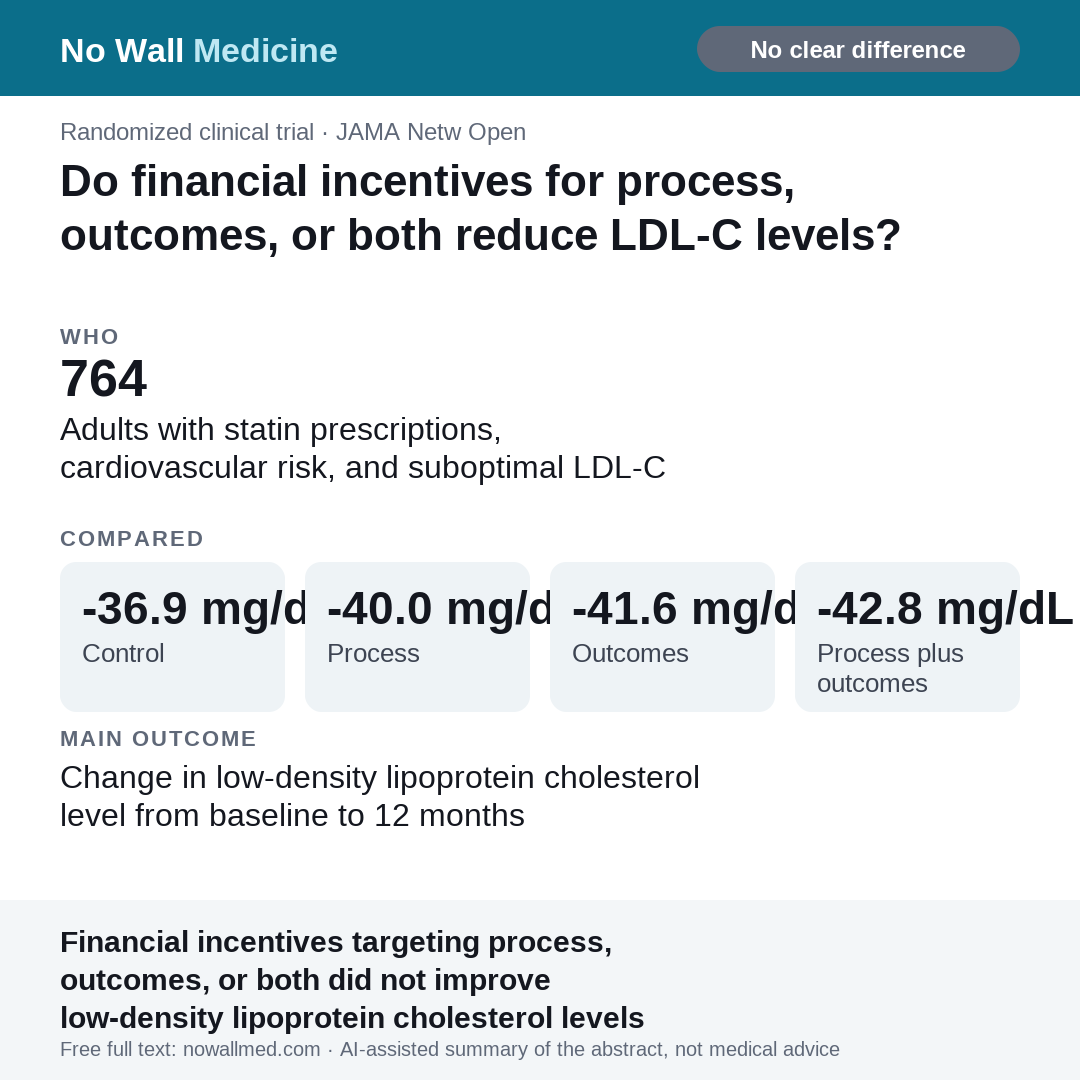
Clinical question: Do financial incentives for process, outcomes, or both reduce LDL-C levels?
Why it matters: It is unknown whether financial incentives are more effective when they target a specific process like medication adherence, a clinical outcome like cholesterol levels, or both.
Key points
- The study randomized 764 adults with high cardiovascular risk and suboptimal low-density lipoprotein cholesterol (LDL-C) levels to receive different types of financial incentives.
- Mean LDL-C reductions at 12 months were -36.9 mg/dL for the control group, -40.0 mg/dL for the process group, -41.6 mg/dL for the outcomes group, and -42.8 mg/dL for the combined group.
- In an exploratory analysis of participants with diabetes and hypertension, incentives were not linked to changes in hemoglobin A1c or blood pressure compared to the control group.
Headline and key points written with AI from the paper’s abstract, with every number checked against it. Read the paper before relying on them.
Was this summary helpful?
Subject terms
Cite this article
Reese PP, Barankay I, Putt M, et al. Effect of Financial Incentives for Process, Outcomes, or Both on Cholesterol Level Change: A Randomized Clinical Trial. JAMA Netw Open. 2021. doi:10.1001/jamanetworkopen.2021.21908
Spotted a mistake? Suggest a correction