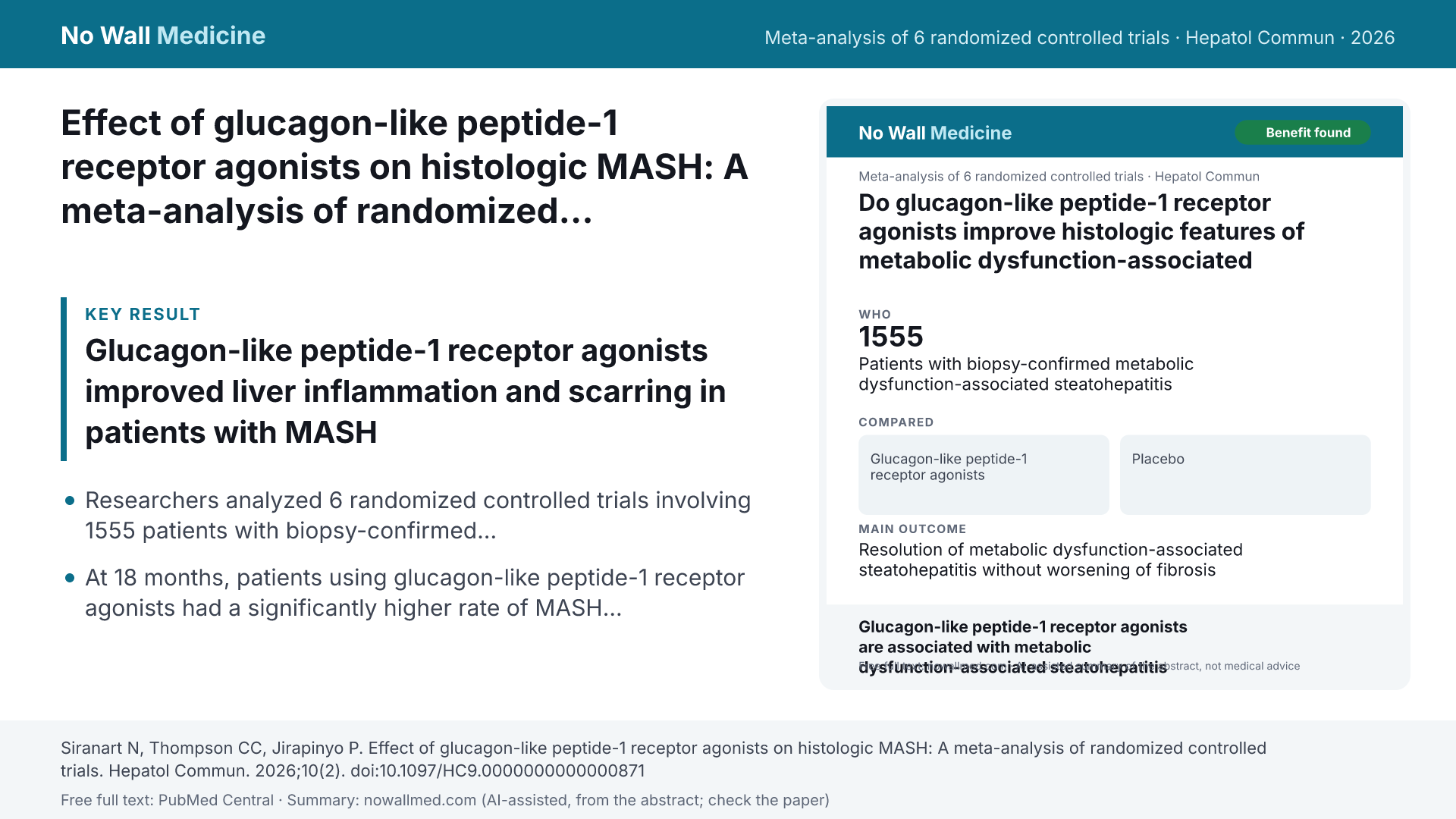
Glucagon-like peptide-1 receptor agonists improved liver inflammation and scarring in patients with MASH
Effect of glucagon-like peptide-1 receptor agonists on histologic MASH: A meta-analysis of randomized controlled trials
Meta-analysis of 6 randomized controlled trialsBenefit found
Do glucagon-like peptide-1 receptor agonists improve histologic features of metabolic dysfunction-associated steatohepatitis?
Who
1555
Patients with biopsy-confirmed metabolic dysfunction-associated steatohepatitis
Compared
Glucagon-like peptide-1 receptor agonists
Placebo
Main outcome
Resolution of metabolic dysfunction-associated steatohepatitis without worsening of fibrosis
Result: odds ratio 4.16 (95% CI 2.33-7.42)
Bottom line: Glucagon-like peptide-1 receptor agonists are associated with metabolic dysfunction-associated steatohepatitis resolution and fibrosis regression.
Hepatol Commun · 2026-01-16 · Save PNG
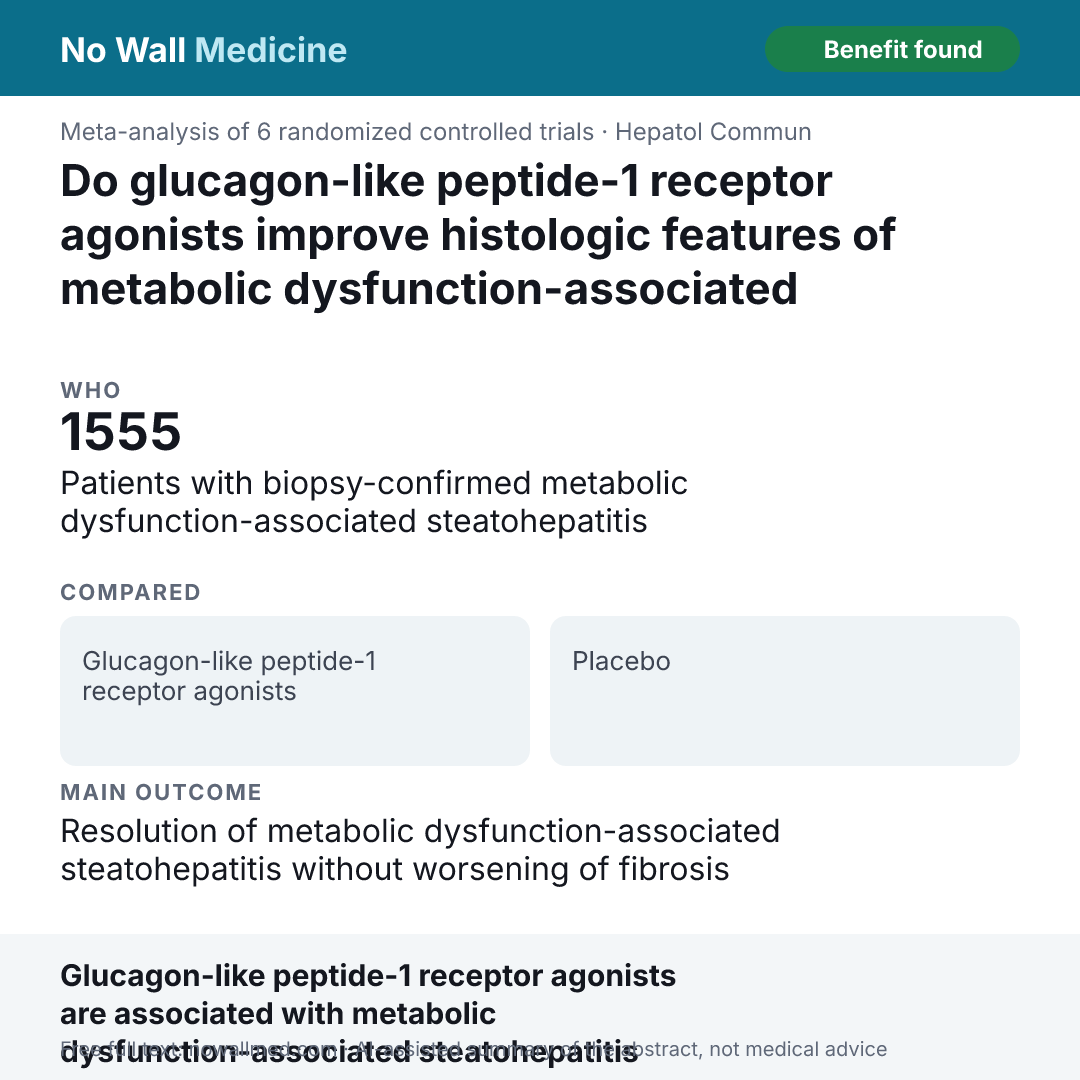
Clinical question: Do glucagon-like peptide-1 receptor agonists improve histologic features of metabolic dysfunction-associated steatohepatitis?
Why it matters: Evidence is needed to evaluate how glucagon-like peptide-1 receptor agonists affect the actual tissue characteristics of metabolic dysfunction-associated steatohepatitis.
Key points
- Researchers analyzed 6 randomized controlled trials involving 1555 patients with biopsy-confirmed metabolic dysfunction-associated steatohepatitis (MASH).
- At 18 months, patients using glucagon-like peptide-1 receptor agonists had a significantly higher rate of MASH resolution without worsening fibrosis compared to placebo (OR: 4.16, 95% CI: 2.33-7.42, p<0.001).
- In a subgroup without cirrhosis, these medications showed a significant benefit for fibrosis regression, which is the reduction of liver scarring (OR: 2.02, 95% CI: 1.56-2.62, p=0.01).
Headline and key points written with AI from the paper’s abstract, with every number checked against it. Read the paper before relying on them.
Was this summary helpful?
Subject terms
Headline, design, result, key points, caveat and citation as plain text.
Cite this article
Siranart N, Thompson CC, Jirapinyo P. Effect of glucagon-like peptide-1 receptor agonists on histologic MASH: A meta-analysis of randomized controlled trials. Hepatol Commun. 2026;10(2). doi:10.1097/HC9.0000000000000871
Spotted a mistake? Suggest a correction