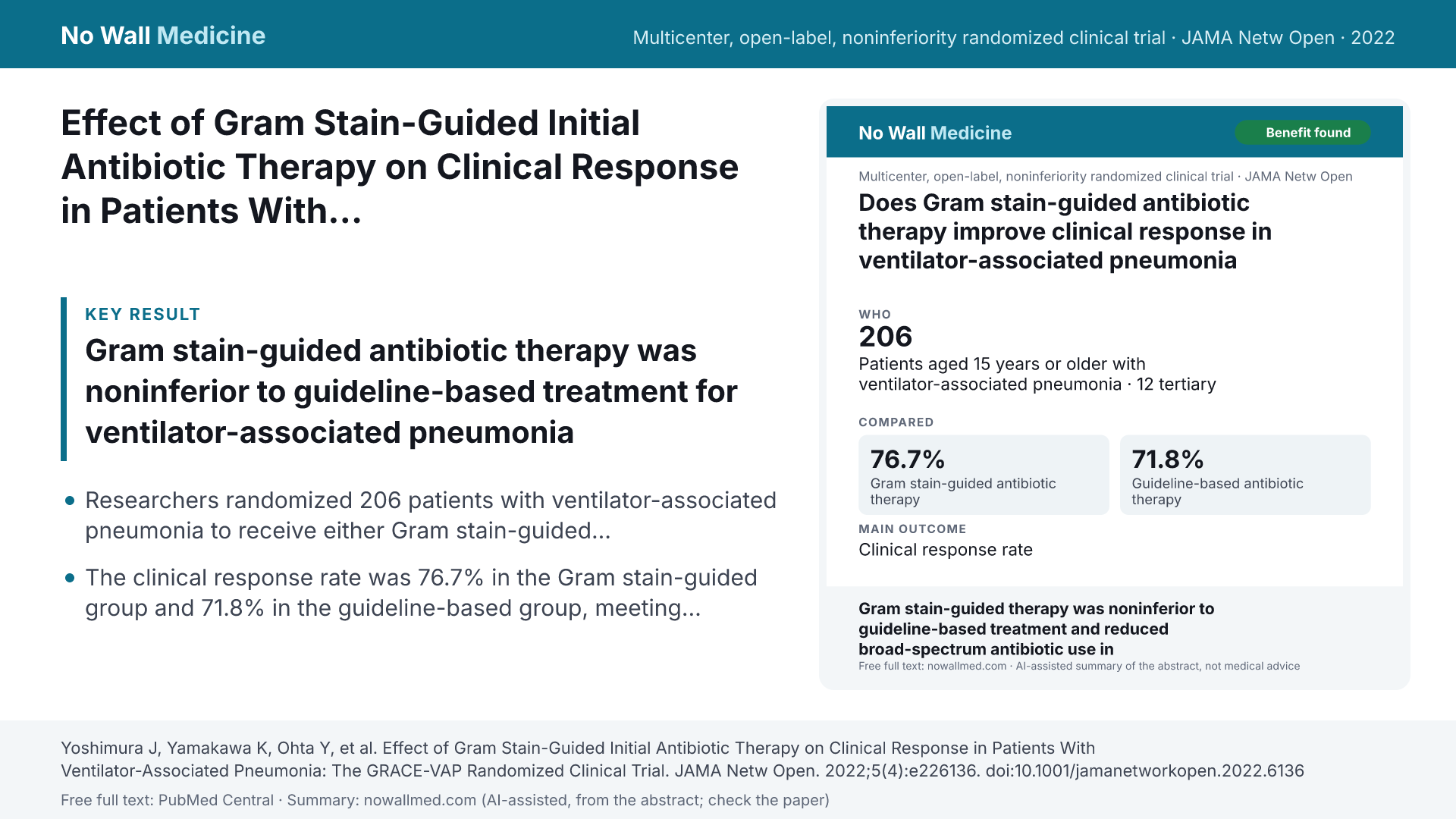
Gram stain-guided antibiotic therapy was noninferior to guideline-based treatment for ventilator-associated pneumonia
Effect of Gram Stain-Guided Initial Antibiotic Therapy on Clinical Response in Patients With Ventilator-Associated Pneumonia: The GRACE-VAP Randomized Clinical Trial
Multicenter, open-label, noninferiority randomized clinical trialBenefit found
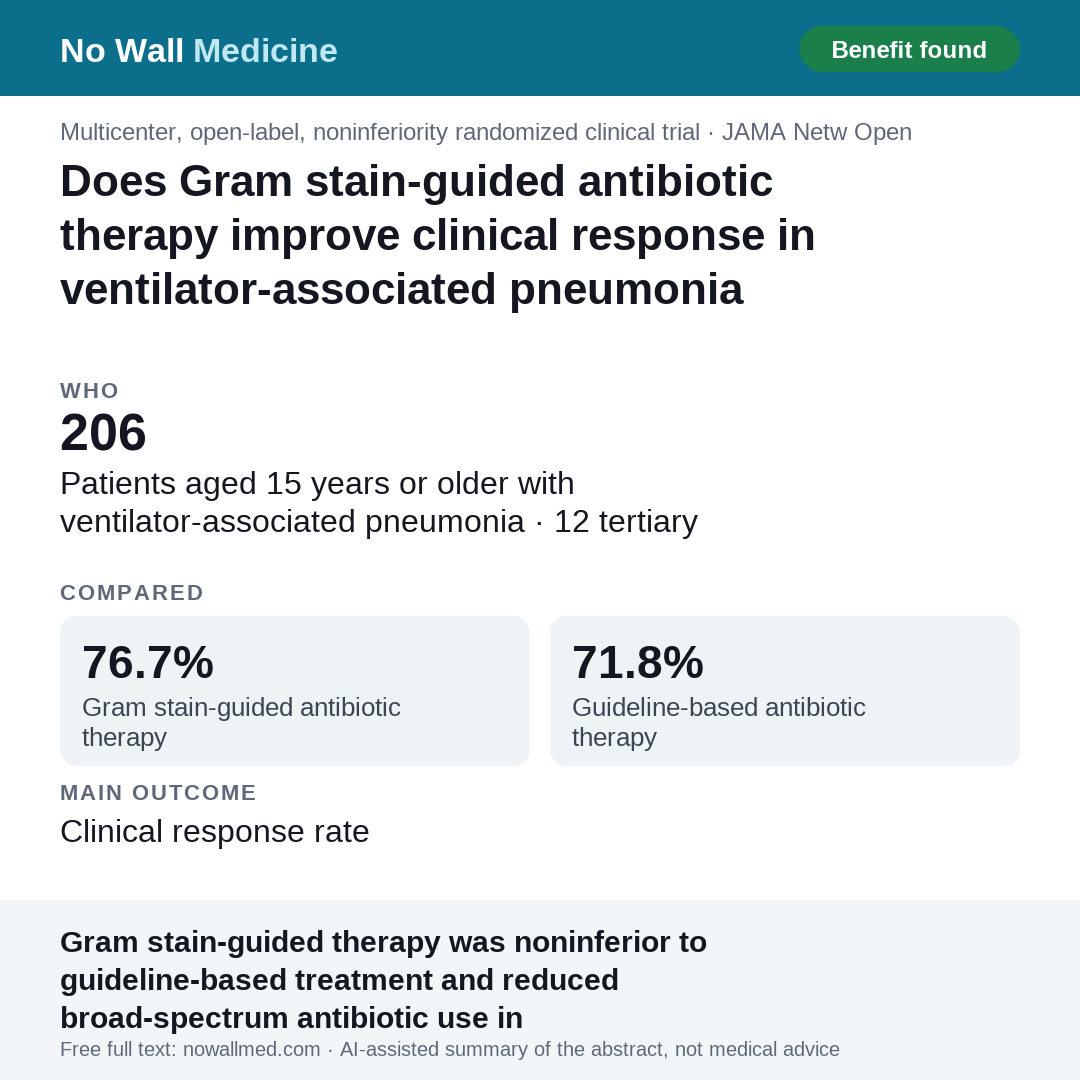
Does Gram stain-guided antibiotic therapy improve clinical response in ventilator-associated pneumonia patients?
Who
206
Patients aged 15 years or older with ventilator-associated pneumonia · 12 tertiary referral hospitals in Japan
Compared
76.7%Gram stain-guided antibiotic therapy
71.8%Guideline-based antibiotic therapy
Main outcome
Clinical response rate
Result: risk difference, 0.05; 95% CI, -0.07 to 0.17
Bottom line: Gram stain-guided therapy was noninferior to guideline-based treatment and reduced broad-spectrum antibiotic use in ventilator-associated pneumonia.
JAMA Netw Open · 2022-04-01Download image
Clinical question: Does Gram stain-guided antibiotic therapy improve clinical response in ventilator-associated pneumonia patients?
Why it matters: It was unknown if using Gram stains to restrict initial antibiotic choices in intensive care units would be as effective as following standard broad-spectrum guidelines.
Key points
- Researchers randomized 206 patients with ventilator-associated pneumonia to receive either Gram stain-guided antibiotic therapy or guideline-based broad-spectrum antibiotic treatment.
- The clinical response rate was 76.7% in the Gram stain-guided group and 71.8% in the guideline-based group, meeting the criteria for noninferiority.
- The Gram stain-guided group had lower use of antipseudomonal agents at 30.1% and anti-methicillin-resistant Staphylococcus aureus (MRSA) agents at 38.8% compared to the guideline group.
Headline and key points written with AI from the paper’s abstract, with every number checked against it. Read the paper before relying on them.
Was this summary helpful?
Subject terms
Cite this article
Yoshimura J, Yamakawa K, Ohta Y, et al. Effect of Gram Stain-Guided Initial Antibiotic Therapy on Clinical Response in Patients With Ventilator-Associated Pneumonia: The GRACE-VAP Randomized Clinical Trial. JAMA Netw Open. 2022. doi:10.1001/jamanetworkopen.2022.6136
Spotted a mistake? Suggest a correction