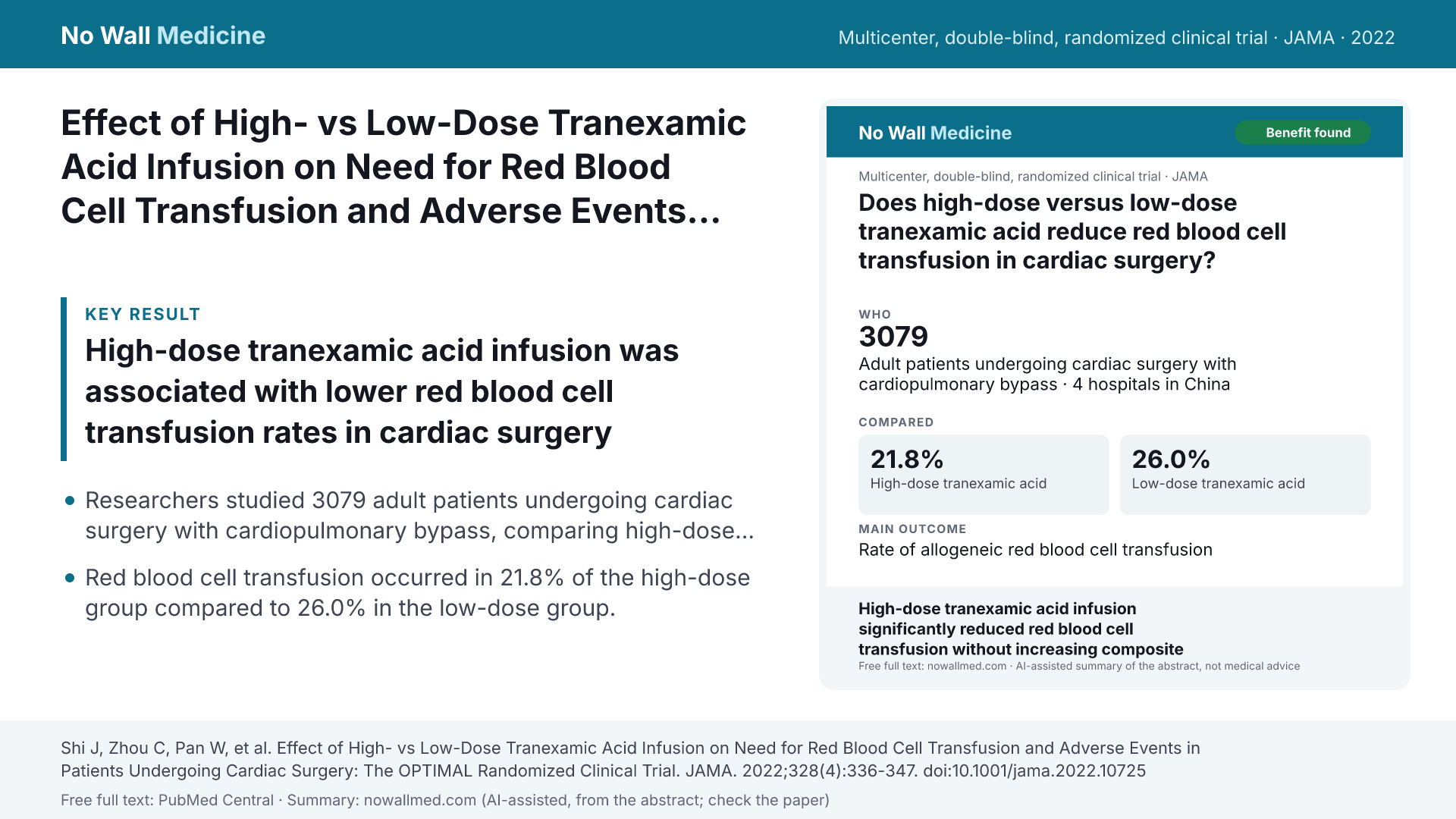
High-dose tranexamic acid infusion was associated with lower red blood cell transfusion rates in cardiac surgery
Effect of High- vs Low-Dose Tranexamic Acid Infusion on Need for Red Blood Cell Transfusion and Adverse Events in Patients Undergoing Cardiac Surgery: The OPTIMAL Randomized Clinical Trial
Multicenter, double-blind, randomized clinical trialBenefit found
Does high-dose versus low-dose tranexamic acid reduce red blood cell transfusion in cardiac surgery?
Who
3079
Adult patients undergoing cardiac surgery with cardiopulmonary bypass · 4 hospitals in China
Compared
21.8%High-dose tranexamic acid (333/1525)
26.0%Low-dose tranexamic acid (391/1506)
Main outcome
Rate of allogeneic red blood cell transfusion
Result: risk difference -4.1% (1-sided 97.55% CI, -∞ to -1.1%)
Bottom line: High-dose tranexamic acid infusion significantly reduced red blood cell transfusion without increasing composite safety risks.
JAMA · 2022-07-26Download image
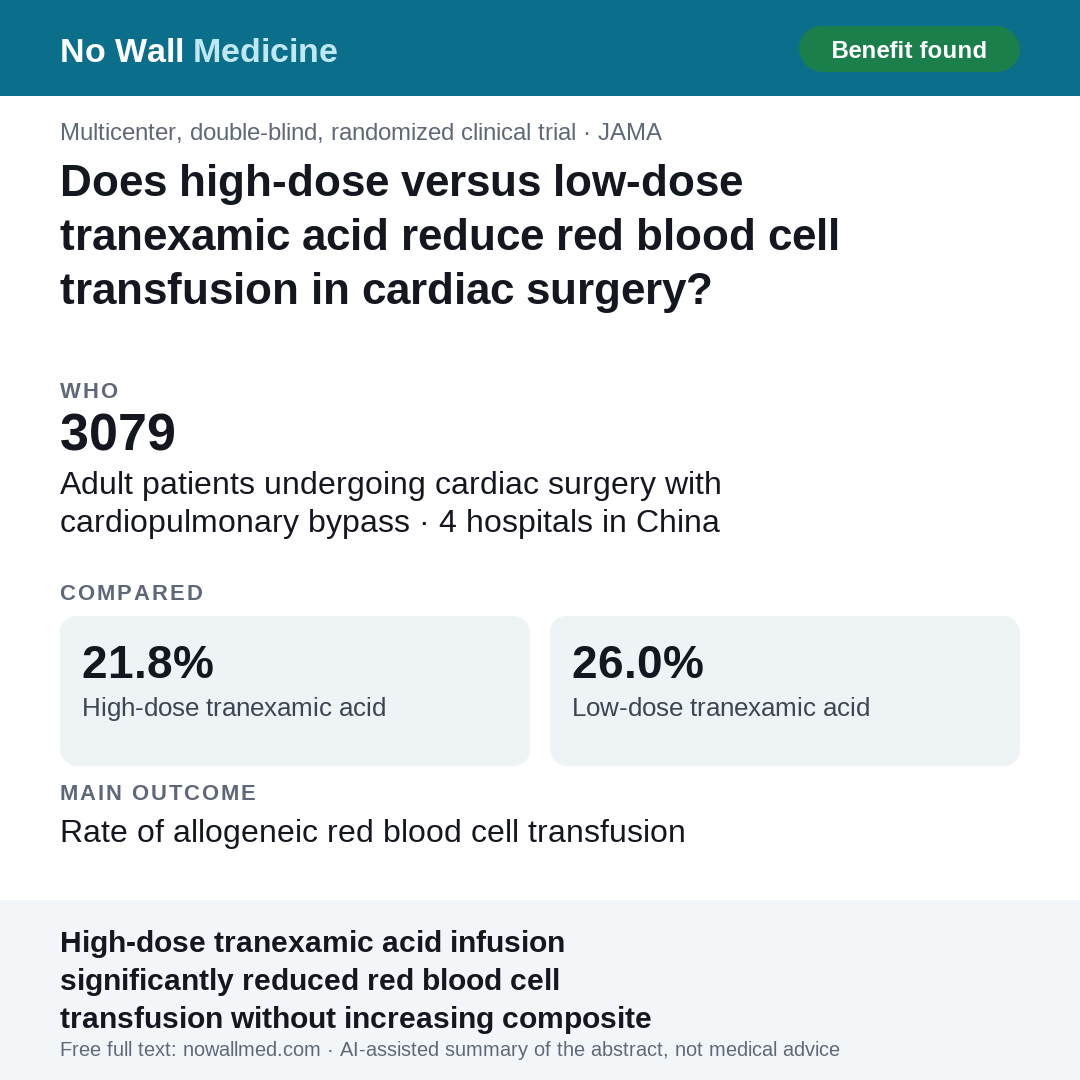
Clinical question: Does high-dose versus low-dose tranexamic acid reduce red blood cell transfusion in cardiac surgery?
Why it matters: It was unknown if a high dose of tranexamic acid provides better blood-sparing effects than a low dose without increasing risks like seizures or blood clots.
Key points
- Researchers studied 3079 adult patients undergoing cardiac surgery with cardiopulmonary bypass, comparing high-dose and low-dose tranexamic acid regimens.
- Red blood cell transfusion occurred in 21.8% of the high-dose group compared to 26.0% in the low-dose group.
- The composite safety outcome of death, seizure, kidney dysfunction, and blood clots occurred in 17.6% of high-dose patients and 16.8% of low-dose patients.
Headline and key points written with AI from the paper’s abstract, with every number checked against it. Read the paper before relying on them.
Was this summary helpful?
Subject terms
Cite this article
Shi J, Zhou C, Pan W, Sun H, Liu S, Feng W. Effect of High- vs Low-Dose Tranexamic Acid Infusion on Need for Red Blood Cell Transfusion and Adverse Events in Patients Undergoing Cardiac Surgery: The OPTIMAL Randomized Clinical Trial. JAMA. 2022. doi:10.1001/jama.2022.10725
Spotted a mistake? Suggest a correction
Top studies every Monday
The week’s key trials and guidelines in your specialties, plus any topics you follow. By email, free.
Get the weekly digest