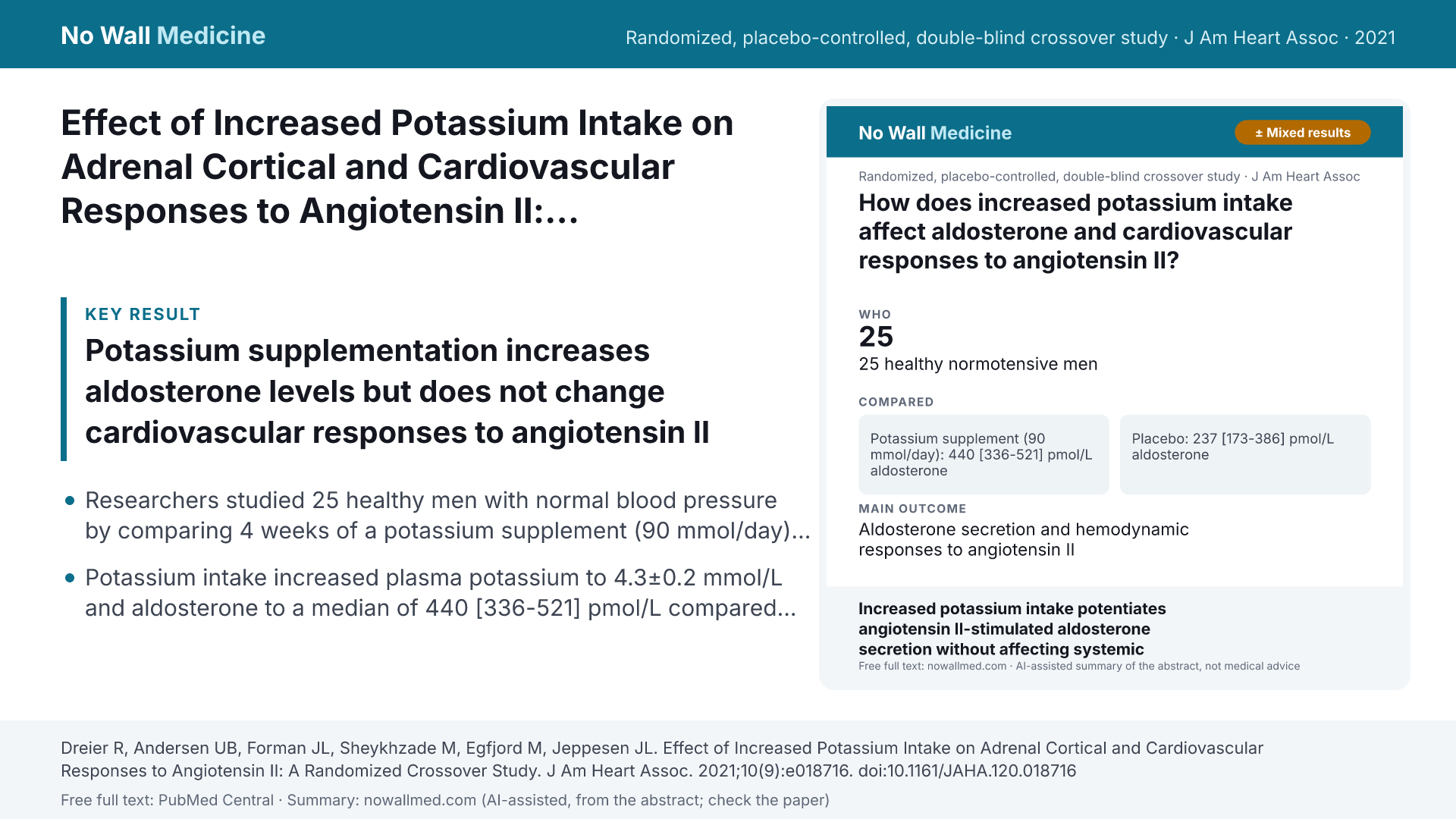
Potassium supplementation increases aldosterone levels but does not change cardiovascular responses to angiotensin II
Effect of Increased Potassium Intake on Adrenal Cortical and Cardiovascular Responses to Angiotensin II: A Randomized Crossover Study
Randomized, placebo-controlled, double-blind crossover studyMixed results
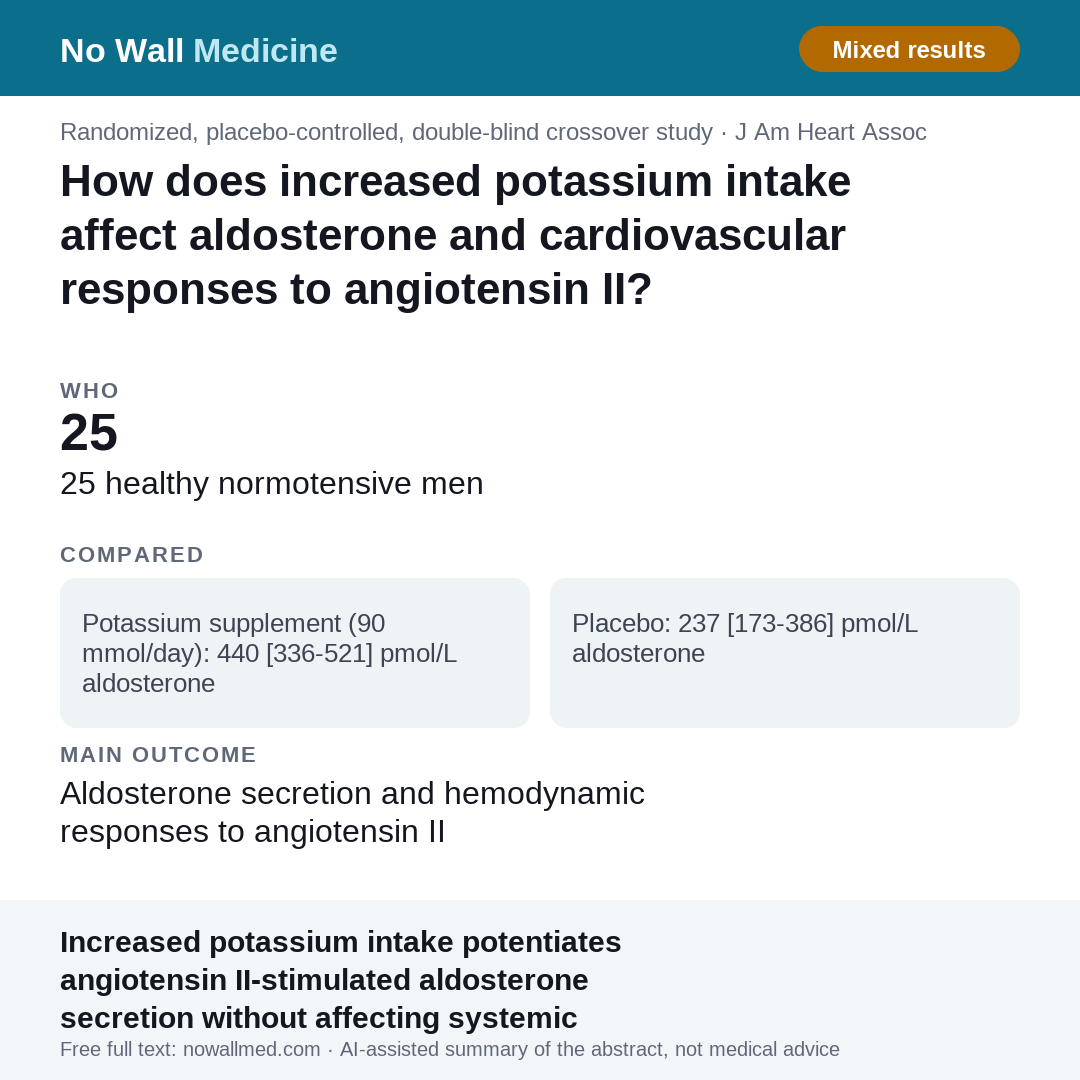
How does increased potassium intake affect aldosterone and cardiovascular responses to angiotensin II?
Who
25
25 healthy normotensive men
Compared
Potassium supplement (90 mmol/day): 440 [336-521] pmol/L aldosterone
Placebo: 237 [173-386] pmol/L aldosterone
Main outcome
Aldosterone secretion and hemodynamic responses to angiotensin II
Bottom line: Increased potassium intake potentiates angiotensin II-stimulated aldosterone secretion without affecting systemic cardiovascular hemodynamics.
J Am Heart Assoc · 2021-04-19Download image
Clinical question: How does increased potassium intake affect aldosterone and cardiovascular responses to angiotensin II?
Why it matters: It is unknown how increased potassium intake and the resulting rise in aldosterone affect the human cardiovascular system's response to angiotensin II.
Key points
- Researchers studied 25 healthy men with normal blood pressure by comparing 4 weeks of a potassium supplement (90 mmol/day) to 4 weeks of a placebo.
- Potassium intake increased plasma potassium to 4.3±0.2 mmol/L and aldosterone to a median of 440 [336-521] pmol/L compared to 4.0±0.2 mmol/L and 237 [173-386] pmol/L.
- Increased potassium intake was associated with higher aldosterone secretion when angiotensin II, a hormone that raises blood pressure, was infused, but blood pressure and cardiac output remained similar to placebo.
Headline and key points written with AI from the paper’s abstract, with every number checked against it. Read the paper before relying on them.
Was this summary helpful?
Subject terms
Cite this article
Dreier R, Andersen UB, Forman JL, Sheykhzade M, Egfjord M, Jeppesen JL. Effect of Increased Potassium Intake on Adrenal Cortical and Cardiovascular Responses to Angiotensin II: A Randomized Crossover Study. J Am Heart Assoc. 2021. doi:10.1161/JAHA.120.018716
Spotted a mistake? Suggest a correction