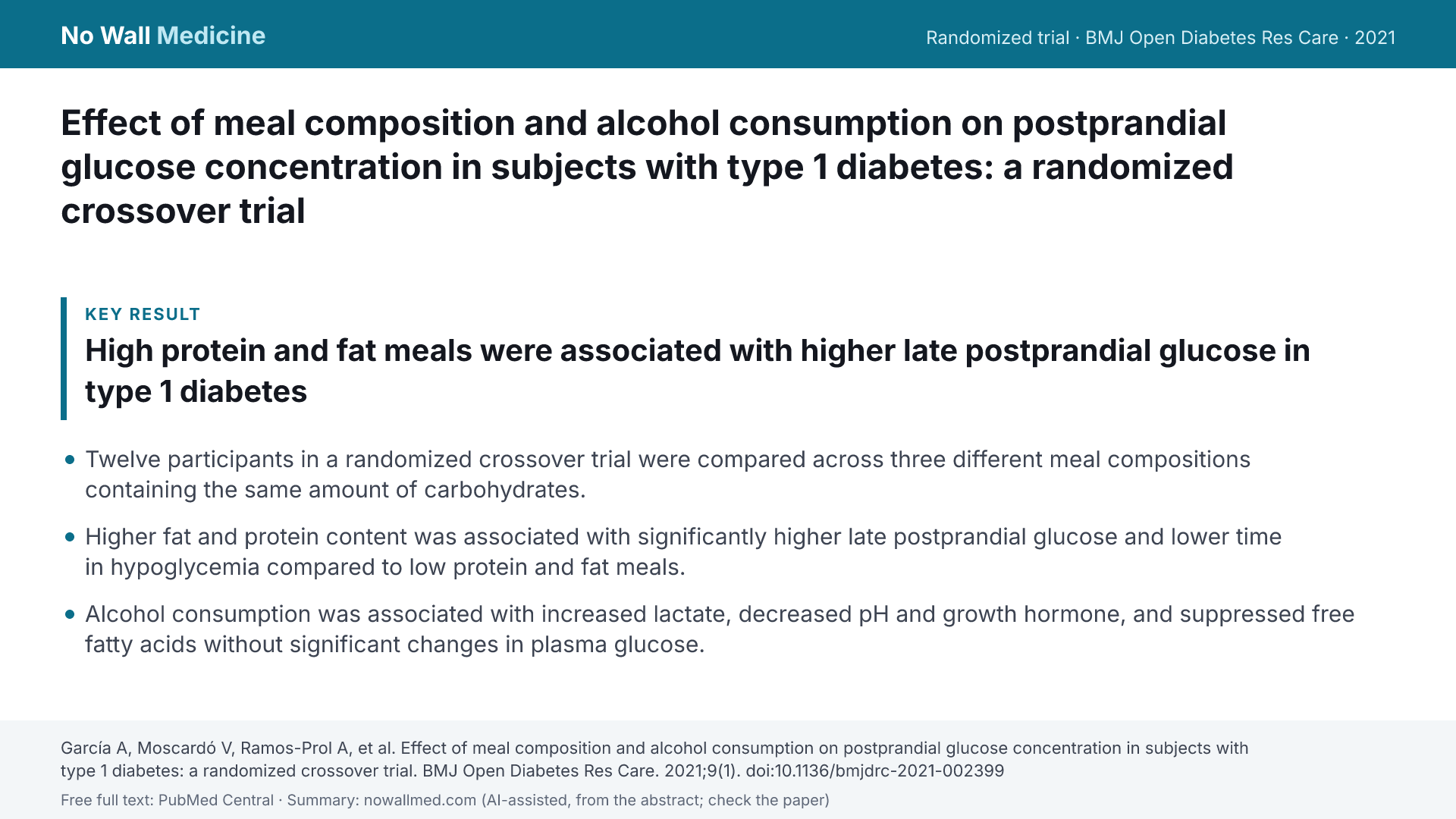
High protein and fat meals were associated with higher late postprandial glucose in type 1 diabetes
Effect of meal composition and alcohol consumption on postprandial glucose concentration in subjects with type 1 diabetes: a randomized crossover trial
Key points
- Twelve participants in a randomized crossover trial were compared across three different meal compositions containing the same amount of carbohydrates.
- Higher fat and protein content was associated with significantly higher late postprandial glucose and lower time in hypoglycemia compared to low protein and fat meals.
- Alcohol consumption was associated with increased lactate, decreased pH and growth hormone, and suppressed free fatty acids without significant changes in plasma glucose.
Headline and key points written with AI from the paper’s abstract, with every number checked against it. Read the paper before relying on them.
Was this summary helpful?
Abstract
Introduction
Meal composition is known to affect glycemic variability and glucose control in type 1 diabetes. The objective of this work was to evaluate the effect of high carbohydrate meals of different nutritional composition and alcohol on the postprandial glucose response in patients with type 1 diabetes. Research design and methods
Twelve participants were recruited to this randomized crossover trial. Following a 4-week run-in period, participants received a mixed meal on three occasions with the same carbohydrate content but different macronutrient composition: high protein-high fat with alcohol (0.7g/kg body weight, beer), high protein-high fat without alcohol, and low protein-low fat without alcohol at 2-week intervals. Plasma and interstitial glucose, insulin, glucagon, growth hormone, cortisol, alcohol, free fatty acids, lactate, and pH concentrations were measured during 6 hours. A statistical analysis was then carried out to determine significant differences between studies. Results
Significantly higher late postprandial glucose was observed in studies with higher content of fats and proteins (p=0.0088). This was associated with lower time in hypoglycemia as compared with the low protein and fat study (p=0.0179), at least partially due to greater glucagon concentration in the same period (p=0.04). Alcohol significantly increased lactate, decreased pH and growth hormone, and maintained free fatty acids suppressed during the late postprandial phase (p<0.001), without significant changes in plasma glucose. Conclusions
Our data suggest that the addition of proteins and fats to carbohydrates increases late postprandial blood glucose. Moreover, alcohol consumption together with a mixed meal has relevant metabolic effects without any increase in the risk of hypoglycemia, at least 6 hours postprandially. Trial registration number
NCT03320993.
Abstract reproduced under the article’s CC BY NC licence.
Subject terms
Cite this article
García A, Moscardó V, Ramos-Prol A, et al. Effect of meal composition and alcohol consumption on postprandial glucose concentration in subjects with type 1 diabetes: a randomized crossover trial. BMJ Open Diabetes Res Care. 2021. doi:10.1136/bmjdrc-2021-002399
Spotted a mistake? Suggest a correction