Proficiency-based simulation training improved procedure quality and reduced errors in novice cardiac device implanters
Effect of Metrics-Based Simulation Training to Proficiency on Procedure Quality and Errors Among Novice Cardiac Device Implanters: The IMPROF Randomized Trial
Prospective randomized trialBenefit found
Does metrics-based simulation training to proficiency improve implant performance quality compared to traditional simulation training?
Who
30
Novice cardiac device implanters · International skills training center
Compared
Proficiency-based progression: 31 [30-32] median procedural steps
Traditional simulation-based training: 24 [22-27] median procedural steps
Main outcome
Objectively assessed performance metrics from video-recordings
Bottom line: Proficiency-based progression training resulted in more procedural steps and significantly fewer errors than traditional simulation-based training.
JAMA Netw Open · 2023-08-01Download image
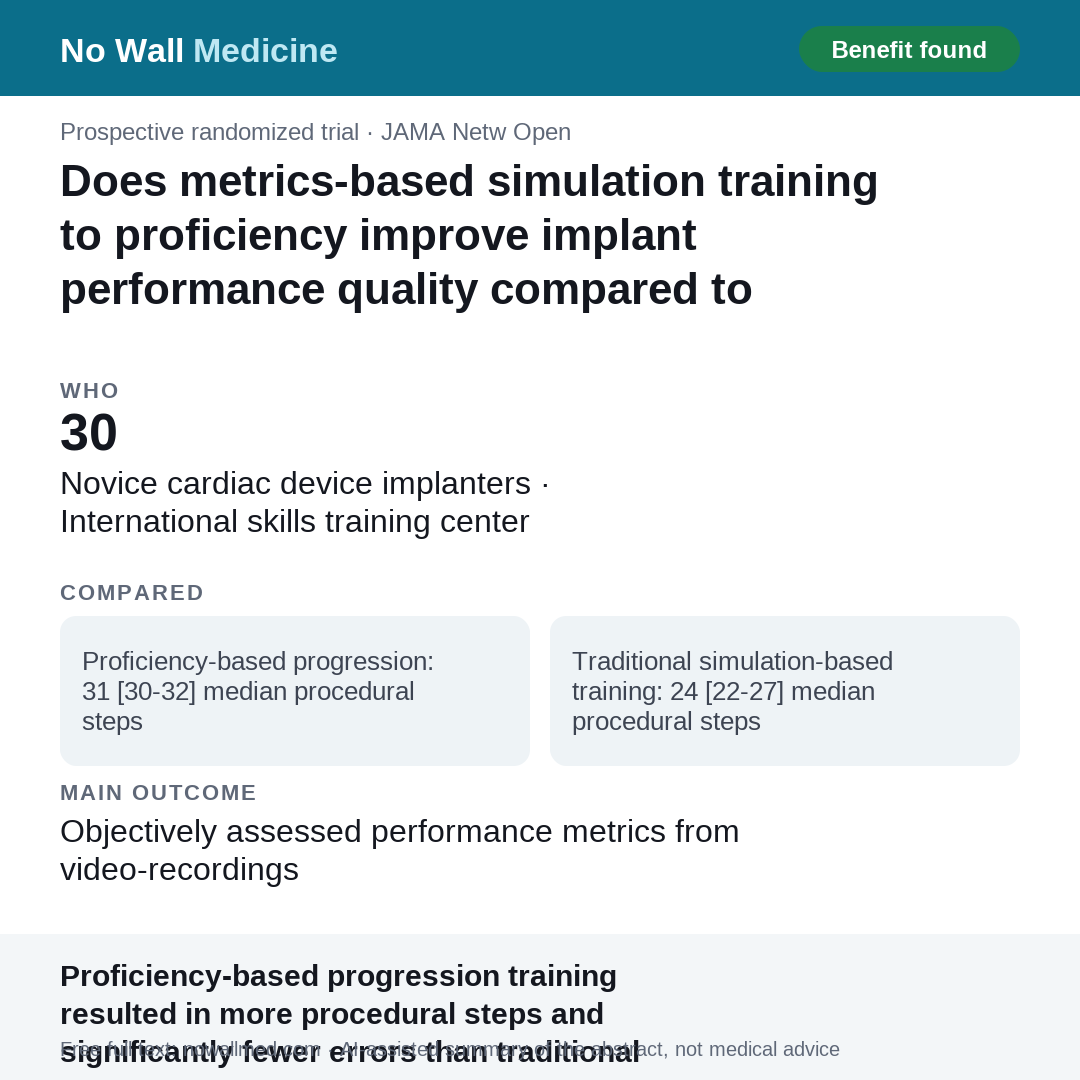
Clinical question: Does metrics-based simulation training to proficiency improve implant performance quality compared to traditional simulation training?
Why it matters: There is no common system to objectively assess if trainees can perform tasks at specific performance levels before they begin practicing on patients.
Key points
- Thirty novice cardiac device implanters were randomized to receive either proficiency-based progression training or traditional simulation-based training using virtual reality.
- The proficiency-based group completed 27% more procedural steps and had 73% fewer errors compared to the traditional training group.
- Trainees using the proficiency-based approach had 84% fewer critical errors and 77% fewer total errors combined.
Headline and key points written with AI from the paper’s abstract, with every number checked against it. Read the paper before relying on them.
Was this summary helpful?
Subject terms
Cite this article
Mascheroni J, Stockburger M, Patwala A, Mont L, Rao A, Retzlaff H. Effect of Metrics-Based Simulation Training to Proficiency on Procedure Quality and Errors Among Novice Cardiac Device Implanters: The IMPROF Randomized Trial. JAMA Netw Open. 2023. doi:10.1001/jamanetworkopen.2023.22750
Spotted a mistake? Suggest a correction
Top studies every Monday
The week’s key trials and guidelines in your specialties, plus any topics you follow. By email, free.
Get the weekly digest