Effect of Reconstituted Human Apolipoprotein A-I on Recurrent Ischemic Events in Survivors of Acute MI
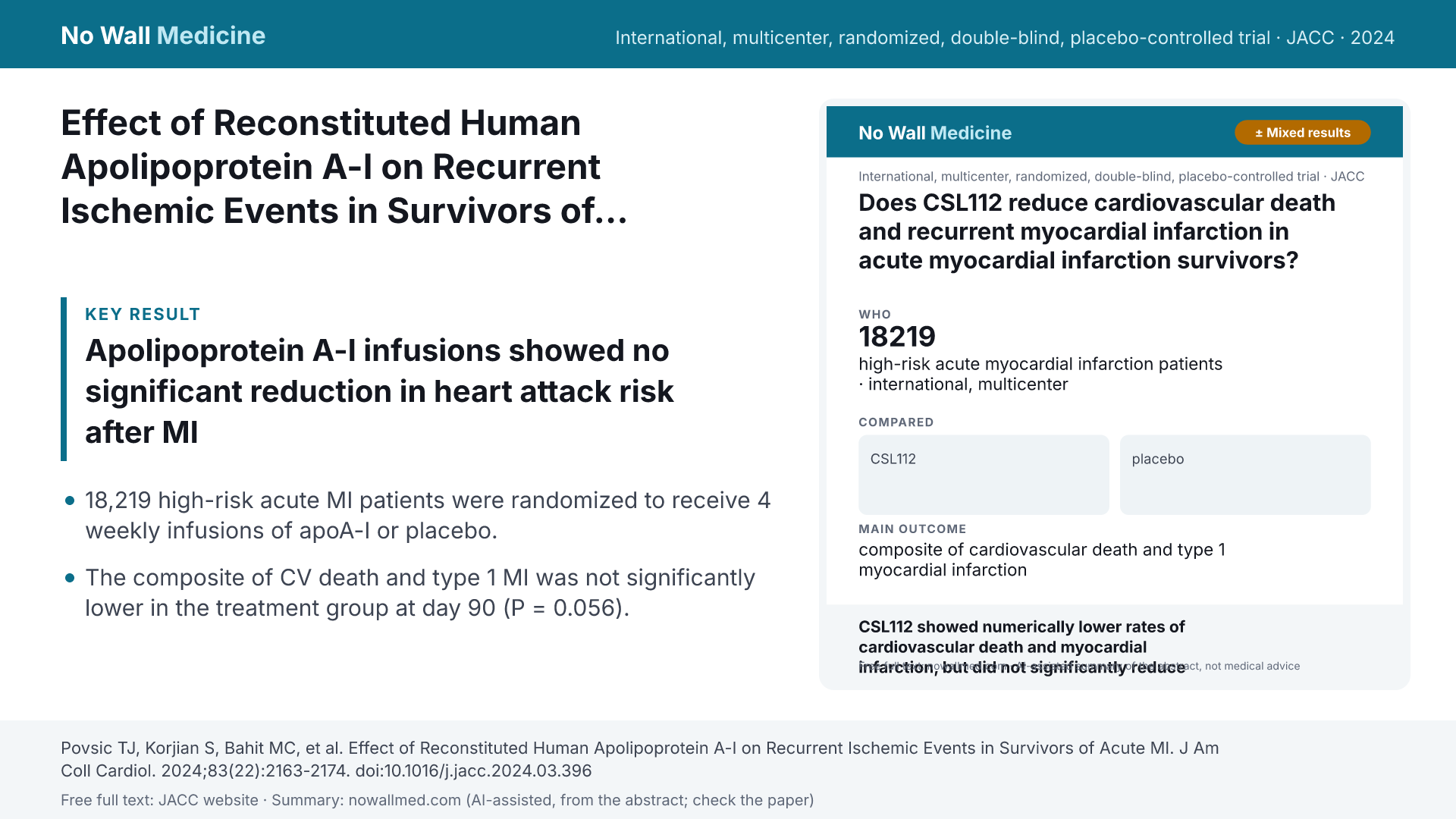
Key result: Apolipoprotein A-I infusions showed no significant reduction in heart attack risk after MI
Secondary analysis of a trialMixed results
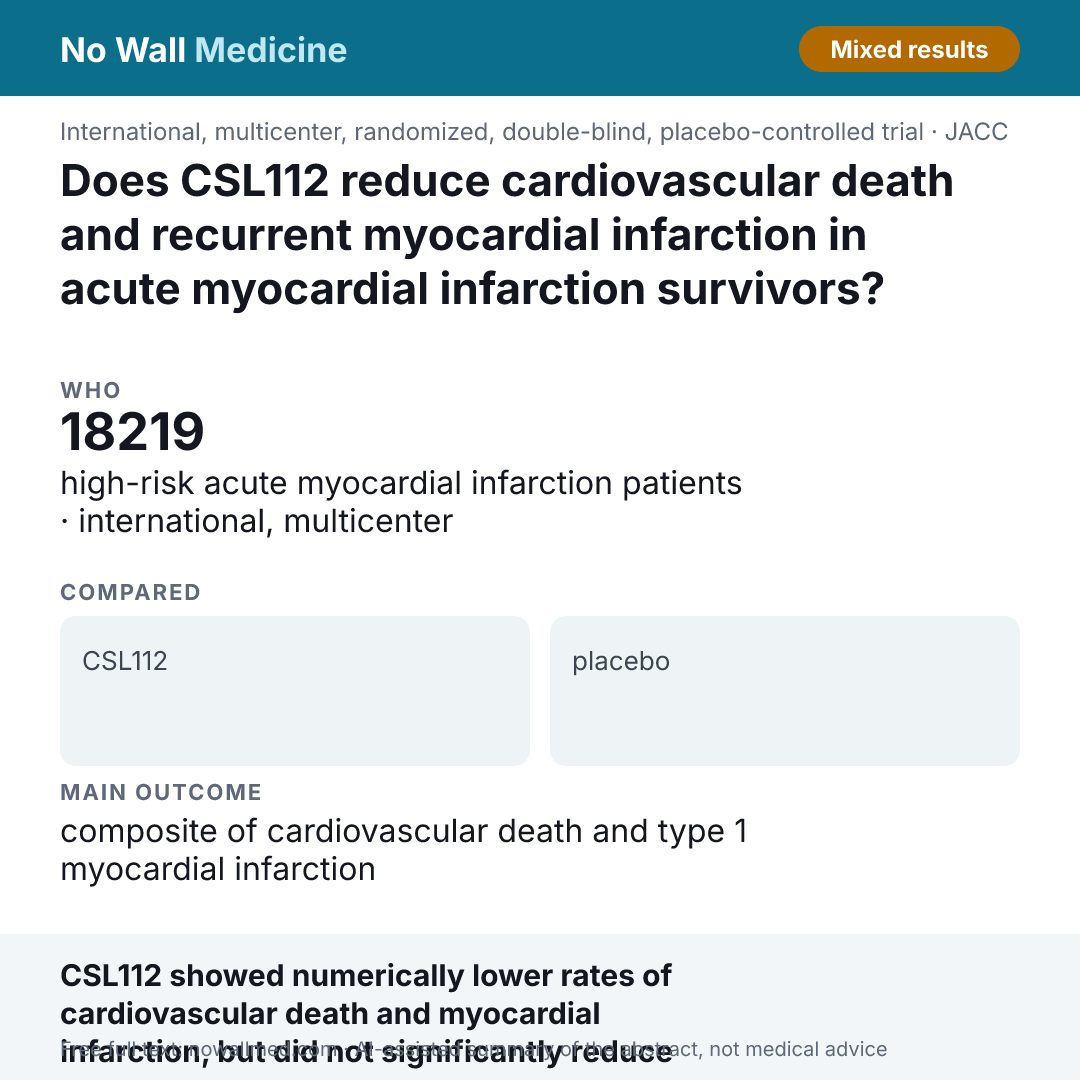
Does CSL112 reduce cardiovascular death and recurrent myocardial infarction in acute myocardial infarction survivors?
Who
18219
high-risk acute myocardial infarction patients · international, multicenter
Compared
CSL112
placebo
Main outcome
composite of cardiovascular death and type 1 myocardial infarction
Result: hazard ratio 0.86 (95% CI 0.74-0.99) at day 180
Bottom line: CSL112 showed numerically lower rates of cardiovascular death and myocardial infarction, but did not significantly reduce primary endpoints.
JACC · 2024-04-06 · Save PNG
Key points
- 18,219 high-risk acute MI patients were randomized to receive 4 weekly infusions of apoA-I or placebo.
- The composite of CV death and type 1 MI was not significantly lower in the treatment group at day 90 (P = 0.056).
- Rates of CV death and MI were numerically lower in the treatment group but did not reach statistical significance at day 365.
Discussion prompts
- Would these patients look like yours? Who was left out?
- Is the main outcome one that matters to patients?
- Is the difference large enough to change what you do?
Cite: Povsic TJ, Korjian S, Bahit MC, et al. Effect of Reconstituted Human Apolipoprotein A-I on Recurrent Ischemic Events in Survivors of Acute MI. J Am Coll Cardiol. 2024;83(22):2163-2174. doi:10.1016/j.jacc.2024.03.396
Free full text: JACC website · Summary and visual abstract: nowallmed.com/a/effect-of-reconstituted-human-apolipoprotein-a-i-on-recurrent-1aoul7b/ (AI-assisted from the abstract; check the paper before relying on it).